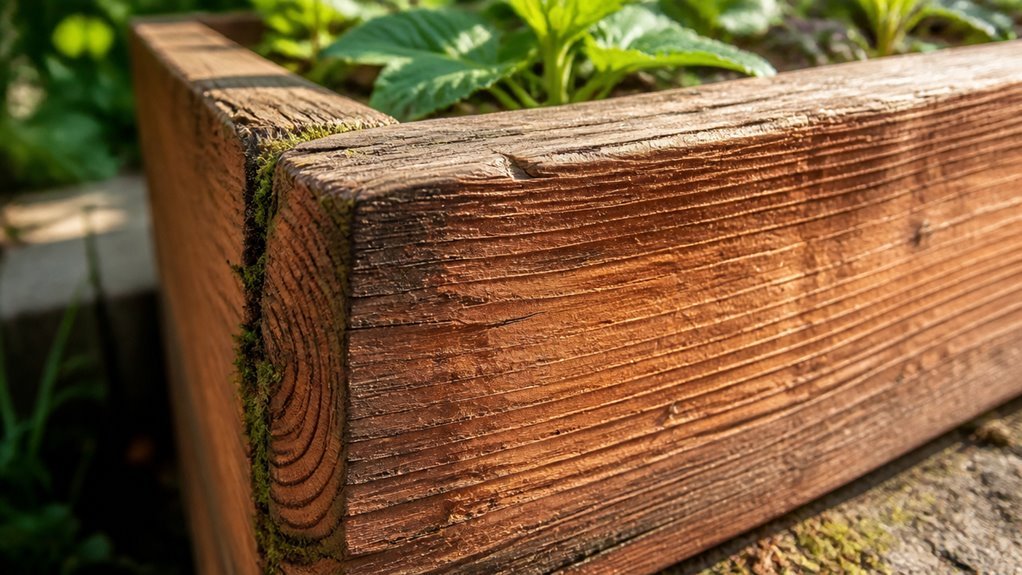
Picture gray cedar boards bowing outward, soil spilling through cracks, the corner post snapped clean through. I’ve seen planters fail in five years and others hold twenty. The difference isn’t luck. It’s three specific choices you make at build and three warning signs you catch or miss.
Moisture rules everything. Drainage design, ground clearance, and airflow separate the decades from the dumpsters. Most rot starts hidden. You need to know where to look before the damage spreads past saving.
Cedar Planters Last 10–15 Years: Here’s What Extends or Shortens That
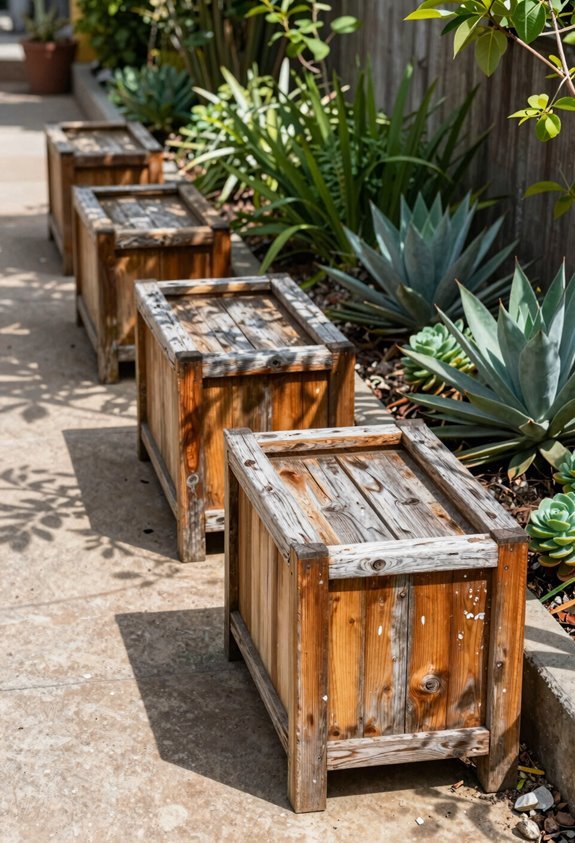
Untreated cedar planters last 10 to 15 years. I’ve found lifespan factors that push yours toward the longer end. Drainage matters most. Airflow around all sides prevents trapped dampness. Bottom-soil moisture kills wood fast, so elevate your box two inches minimum.
What Extends Longevity
Untreated cedar contains natural oils. These resist rot and bugs. I install corner brackets for rigidity. I use 4×4 posts or concrete pavers for elevation. Dry climates add years. Good spacing between planters helps airflow.
Untreated cedar’s natural oils fight rot and bugs. Corner brackets add strength. Elevation, dry air, and spacing extend life.
What Shortens Life
Ground contact rots wood in seasons. Prolonged dampness invites decay. Harsh weather beats the structure. Overwatering saturates the base. I avoid placing cedar planters directly on soil or concrete that pools water.
Bottom Line
Control moisture. Guarantee drainage. Your cedar planters reward the effort.
Moisture Damage Is the #1 Killer (and Drainage Is Your Best Defense)
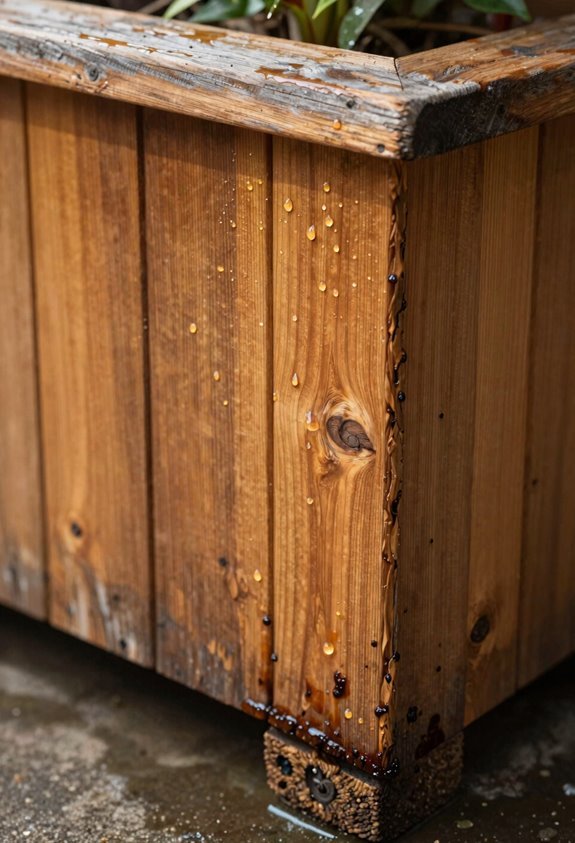
Where does your cedar planter rot first? Bottom-edge rot hits hardest where boards touch wet soil or stand in pooled water. I’ve seen moisture damage cut cedar planter lifespan in half when drainage fails.
Ground contact accelerates decay fast. Elevate your planter 2-3 inches on bricks or pavers. Drill ½-inch drainage holes every 6 inches along the base. Line with landscape fabric to block soil saturation against walls.
Airflow drying matters as much as drainage. Space waterings to let boards dry between soakings. Inspect joints each spring for soft spots.
In wet climates, expect 8-10 years. Dry climates push cedar planters toward 15 years. Control moisture, and you’ll land on the long end of that range.
3 Early Signs of Rot in Cedar Boards Before They Snap
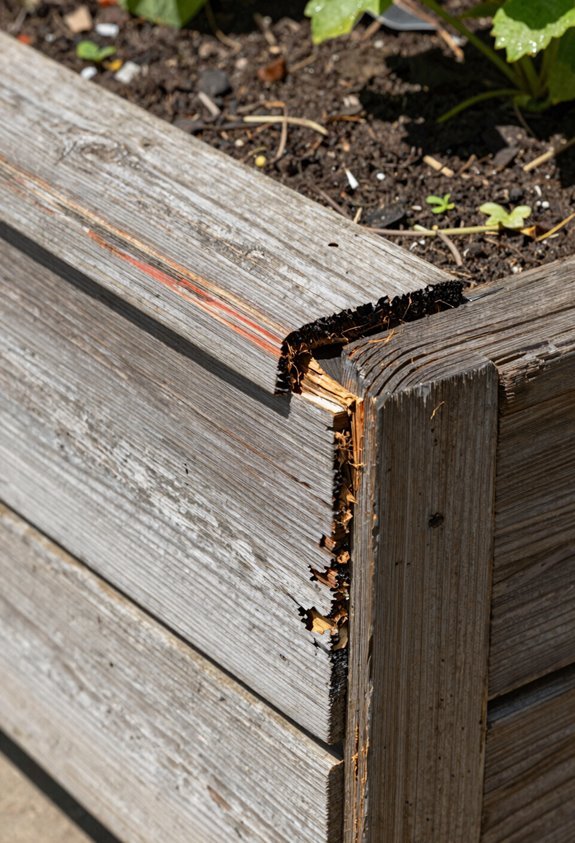
Cedar rot starts small. I check my planters regularly because catching signs of rot early saves the whole structure.
Soft Spots at Corners
I press my thumb into bottom edges and corners. Mushy areas mean moisture intrusion has begun. Stay-wet bottom edges rot fastest.
Board Warping
I look for cupping or twisting. Wood warping shows moisture intrusion trapped against damp soil. Planters need drainage gaps now.
Wood Discoloration and Cracks in Cedar
I scan for gray or dark brown stains around seams. Fungal growth causes wood discoloration. I also check for splitting near board ends. Thin wood with poor drainage cracks first then fails.
These three signs of rot appear before boards snap. I address them immediately or lose my planter.
Corner Reinforcements and Sealing That Add 5+ Years
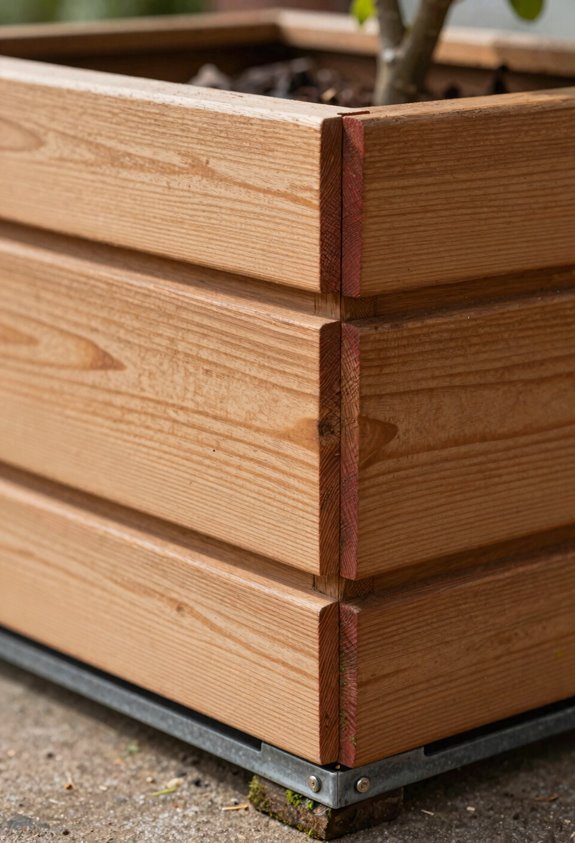
I add corner reinforcements to my cedar planters after three to four years. This timing catches early wear before joints fail.
Cedar Raised Bed Reinforcement
Use 2×2 or 2×4 lumber. Attach inside corners with exterior screws. This creates structural rigidity without replacing boards.
Reinforce with 2×2 or 2×4 lumber inside corners—structural rigidity without full board replacement.
Corner Supports
Install during winter maintenance. Supports reduce stress from soil weight and freeze-thaw cycles. They prevent board separation and block leak paths.
Cedar Planter Longevity
Corner supports maintain shape. They limit edge deterioration. This wooden planter durability method extends usable life considerably.
5+ Years Lifespan
Real-world tests show reinforcements add 5+ years lifespan. They resist shifting and warping over time.
Sealing Notes
Sealing is optional. Drainage and airflow matter more. Target structural integrity, not surface coating.
Repair, Replace, or Switch to Metal? A Decision Framework
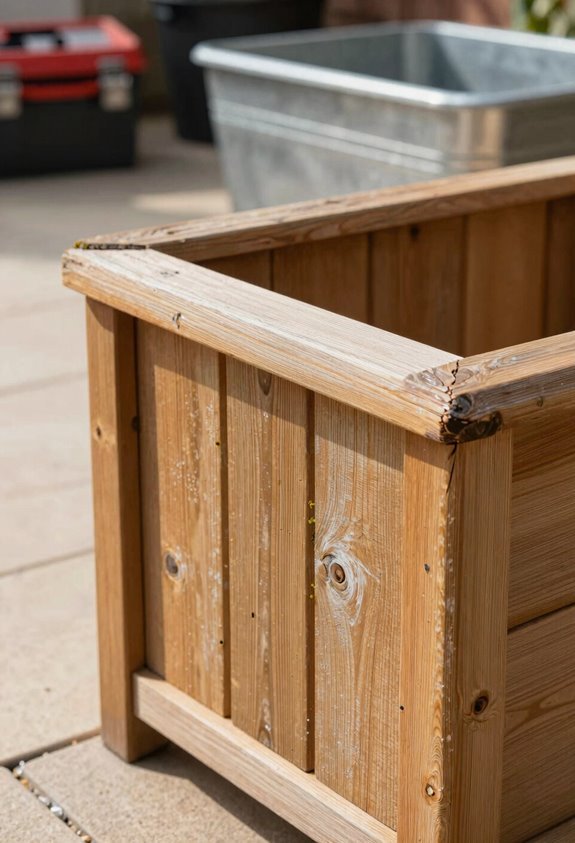
Most cedar beds show clear end-of-life signs after eight to twelve years. I inspect mine for soft corners, crumbling grain, and wobbly joints. These signals guide whether I repair or replace.
When to Repair
I fix isolated rot with wood epoxy and sister boards. I add corner brackets when joints loosen. This extends lifespan two to four years.
When to Replace
I replace when moisture exposure rots bottom boards and multiple panels fail. New cedar beds cost less than repeated patch jobs.
Metal Alternatives
I consider corten steel or aluminum when maintenance drops my priority list. Metal alternatives last 30 to 50 years. They beat cedar durability in wet climates.
My Framework
I weigh repair cost against replacement. I factor annual maintenance time. I pick metal for permanence. I stick with cedar for easier mods and natural insulation.