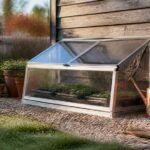

A brief departure from home presents certain challenges for container plants. I’ve tested seven distinct watering methods for various timeframes away. Each solution requires specific materials and delivers measurable results.
Your boxes can survive two days or two weeks with the right setup. The details follow.
Before You Leave: Deep Soak and Shade Your Window Boxes
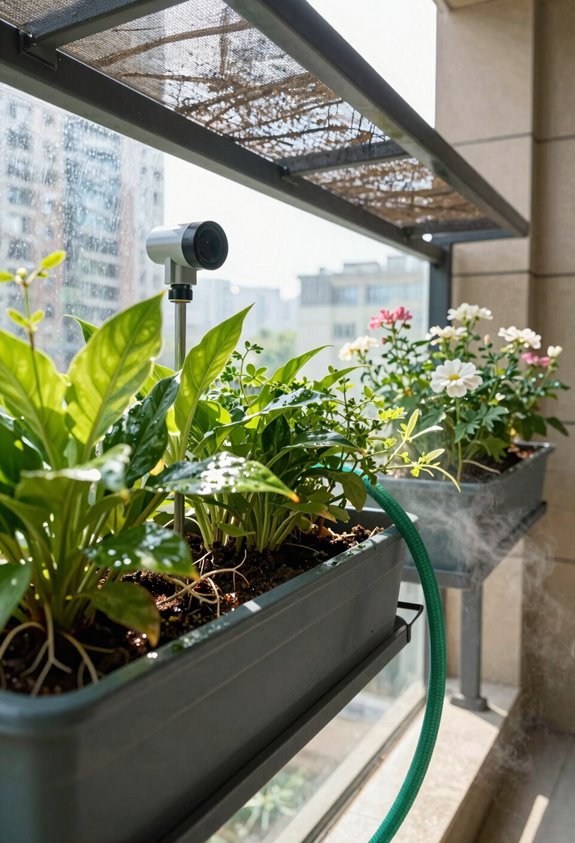
Start with a complete soak. I fill my window boxes until water runs freely from drainage holes. I use the box size to judge soaking time. Larger boxes need more minutes.
I prepare multiple boxes in one session to save effort. I check weather forecasts, and I soak before dry spells and heat waves hit. This timing locks in moisture when plants need it most.
I move my window boxes to shade. This watering strategy cuts evaporation by half. I place them where afternoon sun won’t strike. Drip irrigation isn’t my tool here; simple soaking and shade do the work. My plants stay hydrated while I’m gone.
Water for 2–3 Days: Use Glass Watering Globes
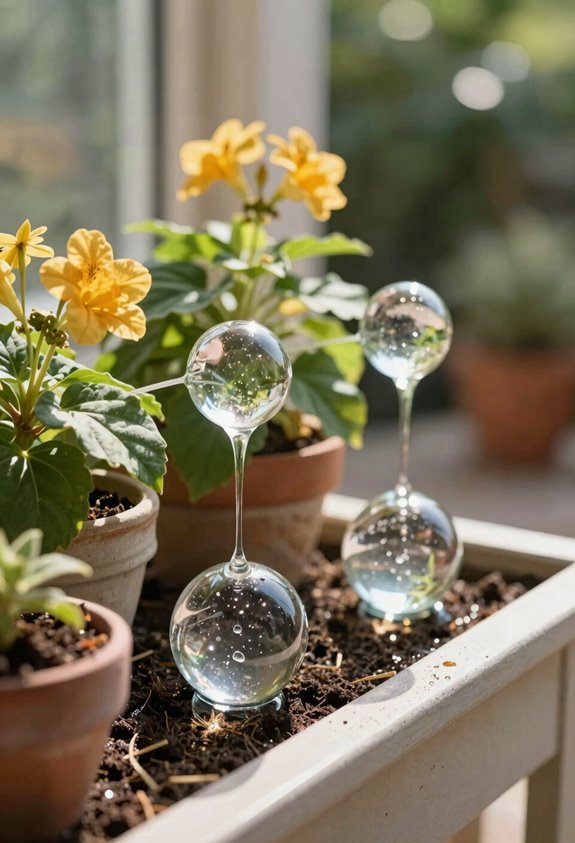
Glass watering globes store water in hollow spheres and release it through slim stems. I fill each globe before pushing its stem into moist soil. The globe acts as simple drip emitters, releasing water as soil dries. This self-watering method covers short trips without complex setup.
Glass watering globes turn simple spheres into patient garden sitters, drip-feeding roots while you’re away.
Choose the right size. Select globes holding 6–12 ounces for standard window boxes. Match capacity to your plants’ thirst.
Fill carefully. Tilt the globe underwater to fill through the stem. Patience prevents air locks.
Insert at an angle. Push stems 2–3 inches deep near roots. Secure placement prevents tipping.
Plan for shade. Move boxes out of direct sun. Reduced evaporation extends globe effectiveness to 2–3 days.
Monitor soil before leaving. Refill if globes empty early.
Water for 5–7 Days: Make Recycled Bottle Spikes
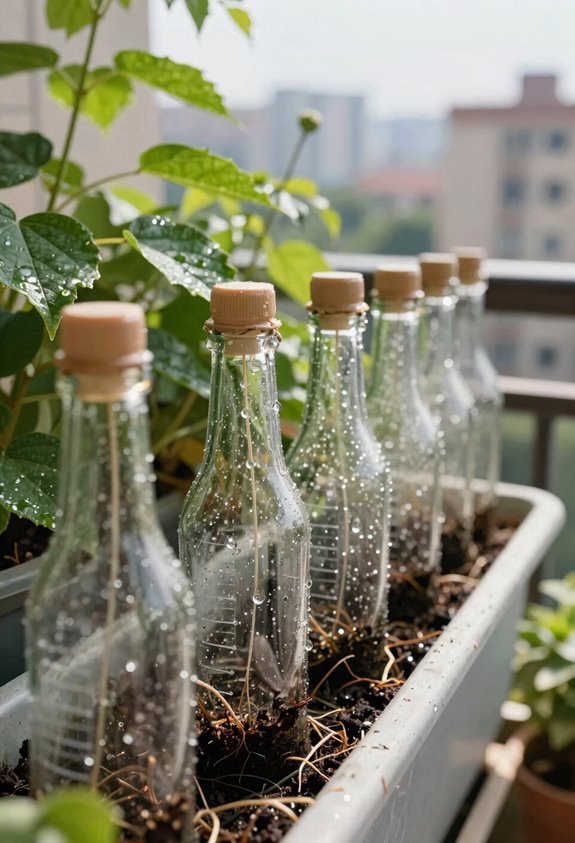
I use a clean 1- or 2-liter bottle with a screw-on spike nozzle for this method. I fill the bottle, screw on the nozzle, and invert it into the soil near my plants.
I adjust the drip rate by tightening or loosening the nozzle, and I space spikes 6-8 inches apart for even coverage.
Preparing Bottle Spikes
How do you keep soil moist without daily attention? I use bottle spikes for a simple self-watering setup.
Gather your bottles.
I grab clean 1- or 2-liter plastic bottles with wide mouths. Wide mouths let me refill fast and check water levels at a glance.
Drill the cap.
I drill one small hole in each bottle cap. This hole holds a nozzle that drips water slow and steady.
Invert and place.
I push the bottle neck-first into moist soil. The water seeps down as dirt dries around it.
Add water.
I fill each bottle full. One 2-liter bottle feeds my window box for five to seven days.
This method costs almost nothing. I reuse old bottles instead of buying gear. It is a practical trick our group of home gardeners shares widely.
Drip Rate Control
What controls how long your bottle lasts? I regulate the drip rate with the nozzle on my inverted bottle spike. A slow drip feeds my window boxes for 5 to 7 days. I adjust the nozzle until I see a steady drop every few seconds.
I check my transparent bottle to monitor water level and estimate refill timing. Multiple bottles placed at even spacing keep moisture balanced across all my window boxes.
Key Details
I use 2-liter bottles with wide mouths for easy filling. Each spike costs very little. I watch for top-heavy wobble in narrow window boxes. Visual bulk matters less to me than function.
I place bottles carefully to prevent tipping. Slow drip rate equals reliable coverage.
Placement Strategy
Several bottle spikes spaced evenly across each window box prevent dry spots and tipping. I space mine every 8-10 inches for even drip irrigation coverage. This self-watering setup keeps soil moist without your daily attention.
Choose bottle size
Use 1-2 liter bottles. Larger bottles hold more water but tip easier.
Position near roots
Push spikes 4-6 inches deep. Place them between plants, not directly on stems.
Check water levels
Transparent bottles show remaining water. Refill when half empty for consistent flow.
Stabilize top-heavy bottles
Bury spikes deeper in long boxes. Lean them against the box edge for support.
This method waters the top soil layer. Deep roots get less moisture. Pair with occasional deep watering before you leave for best results.
Water Multiple Boxes: Install a Simple Drip Line System
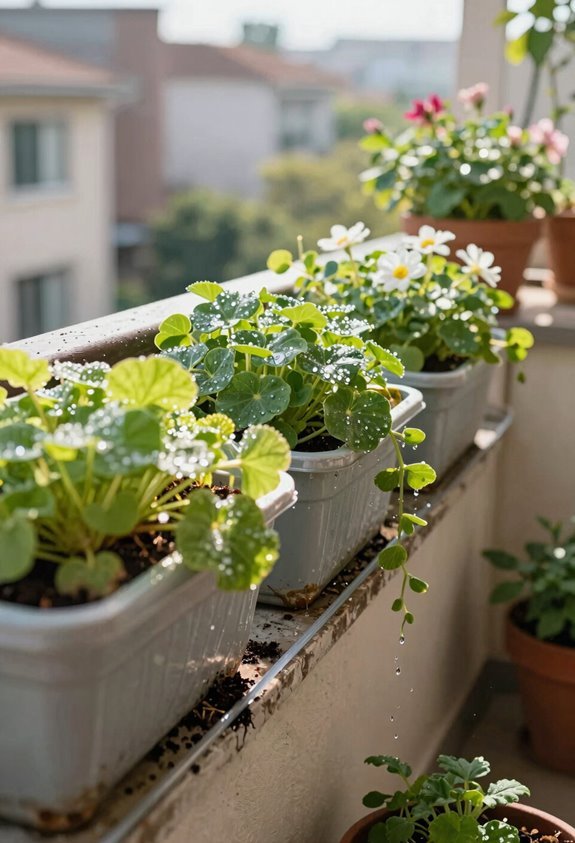
A drip line system lets me water several window boxes at once with minimal setup. I connect a mainline tube to my faucet and run ¼ inch micro tubing up through drainage holes in each box. I space emitters every 3–4 inches for even moisture distribution.
I use tee fittings to split the mainline and end caps at outlets to manage multiple watering points. I secure tubing along brackets or eaves to keep it discreet. This irrigation setup lets me adjust emission rates for weather and plant growth. I reduce manual watering during extended absences with this reliable drip system.
Water From Below: Add Self-Watering Reservoirs
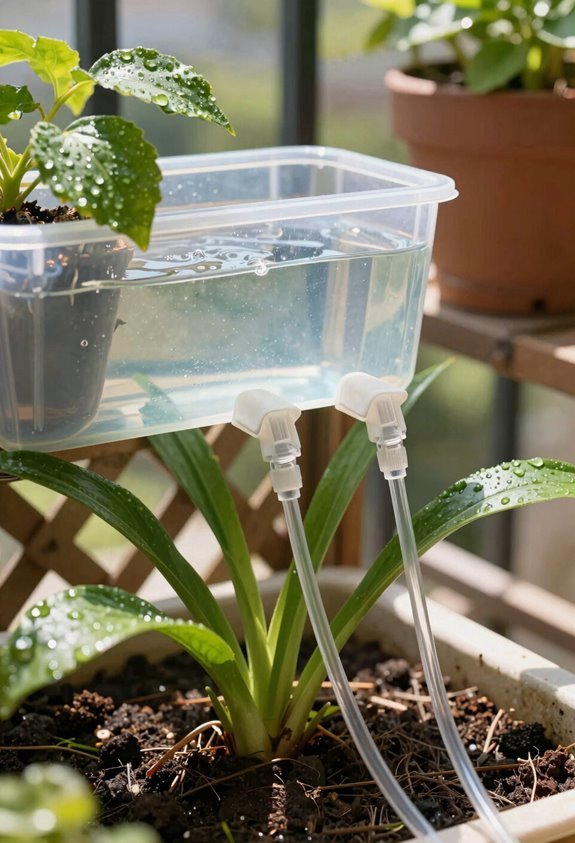
I place reservoirs beneath soil or inside double-walled boxes to create a passive water supply that lasts 7-10 days. A 2-4 gallon reservoir suits standard 24-36 inch boxes and feeds roots through capillary wicks or bottom perforations.
This setup forces roots downward for stronger plants and cuts my watering to once weekly.
Reservoir Placement Options
Self-watering reservoirs sit beneath your window box soil. I place mine at the bottom to encourage deep root growth and steady moisture while I’m gone. Reservoir placement matters for freestanding boxes and planter setups alike. You’ll join countless gardeners who’ve solved their vacation watering worries this way.
Integrated Base Systems
*Manufacturer: Lechuza, Bloem*
These self-watering units snap into the box bottom. I fill the chamber through a side tube. Roots draw water up through a wick or soil contact.
Drop-In Reservoir Trays
*Manufacturer: Window Garden, Gardener’s Supply*
I slide these plastic trays under existing boxes. The tray holds 1-2 gallons. Water soaks upward through drainage holes.
False Bottom Conversions
*DIY with pond liner and egg crate*
I build a 3-4 inch water chamber. A fill pipe extends to the box edge.
External Bladder Systems
*Manufacturer: AquaPots, Olla*
I bury these beside the box. They connect to a hidden reservoir below.
Water Capacity Limits
How much water does your trip require? I match reservoir size to my window box dimensions for reliable coverage. A standard 24-inch box pairs with a 2-gallon reservoir. Larger boxes need proportionally more water capacity.
Reservoir Management
I check my hidden reservoirs weekly. Limited visibility means I lift the box or use a dipstick to gauge levels. I mark my calendar for refills.
Winter Storage
I pause water input before frost. This lets plants go dormant without rot risk. Empty reservoirs prevent freeze damage.
Trip Planning
I calculate one gallon per square foot of soil for week-long absences. I size up if I’m away longer. Proper water capacity removes guesswork from my reservoir management routine.
Root Health Benefits
Why fight gravity when roots can drink from below? I use a self-watering reservoir to keep my plants healthy while I’m gone.
Deep Root Growth
Capillary action pulls water upward. Roots stretch downward seeking moisture. Stronger plants result from below-soil hydration.
Reduced Watering Frequency
I fill the reservoir once or twice weekly. The system handles extended absences. Less work, consistent results.
Freestanding Box Solution
Surface watering misses elevated planters. The reservoir delivers water directly. Every root zone gets coverage.
Proper Sizing Required
Match reservoir capacity to box dimensions. Too small causes dry spells. Too large risks root rot.
I check water levels through access ports. The reservoir stays hidden after planting. My window boxes stay green without daily attention.
Long-Term Absences: Build Soda Bottle Slow-Release Systems
Turn empty plastic soda bottles into slow-release watering tools for absences lasting one to two weeks. I cut the bottom off each bottle, remove labels for clean looks, and keep the cap on. I drill four to six holes in the lid to control the drip rate. I bury each bottle upside down in the soil, leaving the cut end exposed for easy refilling. I space bottles at both ends and the middle of my window box to cover all plants evenly.
| Component | Purpose |
|---|---|
| Cut bottle bottom | Creates refill opening |
| Drilled cap holes | Regulates water flow |
| Inverted placement | Enables gravity-fed release |
| Multiple bottles | Extends coverage period |
This self-watering setup mimics simple drip irrigation without complex parts. I adjust bottle count based on plant size, weather, and soil dryness. I refill before leaving to maintain steady moisture throughout my trip.
Permanent Solution: Install Professional Drip Irrigation
A permanent drip system solves my watering needs year-round with buried tubing and emitters that feed each window box automatically. I commission a professional drip irrigation setup to automate my watering system completely.
1. Hands-Free Operation
Installers connect buried tubing to my main supply line. I schedule deliveries and walk away. The system runs without my presence.
2. Customized Drip Rates
I adjust emitters for weather changes and plant growth. Each window box receives optimal moisture levels tailored to its contents.
3. Professional Monitoring
The installer checks initial delivery accuracy. I verify each box receives correct water volume before full activation.
4. Fixed Layout Requirement
I plan container placement carefully. Moving boxes later requires reworking buried piping and emitter positions.
My upfront investment eliminates daily labor. The watering system delivers reliability I cannot match manually.