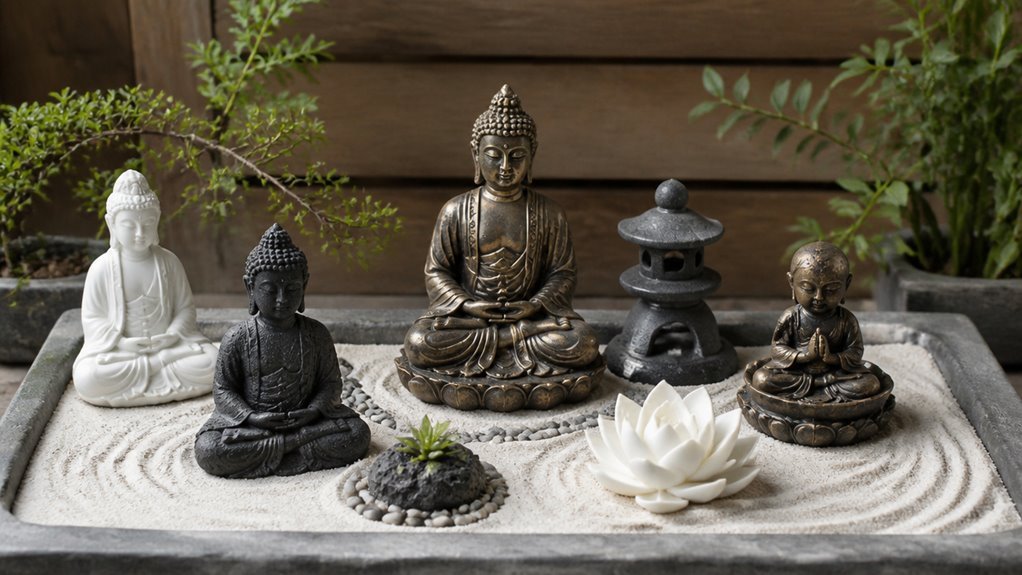
You don’t need a large yard to build a meaningful Zen garden. I place a 24-inch meditating Buddha at eye level on a 12-inch stone pedestal as my focal point. A reclining Buddha fits a nightstand for sleep spaces. Standing Buddhas work at entries.
What Pose Should Your Buddha Take?
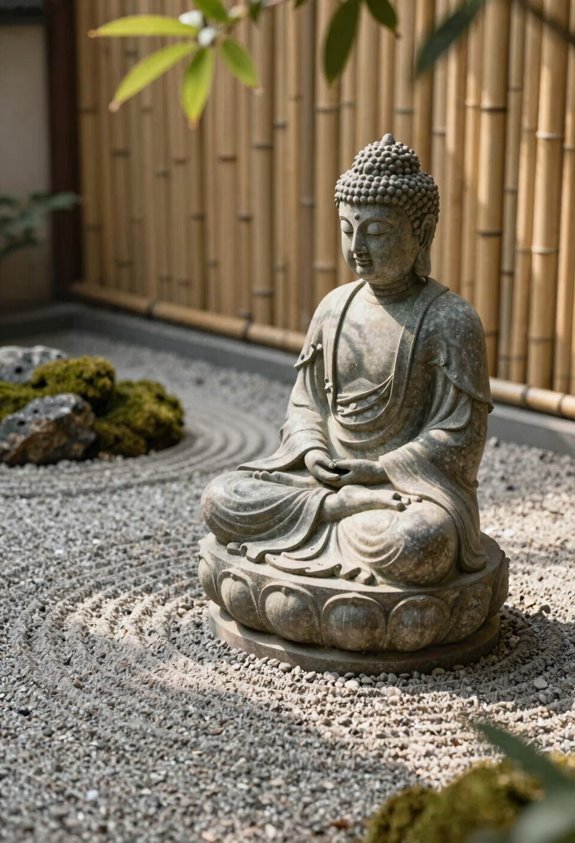
I choose the Meditating Buddha for my garden’s center. This pose works best for my zen garden. The seated figure with crossed legs creates calm. I place this little Buddha statue at eye level. It becomes the clear focal point of my meditation space.
Reclining Buddha
Bedroom placement. I set this on my nightstand for peaceful sleep.
Standing Buddha
Entryway welcome. I position this figure with raised palm near my front door.
Teaching Buddha
Workspace reminder. I use this seated pose in my home office.
I elevate each statue on a simple altar or shelf. I keep the area uncluttered. The Buddha remains central to the space. My meditation space stays balanced and purposeful.
Size Your Statue to Fit Your Space
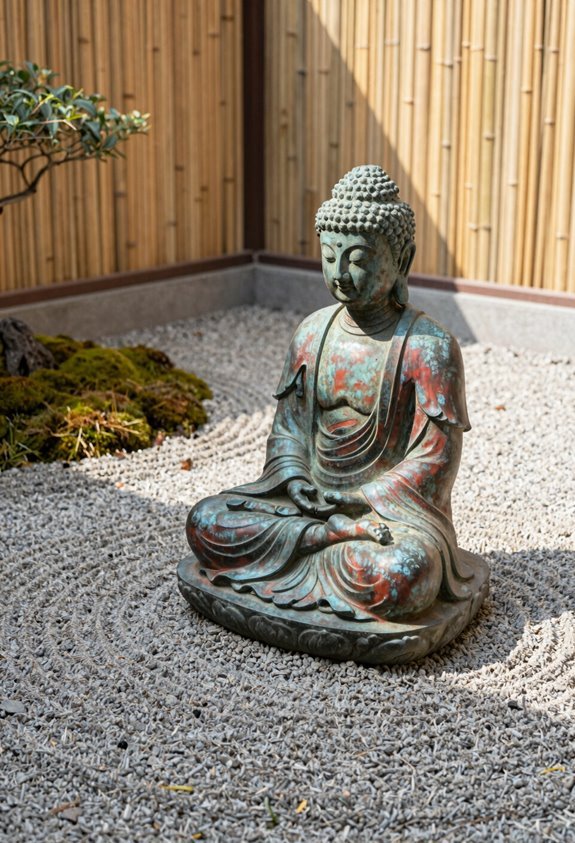
I measure my space before I pick any statue. Small statues fit desks or shelves, while medium to large pieces work on mantels or in focal corners. I leave six to twelve inches of clearance around each piece to keep the space open and balanced.
Scale for Impact
How do you pick a statue that feels right? I match Buddha statue size to the scale of my meditation space. I aim for presence that commands attention without crowding.
Mantels and Shelves
Select statues 12–18 inches tall. This maintains proportion with furniture and avoids overwhelming the area.
Tight Corners
Choose 6–10 inch statues. This preserves breathing room and maintains visual calm in intimate nooks.
Room Height
In 8–9 foot ceilings, use 18–24 inch statues. Ceilings over 10 feet allow 24–36 inches for commanding presence.
Scale Cues
Match the statue’s base width to its furniture. Keep base same or smaller than the shelf width. This maintains harmonious visual rhythm.
Proportion for Harmony
After finding the right scale, I’m sizing the statue to its actual placement spot.
Place Small Statues Above Ground Level
A small Buddha statue belongs on a mantel or shelf. This prevents crowding. Keep the piece visible without blocking paths.
Clear the Perimeter for Floor Pieces
A larger statue needs 2-3 feet of clearance on all sides. This preserves open sightlines. You walk around it without obstruction.
Match Surrounding Objects
Pair medium Buddha statues with same-scale furniture and plants. This keeps proportion intact. Nothing dominates or shrinks.
Position at Eye Level
Set seated Buddha statues at eye-level placement when you sit on your meditation cushion. This creates direct connection. The gaze rests naturally.
Layer Heights for Depth
Combine a taller statue with shorter garden decor ideas like candles and bowls. This builds tiers. Your eye moves smoothly through space.
Measure Your Room
Compact rooms need 12-18 inch statues with clean surroundings. Expansive rooms handle 24-36 inch centerpieces. Size matches impact.
Place Your Statue Where You’ll Actually See It
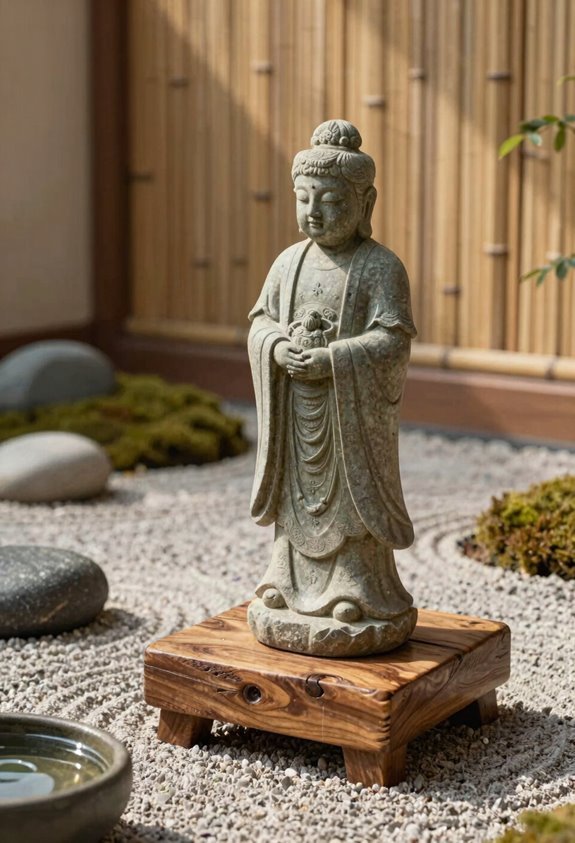
You’ll miss the benefits if your statue hides in a corner. I place my Buddha statue where my eyes naturally land. Visibility matters for daily practice.
Elevated Surface
Place the statue on a shelf or mantel. Keep it at eye level from your seating area. This makes constant visual contact during meditation possible.
Meditation Corner
Position the statue in a dedicated meditation corner. Create a focal point that invites calm. This anchors your regular practice.
Avoid the Floor
Set the statue on a table, cabinet, or stand. Make certain it stays in view when you enter. Floor placement reduces visual impact.
Light and Space
Place near natural light or a soft lamp. Keep the surrounding area tidy and uncluttered. The statue remains your primary visual anchor.
Build a Simple Altar Around Your Garden Buddha
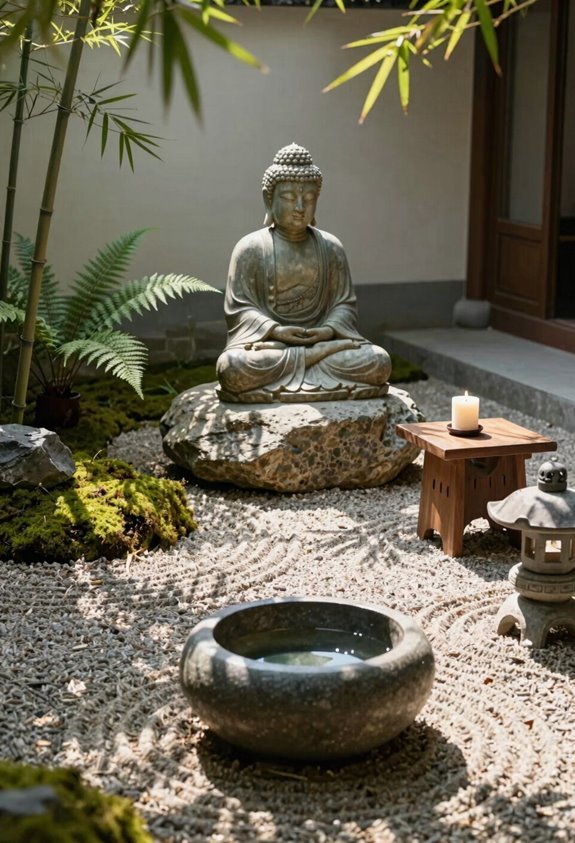
I place the Buddha at eye level on a raised surface like a 12-inch shelf or small altar table. I surround the statue with candles, fresh flowers, or meaningful stones to build a focal point. I keep the surface clean, face the display east, and use wood or ceramic that matches my garden rocks and gravel.
Choosing Your Buddha Statue
Build a simple garden altar around your Buddha statue. I place mine at or above eye level on a pedestal or shelf to create a clear focal point in my meditation space. I choose weather-resistant materials like stone, brass, bronze, or resin that match my garden style and local climate. Wood and glass work too, but I check durability first.
I keep the area tidy with minimal decor like candles or small stones. When I use multiple statues, I make sure the Buddha stays central or highest to maintain respectful focus.
, Pick the right height. Place your statue at or above eye level on a solid surface.
, Select durable materials. Use stone, metal, or resin for outdoor longevity.
, Keep it clean. Avoid clutter around your garden altar to preserve calm.
, Respect the center. Position the Buddha as the highest or central piece.
Arranging Natural Elements
A solid pedestal sets the foundation for your garden altar. Place your buddha at eye level on a clean surface. This invites focus during meditation.
Add stone elements around the base. Use smooth river stones, moss, and a shallow pebble bed. These materials ground your space in earthiness.
Install a water feature nearby. Choose a gentle fountain or small koi pond. The subtle sound supports mindful breathing.
Surround your setup with bamboo, ferns, or low shrubs. Add natural timber accents for cohesion.
Keep the area clutter-free. Label it as your meditation altar. Light candles or place simple flowers to honor the buddha. This creates a serene retreat born from the natural world.
Creating Sacred Space
Where do you center your focus during meditation? I build sacred space around a small Buddha statue to anchor my zen practice.
Choose Your Base
I select a pedestal or shelf at eye level. This places the altar in my garden space.
Add Meaningful Items
I surround my small Buddha statue with candles, crystals, and keepsakes. These objects mark the area as dedicated.
Pick Right Materials
I use stone, wood, or bronze. I keep the display clean and uncluttered.
Place With Purpose
I position the altar away from splashes and heat. I face the statue toward my meditation spot.
- Moss adds quiet life to the base
- Bamboo brings vertical calm
- A water bowl holds stillness
- Soft light sustains long sits
I include symbolic plants to complete the scene.
Choose Stone, Wood, or Ceramic for Your Climate
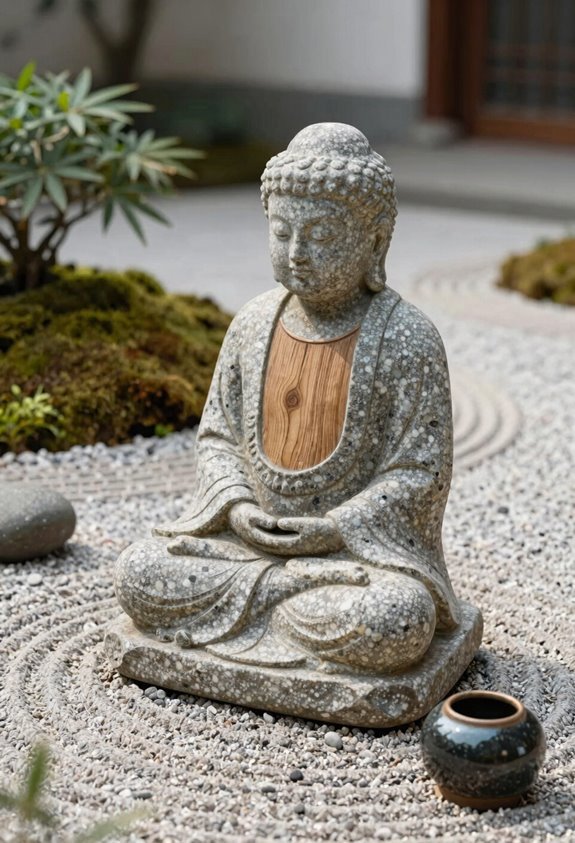
Why let weather ruin your Zen garden centerpiece? I pick stone for wet climates because granite and limestone endure rain and frost without cracking. Stone Buddhas weigh 40 to 80 pounds. I anchor them on concrete pads for stability.
I choose wood for dry mild regions. Cedar and teak resist moisture damage and bring warmth to plant-heavy spaces. I seal wooden Buddhas yearly with outdoor polyurethane.
I select ceramic for sheltered spots in moderate zones. Frost cracks glazed surfaces so I place ceramic under eaves or pergolas.
I avoid resin in intense sun. UV rays degrade it within two seasons.
I match my material to my climate. This protects my investment and keeps my meditation space grounded. My statue stays intact. My practice stays focused.
Layer Soft Natural Accents Around Hard Materials
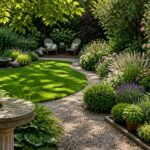
I soften my stone Buddha with moss and ferns. I balance hard textures with living elements around my mediation space.
Pair moss with stone features. I press sheet moss around my statue base. I keep it damp in shade.
Add bamboo screens. I place clumping bamboo three feet from gravel paths. I soften angular lines.
Build plant corridors. I line stone steps with drought-tolerant ground cover. I force slow walking.
Mix driftwood and sand. I weather gray driftwood beside matte Buddhas. I show time passing.
I prune small trees near seating nooks. I pause there. I let soft textures contrast hard materials. I maintain clean lines. I guide movement toward focal points. I create belonging through deliberate balance.
Light Your Buddha for Evening Contemplation
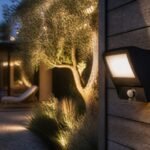
As daylight leaves my garden, I shift focus to how my statue holds space after dark. Proper outdoor lighting transforms your Buddha statue into a focal point for evening contemplation.
Use warm, dimmable LEDs at or slightly below eye level. Choose shaded lanterns with amber or candle-like hues. Avoid cool white tones. Position lights for backlighting or side-lighting to emphasize the statue’s features and surrounding textures like moss or gravel.
Select weather-resistant, outdoor-rated fixtures rated IP65 or higher. Install lights 2-4 feet from the statue base. This ambient lighting creates gentle, non-direct glow without glare. Your meditation space remains usable after sunset. The soft illumination preserves a calm, contemplative atmosphere for nightly practice.