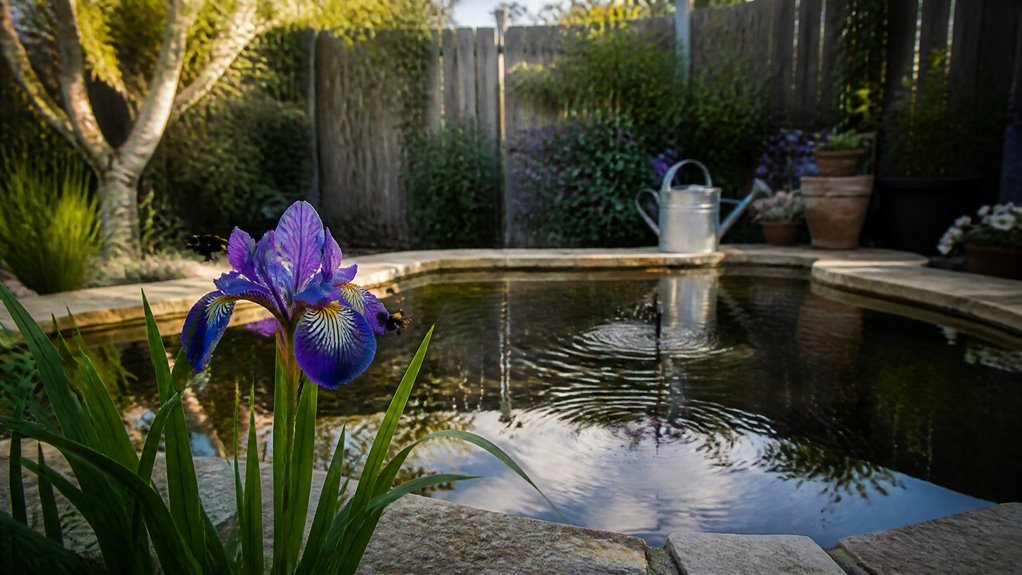
A pond can whisper or shout, and the irises you choose decide which. I’ve spent seasons watching these beauties transform murky edges into living tapestries, and I’m still surprised by how much drama fits into a small space.
But not every iris belongs at the water’s edge. Some demand deep soaking, others sulk in soggy soil, and a few will overrun your pond before July.
So which varieties strike that perfect balance: compact enough for tight margins, tough enough for wet feet, and striking enough to stop a visitor mid-step? The ten I’ve gathered for 2026 each solve a specific problem, from the midnight allure of ‘Black Gamecock’ to the variegated foliage of Japanese water iris that shines even when blooms fade. Some filter water, others handle koi nibbling with grace. A few top out at twelve inches, perfect for container ponds on balconies.
Let’s look at what actually works.
| Iris ‘Black Gamecock’ Aquatic Pond Plant | Best Dark Blooms | Iris Type/Variety: ‘Black Gamecock’ Louisiana Iris | Flower Color: Deep purple/velvety black | Plant Form: Rhizome/bareroot plant | VIEW LATEST PRICE | Read My Analysis | |
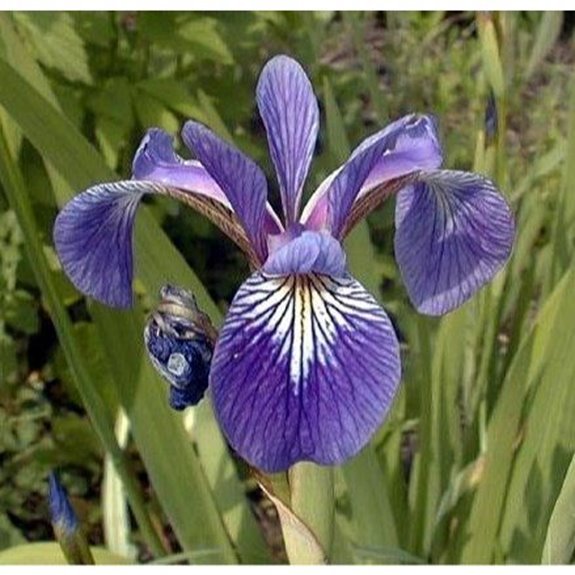
| Iris versicolor Blue Flag Iris Perennial | Best Cold Hardy | Iris Type/Variety: Iris versicolor (Northern Blue Flag) | Flower Color: Blue | Plant Form: #1 container rooted plant | VIEW LATEST PRICE | Read My Analysis | |
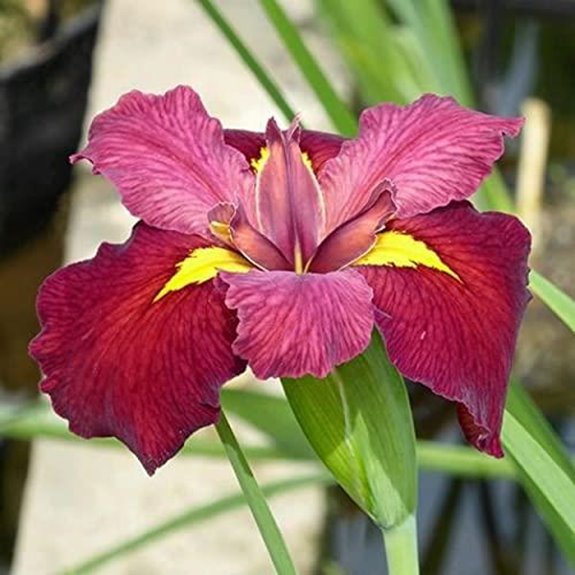
| Iris ‘Ann Chowning’ Marginal Aquatic Pond Plant | Boldest Red Choice | Iris Type/Variety: ‘Ann Chowning’ Louisiana Iris | Flower Color: Royal red/cherry red with yellow | Plant Form: Rhizome/bareroot plant | VIEW LATEST PRICE | Read My Analysis | |
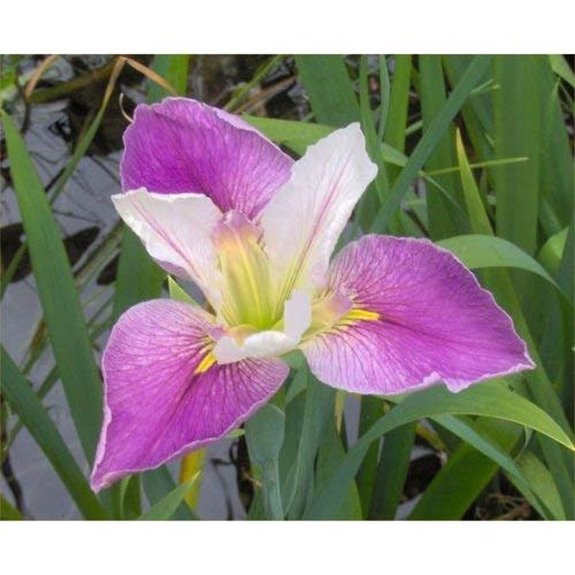
| Louisiana Iris Marginal Pond Plant – White/Purple | Best Bicolor Show | Iris Type/Variety: ‘Colorific’ Louisiana Iris (White/Purple) | Flower Color: White and purple | Plant Form: 2-pot arrangement pre-grown plant | VIEW LATEST PRICE | Read My Analysis | |
| Harlequin Blue Flag Iris 10Seed-Iris versicolor-Aquatic | Best For Seeds | Iris Type/Variety: Iris versicolor (Harlequin Blue Flag) | Flower Color: Blue (seed-grown) | Plant Form: Seeds (10 count) | VIEW LATEST PRICE | Read My Analysis | |
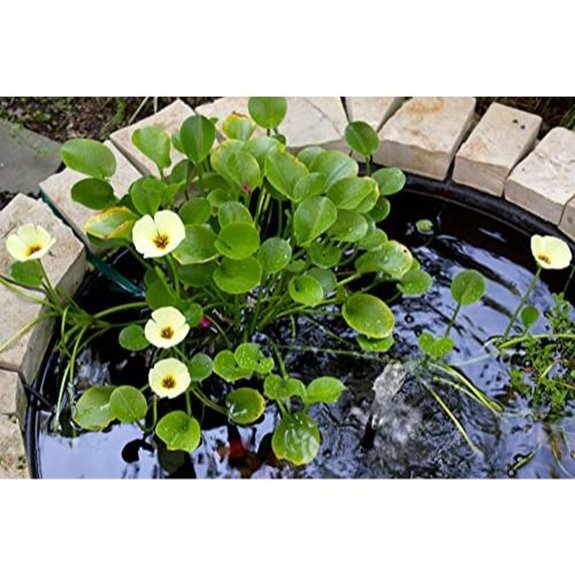
| Golden Water Poppies (Hydrocleys Nymphoides) – Easy Live Pond Plants | Best Floating Option | Iris Type/Variety: Hydrocleys nymphoides (Golden Water Poppy) | Flower Color: Golden yellow | Plant Form: Bareroot plant | VIEW LATEST PRICE | Read My Analysis | |
| Japanese Variegated Iris Live Pond Plant 3 Pack | Best Multi-Pack Value | Iris Type/Variety: Japanese Variegated Iris | Flower Color: Purple | Plant Form: Potted plant (3 pack) | VIEW LATEST PRICE | Read My Analysis | |
| RedCrocus Variegated Japanese Water Iris (Pack of 2) | Best Variegated Foliage | Iris Type/Variety: Iris ensata ‘Variegata’ | Flower Color: Lavender-blue | Plant Form: Container plant (pack of 2) | VIEW LATEST PRICE | Read My Analysis | |
| RedCrocus Variegated Japanese Water Iris (Pack of 2) | Best 1-Gallon Size | Iris Type/Variety: Iris ensata ‘Variegata’ | Flower Color: Lavender-blue | Plant Form: 1 gallon container plant | VIEW LATEST PRICE | Read My Analysis | |
| Iris ‘Moonlight Waves’ Dwarf Crested Perennial #1 Container | Best Dwarf Height | Iris Type/Variety: Iris cristata ‘Moonlight Waves’ | Flower Color: White with lime-green centers | Plant Form: #1 container rooted plant | VIEW LATEST PRICE | Read My Analysis |


More Details on Our Top Picks
Iris ‘Black Gamecock’ Aquatic Pond Plant
Who else craves drama in their pond?
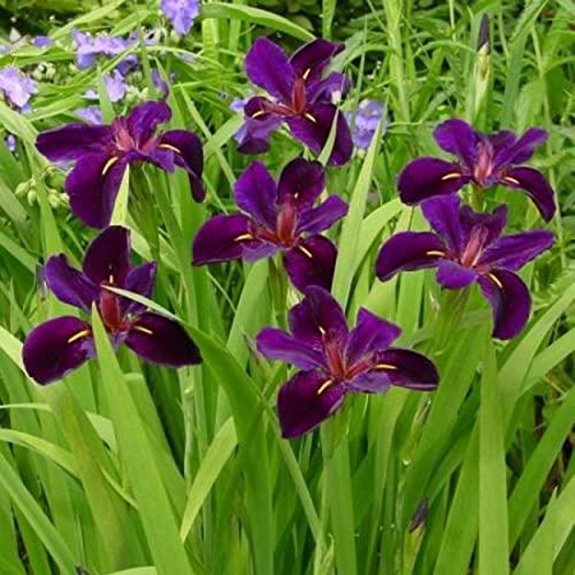
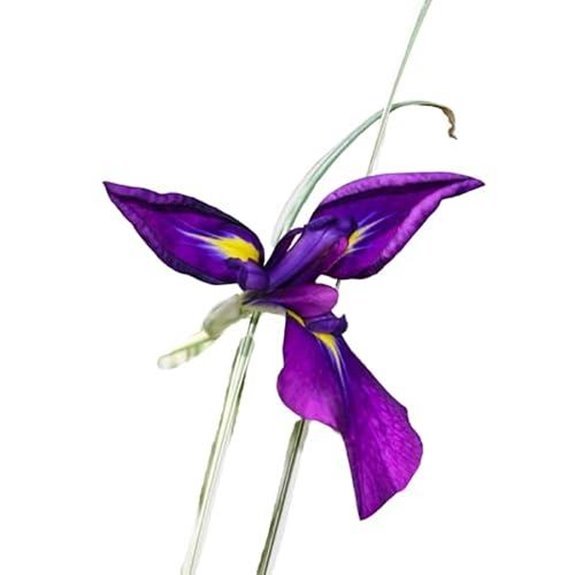
I found my answer in Iris ‘Black Gamecock’. This aquatic pond plant delivers theatrical, velvety deep purple blooms that read nearly black against sword-like foliage.
It’s a marginal variety, meaning you’ll plant it in that shallow shelf area where water meets land, or right in boggy soil at pond’s edge.
Here’s why I’m recommending it for any pond size:
- Natural filtration power, clarifying water while it grows
- Winter hardy charm that returns yearly with zero fuss
- Prime real estate for koi, goldfish, and visiting wildlife
Chalily cultivates these specifically for water gardens, and they’re forgiving if you’re still learning. I anchor roots with gravel or heavy soil, keep moisture consistent, and step back. The plant handles the rest.
Fish get shelter. You get that moody, naturalized aesthetic. Everyone wins.
- Iris Type/Variety:‘Black Gamecock’ Louisiana Iris
- Flower Color:Deep purple/velvety black
- Plant Form:Rhizome/bareroot plant
- Water Depth/Placement:Marginal; bog/plant shelf/shallow water
- Hardiness Zone:Winter hardy (zones unspecified)
- Wildlife/Ecosystem Benefit:Natural filter; fish/wildlife habitat
- Additional Feature:Velvety deep purple
- Additional Feature:Naturalized sword foliage
- Additional Feature:Black-thumb friendly
Iris versicolor Blue Flag Iris Perennial
Looking for a tough, elegant Iris that’ll survive brutal winters? I’ve got you covered with Iris versicolor, the Northern Blue Flag Iris. This perennial powerhouse laughs at zone 3 cold snaps and keeps coming back stronger.
Here’s what makes it special:
- Reaches 2-3 feet tall with a 20-24 inch spread, perfect for mid-pond borders
- Striking blue blooms that’ll stop you mid-step on morning coffee walks
- Ships fully rooted in a #1 container from Green Promis Farms, ready to plant immediately
I love how versatile this native beauty is. While it’ll thrive in consistently moist soil at your pond’s edge, it’s surprisingly adaptable once established.
And that blue? It’s the kind of saturated, true blue that photographs beautifully but looks even better in person.
Plant it in full sun to partial shade, keep the roots happy with steady moisture, and watch it multiply into impressive clumps over seasons. No fuss, no muss, just reliable perennial performance with serious cold-hardy credentials.
- Iris Type/Variety:Iris versicolor (Northern Blue Flag)
- Flower Color:Blue
- Plant Form:#1 container rooted plant
- Water Depth/Placement:Moist to wet; pond edges
- Hardiness Zone:USDA 3-8
- Wildlife/Ecosystem Benefit:Not specified
- Additional Feature:Fully rooted container
- Additional Feature:Immediate planting ready
- Additional Feature:24-36 inch height
Iris ‘Ann Chowning’ Marginal Aquatic Pond Plant
Want a water garden that stops visitors mid-step? I’m planting Iris ‘Ann Chowning’ to make that happen, and you should too.
This marginal aquatic delivers royal red blossoms, that stunning velvet color with cherry red petals and a contrasting yellow streak. Flowers hit six inches across. Think about that, half a foot of saturated crimson hovering above your pond.
Here’s why it works for small ponds:
- Sits happily on plant shelves, in bogs, or shallow water, and koi won’t demolish it
- Sword-like foliage softens edges, giving that naturalized look we all pretend happened accidentally
- Winter hardy and genuinely forgiving, I call it black-thumb friendly for a reason
The practical stuff matters too. Roots want securing with gravel or soil, and it’ll soak up all the moisture you throw at it. But here’s the bonus: it filters water naturally, improving clarity while fish lounge underneath.
Chalily grows and ships these with a 100% quality guarantee. No root rot surprises, no sad brown sticks in the mail.
Pop one on your marginal shelf. Watch the color do its thing. Simple as that.
- Iris Type/Variety:‘Ann Chowning’ Louisiana Iris
- Flower Color:Royal red/cherry red with yellow
- Plant Form:Rhizome/bareroot plant
- Water Depth/Placement:Marginal; bog/plant shelf/shallow water
- Hardiness Zone:Winter hardy (zones unspecified)
- Wildlife/Ecosystem Benefit:Natural filter; fish/wildlife habitat
- Additional Feature:Cherry red yellow streak
- Additional Feature:6-inch flower size
- Additional Feature:Skilled aquatic experts
Louisiana Iris Marginal Pond Plant – White/Purple
This bicolored beauty is the showstopper I recommend for pond keepers craving visual drama without fuss.
I’ve seen countless irises, and AquaLeaf Aquatics’ Colorific White and Purple Louisiana Iris strikes that perfect balance, being bold yet manageable. You get two pre-grown plants ready for transplant, which means no waiting around for finicky germination.
Here’s what makes this marginal plant worth your consideration:
- Zero-worry arrival, guaranteed alive and healthy with a digitally controlled nursery keeping disease, pests, snails, and algae at bay
- Natural bio-filter action that pulls double duty, enhancing water quality while producing oxygen and absorbing carbon dioxide
- Compact 2-pot arrangement that slips easily into larger containers as your pond setup demands
The care instructions are printed right on the product description, so you won’t be scrambling. Transplant, monitor growth, maintain your water conditions, and you’re golden.
And that white-purple contrast? It photographs brilliantly against dark water.
- Iris Type/Variety:‘Colorific’ Louisiana Iris (White/Purple)
- Flower Color:White and purple
- Plant Form:2-pot arrangement pre-grown plant
- Water Depth/Placement:Marginal pond plant; bog conditions
- Hardiness Zone:Not specified
- Wildlife/Ecosystem Benefit:Natural bio-filter; oxygen production
- Additional Feature:Digital controlled nursery
- Additional Feature:Disease pest free
- Additional Feature:2-pot arrangement included
Harlequin Blue Flag Iris 10Seed-Iris versicolor-Aquatic
Why start with established rhizomes when you’re the patient type who finds joy in cultivation from the very beginning? I get it. There’s something deeply satisfying about coaxing life from a tiny seed, watching those first green spears pierce the soil.
Hirts Gardens packs ten Iris versicolor seeds in this aquatic variant, and I’ll walk you through why these reward the devoted:
- True water garden performers, thriving with crowns submerged or in saturated margins
- Hardy North American natives, meaning less fuss once established
- Those unmistakable harlequin blue-purple blooms with dramatic veining
Here’s my seed-starting protocol:
- Cold-stratify for 60 days (moist vermiculite in your fridge)
- Surface-sow; they need light
- Keep trays consistently damp, never waterlogged
- Transplant pond-side after frost danger passes
Patience pays. You’re looking at 2-3 years to flowering. But when that first bloom opens above the waterline? Worth every calendar flip.
The foliage alone earns its keep, those sword-like leaves arching elegantly at the pond’s edge.
Small pond perfection, grown entirely from scratch.
- Iris Type/Variety:Iris versicolor (Harlequin Blue Flag)
- Flower Color:Blue (seed-grown)
- Plant Form:Seeds (10 count)
- Water Depth/Placement:Aquatic/wetland environment
- Hardiness Zone:Not specified
- Wildlife/Ecosystem Benefit:Wetland/aquatic habitat
- Additional Feature:10 seed package
- Additional Feature:Wetland aquatic species
- Additional Feature:Garden patio landscaping
Golden Water Poppies (Hydrocleys Nymphoides) – Easy Live Pond Plants
Looking for a pond plant that basically takes care of itself?
I want to tell you about Golden Water Poppies from AquaLeaf Aquatics. These pesticide-free beauties, with their golden-yellow blooms and green foliage, are the low-maintenance heroes your small pond deserves.
Here’s why I’m partial to them:
- Versatile planting – tuck into aquatic soil or let them float freely
- Natural filtration – they work as biofilters, clearing your water without chemicals
- Ready to multiply – these are established plants that reproduce readily
A few practical notes from one pond keeper to another:
- Plant in aquatic soil for the lushest growth, though floating works fine
- Skip ordering when daytime highs top 100F or lows dip below 20F
- Watch for strong cold winds, which can batter the foliage
The bareroot single plant comes ready to establish. Since we’re discussing irises in this article, I’ll mention that water poppies play beautifully alongside them, filling different niches in your pond’s ecosystem.
And really, who doesn’t appreciate a plant that filters while it flowers?
- Iris Type/Variety:Hydrocleys nymphoides (Golden Water Poppy)
- Flower Color:Golden yellow
- Plant Form:Bareroot plant
- Water Depth/Placement:Floating or planted in aquatic soil
- Hardiness Zone:Temperature-sensitive; avoid extremes
- Wildlife/Ecosystem Benefit:Natural bio-filter; clears water
- Additional Feature:Bareroot delivery
- Additional Feature:Temperature ordering restrictions
- Additional Feature:Pesticide free grown
Japanese Variegated Iris Live Pond Plant 3 Pack
Shore Aquatic’s Japanese Variegated Iris comes in a 3-pack that’ll stretch your dollar further than single-plant alternatives.
I’ve found this marginal aquatic plant fits nearly anywhere: bogs, plant shelves, or shallow water edges.
Here’s what makes it worth your attention:
- Natural filtration: Keeps water clean and healthy without mechanical gadgets
- Visual impact: Variegated leaves plus purple blooms create real focal points
- Beginner-friendly: Hardy enough that you’ll look like you know what you’re doing
And the color combo? Green foliage, purple flowers. Simple, elegant, not trying too hard.
Placement is forgiving. Tuck it in a boggy corner, perch it on a shelf, or let it wade in shallow water. This Iris adapts.
Maintenance? Minimal. Water it when you remember, divide it when it crowds. That’s really it.
For small ponds specifically, three plants hit a sweet spot. Enough coverage for filtration benefits, enough presence for visual interest, not so much that you’re battling a jungle by July.
At roughly 12-18 inches tall, it won’t block your view of the water either. Practical beauty, packaged smart.
- Iris Type/Variety:Japanese Variegated Iris
- Flower Color:Purple
- Plant Form:Potted plant (3 pack)
- Water Depth/Placement:Bogs/plant shelves/shallow water
- Hardiness Zone:Not specified
- Wildlife/Ecosystem Benefit:Natural filtration; clean aquatic environment
- Additional Feature:3 pack option
- Additional Feature:Minimal maintenance required
- Additional Feature:Variegated leaf color
RedCrocus Variegated Japanese Water Iris (Pack of 2)
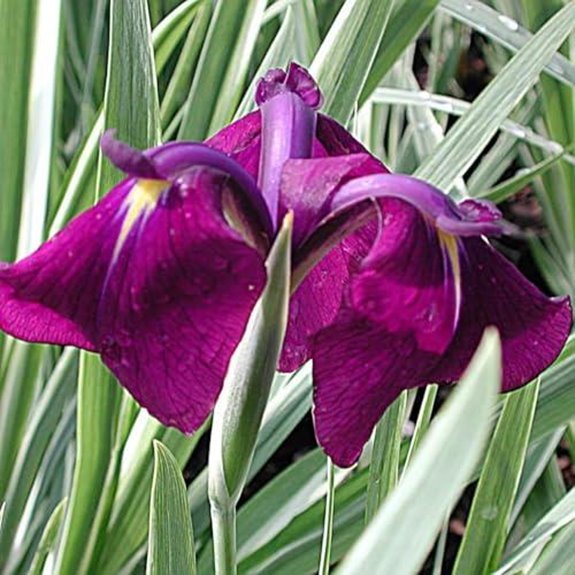
This variegated Japanese water Iris delivers exactly what I’m after when I want foliage that works as hard as the flowers. The green-white striped leaves keep performing long after those lavender-blue blooms finish their late spring show.
Iris ensata ‘Variegata’ hits that sweet spot for small pond edges, topping out at 24-36 inches with an 18-24 inch spread. It’s not shy about moisture, either. Full sun to partial shade, USDA zones 4-9, and you’re set.
Here’s what seals the deal for me:
- Deer resistant (finally, something they ignore!)
- Light, pleasant scent
- Pet friendly around the water’s edge
- Two-plant pack gives immediate visual impact
The RedCrocus offering skips the guesswork. You get established rhizomes ready to anchor into that muddy margin where other plants sulk.
And yes, variegated plants can look fussy, but this one’s surprisingly rugged once settled.
- Iris Type/Variety:Iris ensata ‘Variegata’
- Flower Color:Lavender-blue
- Plant Form:Container plant (pack of 2)
- Water Depth/Placement:Pond edges/water gardens/moist landscapes
- Hardiness Zone:USDA 4-9
- Wildlife/Ecosystem Benefit:Pet friendly; deer resistant
- Additional Feature:Light scent flowers
- Additional Feature:Pet friendly plant
- Additional Feature:Deer resistant variety
RedCrocus Variegated Japanese Water Iris (Pack of 2)
Why settle for plain pond edges when you can have stripes? I love how this single 1-gallon plant delivers instant drama with its green-and-white variegated foliage, even before those lavender-blue blooms arrive in late spring.
Here’s what you’re getting:
- Height: 24-36 inches tall, spreading 18-24 inches
- Hardiness: Zones 4-9 (tough as nails)
- Light: Full sun to partial shade
- Bonus perks: Light scent, pet-friendly, and deer-resistant
At this size, it’s perfect for establishing one strong focal point rather than filling a whole border. I tuck mine right at the pond’s edge where the roots can dip into moist soil, though it handles regular garden beds fine too.
The variegation catches morning light beautifully, and that soft color palette plays nicely with bolder water garden companions.
One plant, big impact. Sometimes that’s exactly what a small pond needs!
- Iris Type/Variety:Iris ensata ‘Variegata’
- Flower Color:Lavender-blue
- Plant Form:1 gallon container plant
- Water Depth/Placement:Pond edges/water gardens/moist landscapes
- Hardiness Zone:USDA 4-9
- Wildlife/Ecosystem Benefit:Pet friendly; deer resistant
- Additional Feature:1 gallon container
- Additional Feature:Deer resistant variety
- Additional Feature:Pet friendly plant
Iris ‘Moonlight Waves’ Dwarf Crested Perennial #1 Container
A dwarf crested Iris that tops out at just two to three feet makes ‘Moonlight Waves’ the obvious pick if you’re working with compact pond margins or modest water features where every inch of vertical space matters.
I love how this Perennial Farm Marketplace variety handles itself. Those sword-shaped leaves stay tidy while the June-July blooms deliver white petals with lime-green centers that practically glow against dark water.
It wants moist to wet soil, so tuck it right at your pond’s edge where other plants might sulk.
Here’s what seals the deal for small spaces:
- Spreads slowly, so it won’t overrun your border
- Thrives in full sun to part sun
- Hardy in USDA zones 5-9
- Deer leave it alone completely
Space plants 18-24 inches apart for breathing room. And watch the winter water levels; this one prefers not to sit submerged when dormant.
Arrives fully rooted in a #1 container, ready to plant immediately. Just note they won’t ship to western states due to agricultural restrictions, so check your zip code before ordering.
- Iris Type/Variety:Iris cristata ‘Moonlight Waves’
- Flower Color:White with lime-green centers
- Plant Form:#1 container rooted plant
- Water Depth/Placement:Moist/wet soil; pond edges
- Hardiness Zone:USDA 5-9
- Wildlife/Ecosystem Benefit:Deer resistant
- Additional Feature:Lime green centers
- Additional Feature:State shipping restrictions
- Additional Feature:Cut-flower suitable
Factors to Consider When Choosing Iris for Small Ponds
I’ll walk you through the key factors I’ve found make or break a small pond planting, because squeezing the wrong iris into tight quarters is a recipe for heartache and hacked-up roots. You need to weigh mature plant size against your water surface, match water depth needs to your shelves, and keep a weather eye on growth spreading habits unless you fancy yanking out runners every spring. And don’t sleep on hardiness zones or visual impact, either, because a stunning bloom that turns to mush after one hard frost, or a flower that disappears against your patio, isn’t doing you any favors.
Mature Plant Size
Plant size can make or break your small pond design, so I’m starting here because it’s the detail I see folks overlook most often. I stick to varieties topping out at 12–24 inches; anything taller swallows your space whole.
Dwarf crested and marginal forms are my go-tos, usually holding steady at 12–18 inches. But watch those labels! Some cultivars sneak past 24 inches, and suddenly your “compact” pond looks like a jungle.
A few pointers I follow:
- Verify stated mature height before buying; nursery tags don’t lie, but I sometimes forget to check
- Skip deeply rooted bearded irises; they demand elbow room you don’t have
- Grab miniature or border types instead
- Look for container-ready or bareroot options marketed small- to mid-sized, perfect for narrow shelves
Compact choices keep everything proportional, and your pond stays the star!
Water Depth Needs
How deep is too deep when you’re tucking iris into a snug pond? I’ve found that marginal and shallow-water varieties are your best bet, since they thrive with roots anchored in moist substrate rather than fully submerged.
Here’s what I look for:
- Labels reading “marginal aquatic” or “boggy margin”: these tell you the plant’s adapted to shallower water than fully submerged species
- Compact or dwarf cultivars, so top-heavy blooms don’t flop past your pond’s edge
- Root zones that grip soil or gravel without demanding deep submersion
And don’t forget seasonal drama! Your chosen iris needs to handle winter’s drying cracks and summer’s fluctuating depths. Verify that tolerance before you plant, or you’ll be swapping specimens come spring.
Growth Spreading Habits
Since I’ve only got a few feet of shoreline to work with, I’m picky about which iris I invite in, and spreading habit sits right at the top of my checklist.
Some irises creep politely, forming slow clumps you barely notice. Others? They gallop. For tight spaces, I zero in on dwarf and marginal varieties that know their boundaries.
Moisture helps too, wet roots keep growth steady and predictable, while dry spells can trigger weird expansion spurts.
Here’s how I keep the peace in my pond margins:
- Plant aggressive spreaders in containers (those plastic pond baskets work wonders)
- Install simple root barriers between varieties
- Divide clumps every 2-3 years before they elbow out neighbors
A little editing goes a long way. I’d rather lift and split a crowded iris than watch it choke out everything else!
Hardiness Zones
Once I’ve got a handle on how an iris behaves at the water’s edge, I immediately flip the tag over to check its hardiness zone. This number tells me exactly where that plant will laugh at winter instead of surrendering to it.
Most aquatic irises I’m recommending handle USDA zones 3 through 9, which covers a remarkable range. That means whether you’re dealing with Minnesota deep freezes or Carolina mild spells, these plants keep coming back.
But here’s the crucial bit for small ponds: shallow water freezes solid, and that ice doesn’t forgive poorly matched roots.
I always match the rating to my area’s absolute lowest winter temperature, not the average. Some varieties earn their “winter hardy” reputation by surviving frozen margins that would destroy tender alternatives. Check twice, plant once.
Visual Impact
Why settle for a pond that only looks good three weeks a year? I pick iris that earn their keep across all four seasons.
Here’s what I prioritize for maximum visual punch in tight spaces:
- Compact varieties (dwarf or border-friendly) that won’t crowd the water
- Bloom color that complements my pond’s palette, whether that’s deep purple, soft lavender, or crisp white
- Marginal placement at the edge, not towering over everything
But the real secret? I chase foliage that keeps working when flowers fade. Sword-like leaves give me year-round texture and structure.
And I love varieties that clump naturally, creating soft, layered edges without looking fussy or overplanted.
Small pond, big impact. That’s my whole philosophy!