Outdoor furniture replacement costs average $2,000 per household annually. I learned this after ruining three patio sets in five years.
Most damage comes from preventable moisture and UV exposure. The fixes are simpler than you’d expect.
Protect Outdoor Furniture With Smart Placement First
When you set up your outdoor space, placement matters.
Use Covered Areas
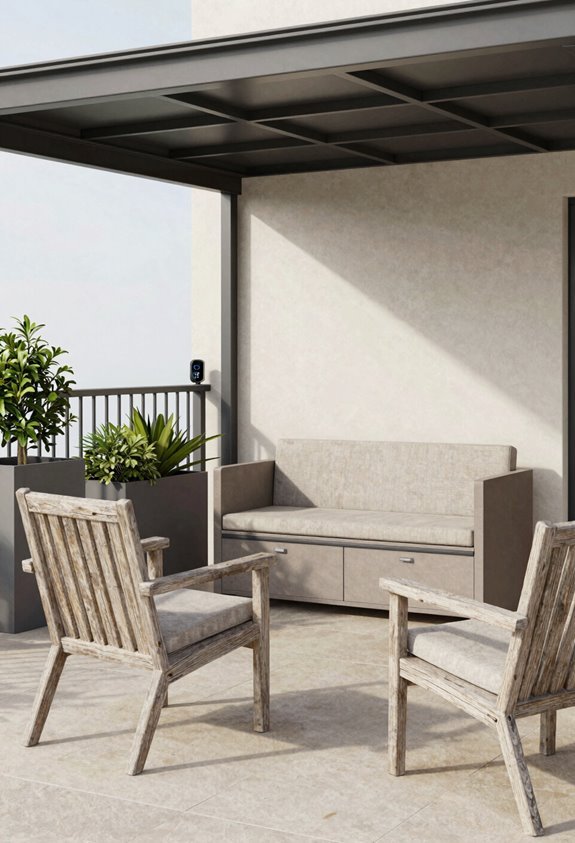
Place furniture under roofed pergolas, carports, or awnings. This placement cuts sun exposure and rain contact by half.
Lift Off Ground
Elevate pieces four inches or lay protective mats underneath. You create a moisture buffer that blocks ground rot.
Stash Soft Goods
Store cushions and pillows in sealed deck boxes or indoors during storms. This keeps moisture and critters out.
Pick Movable Pieces
Choose modular, stackable, or detachable furniture. You simplify off-season relocation and tight storage.
Select Weather-Resistant Materials
Pick powder-coated metal or teak with mild soap cleaning. These weather-resistant materials withstand year-round placement without frequent moving.
Weatherproof Pieces With Fitted Covers
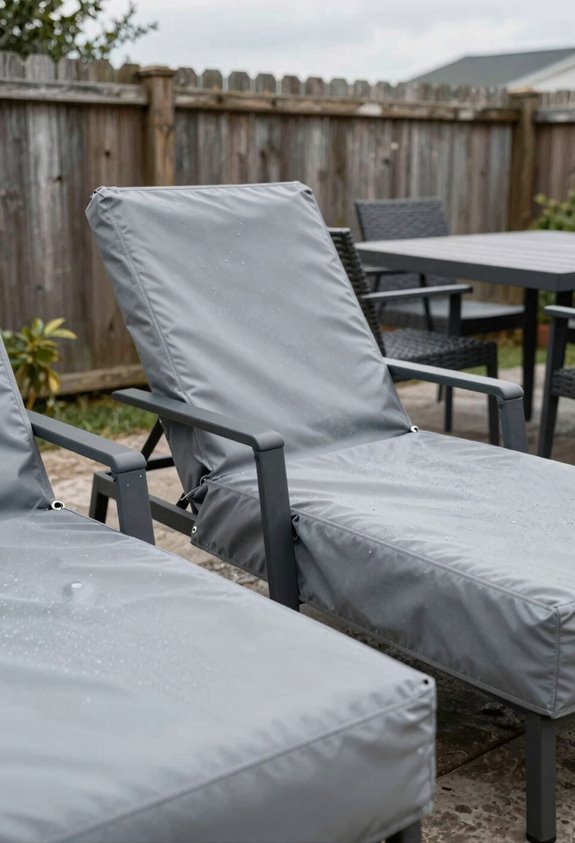
Smart placement helps, but covers add another layer of defense. I weatherproof my teak and aluminum pieces with fitted covers designed for all four seasons. This keeps my furniture looking fresh and extends its life year after year.
Smart placement helps, but covers add another layer of defense against the elements.
- UV-Resistant Materials. I choose weatherproof covers that block sun damage and resist cracking. These covers fit snugly without gaps where moisture sneaks in.
- Ground Clearance. I elevate covered pieces off damp surfaces. I place furniture on outdoor rugs or raise legs slightly to build a moisture buffer underneath.
- Seasonal Pairing. I combine covers with rust-resistant sprays on metal frames and oil-based sealants on teak. I store cushions indoors during harsh months since covers alone won’t stop all moisture damage.
I inspect my covers regularly for tears or wear. I schedule semi-annual furniture checks to confirm my weatherproofing still holds strong.
Choose Covers Sized for Your Furniture Type
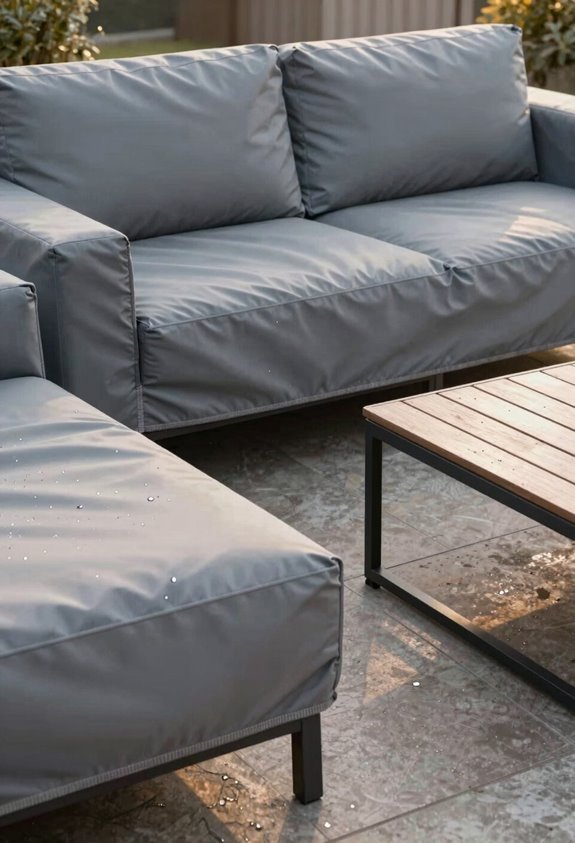
I learned the hard way that loose covers flop in wind and trap water in folds. Now I measure every piece before I shop. My teak bench needs a different cut than my aluminum chairs. Weatherproof covers must match the shape exactly.
I check labels for material specifics. Heavy-duty polyester resists tearing. PVC backing blocks rain. I look for drawstrings or straps. These hold fast when storms hit.
I bought covers for my outdoor furniture last spring. Each one fits like a glove. No gaps show. No fabric bunches. Wind cannot sneak underneath.
I elevate legs two inches off the deck. Air flows below. Moisture stays low. My covers do the rest.
Seal Wood and Metal Against Moisture Damage
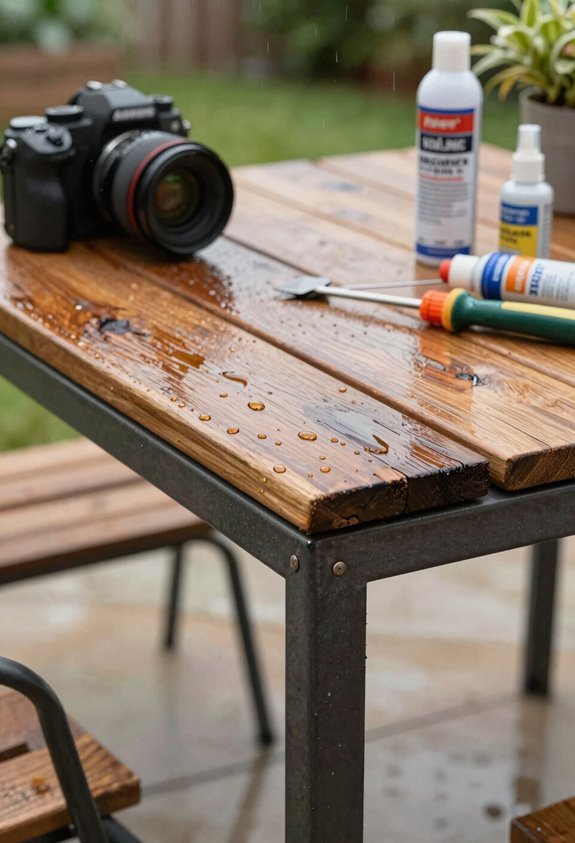
Whether the forecast calls for sun or storms, moisture damages furniture I neglect. I’ve learned that proper sealing keeps my outdoor pieces in the circle of care they deserve.
Wood Sealing
Apply weatherproof sealant or wood protector to all wooden surfaces. Store pieces indoors or under cover during off-season months. This prevents moisture penetration and warping.
Metal Protection
Spray rust-resistant primer on metal frames. Wipe frames dry after dew or storms. This inhibits rust formation and extends furniture life.
Maintenance Schedule
Reapply wood protectants and rust inhibitors every six months. Clean surfaces with mild soap and water before sealing. This makes certain of proper adhesion and effective moisture protection.
Weather resistant finishes and consistent moisture protection let me enjoy my outdoor space with neighbors who value the same care.
Elevate Frames Above Ground Dampness
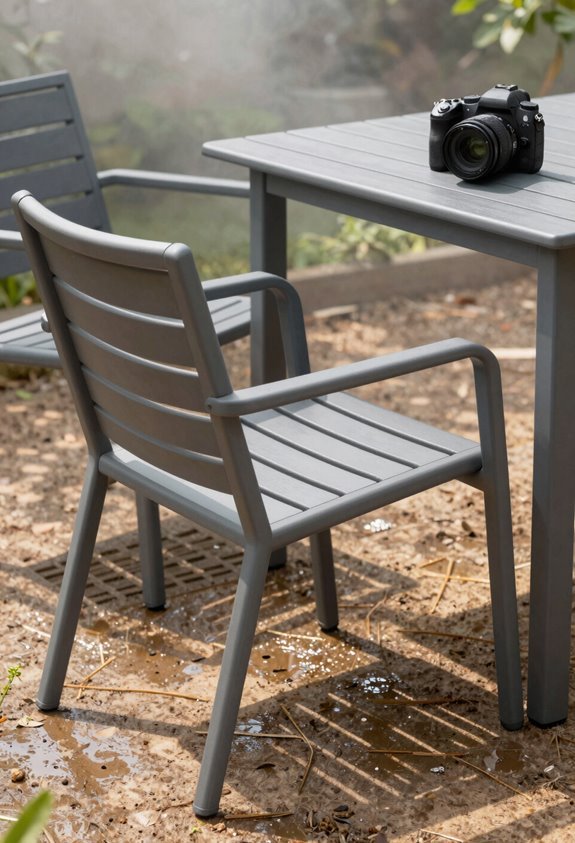
I raise my outdoor furniture off damp surfaces to stop rust and rot before they start. I place pieces on outdoor rugs, deck boards, or furniture feet to create a moisture barrier.
I add weatherproof seals for extra protection against ground moisture and seasonal wet spells.
Moisture Barrier Methods
Outdoor furniture suffers when it sits flat on damp surfaces. I always elevate frames to create a moisture buffer. Elevation reduces rot and rust from ground contact.
Lift with platforms. Raised decking or rubber feet stop wicking. Water damage drops sharply.
Add barrier layers. Weather-resistant mats or outdoor rugs slow moisture transfer. I place these under legs for extra protection.
Let air flow. Elevation speeds drying after rain or dew. Mold and mildew struggle to grow.
I pair these steps with protective covers during off-seasons. This combo maximizes moisture control year-round. Small changes keep your outdoor space welcoming and your furniture lasts longer. We all want pieces that endure through every season together.
Material Elevations Options
Concrete Block Risers
Concrete blocks with built-in slots lift frames 2 to 4 inches off damp ground. I use deck blocks or outdoor risers for the same effect. Elevation creates a moisture buffer that protects my investment.
Metal and Wood Protection
Elevation reduces contact with moisture. I prevent rust on metal components and stop wood rot in damp climates. My furniture lasts longer with this simple step.
Airflow and Drying
Raised platforms help airflow underneath. My furniture dries faster after rain. I discourage mildew on cushion bottoms and fabric.
Teak and Dense Hardwoods
Elevation minimizes ground moisture exposure. I reduce warping and finish degradation on teak over multiple seasons.
Complete Protection
I pair height with weatherproof seals and ventilated covers. Moisture management works year-round with these combined measures.
Store Cushions Dry and Protected
Where do your cushions spend the winter? I bring mine inside. Storing cushions dry keeps outdoor furniture ready for spring.
Bringing cushions inside for winter keeps outdoor furniture ready for spring.
Here’s how I protect mine:
- Clean before storing. I wash or spot-clean cushions. I dry them completely. This stops mildew before it starts.
- Pick the right container. I use waterproof deck boxes with tight seals when indoor space runs out. These block rain, sun, and pests.
- Add breathable covers. I choose washable covers that let moisture escape. This extra layer guards against dust and damage.
I never store cushions damp. I never leave them sitting on the ground. Small habits now save replacement costs later. Your outdoor space deserves this care. Your future self thanks you.
Select Modular Furniture for Easy Off-Season Storage
Protecting cushions solves half the storage puzzle. I tackle the rest by choosing outdoor modular furniture that works smarter, not harder.
Stack and Detach
I pick pieces that nest flat or break down fast. My sectional stacks in the garage. My chairs nest in a corner. Modular furniture lets me pack tight in sheds or basements without fighting awkward shapes.
Remove Legs, Gain Space
I hunt for tables with detachable legs. One wrench removes four bolts. The top slides under a workbench. The legs lean flat against a wall. I reclaim floor space I thought I lost.
Reconfigure, Reduce
I favor sets that shift arrangements. One summer configuration seats eight. I break it into two pieces for winter. Fewer items need long-term storage. I rotate pieces seasonally without heavy lifting.
Clean Frames and Fabrics Before Stains Set
I clean my outdoor furniture before dirt becomes permanent damage. I mix mild soap with water for routine upkeep on frames and cushions. This simple habit keeps my pieces looking fresh and welcoming for gatherings with friends.
I wash frames weekly. I wipe metal and wood surfaces with soapy water. This prevents grime from embedding into finishes and extends the life of my furniture.
I treat tough spots fast. I apply Sunbrella Clean Multi-Purpose Fabric Cleaner to lift soils. It works without harming fibers and keeps fabrics before stains set from becoming eyesores.
I protect between seasons. I use Sunbrella Restore Fabric Protector & Repellent twice yearly. This refreshes water resistance and blocks future staining.
I also schedule semi-annual checks to tighten screws. Tight connections reduce fabric wear and help my outdoor space stay ready for company.
Inspect and Repair Before Harsh Weather Hits
I check my furniture for loose screws, cracks, and wobbly joints, then tighten or repair them before storms hit. I seal peeling finishes with weatherproof paint or sealant to block moisture damage. I treat rust spots on metal frames with primer and patch torn cushions to keep everything solid through winter.
Check for Damage
Why wait until a storm tears your furniture apart? I check my outdoor pieces twice yearly as part of routine maintenance. This keeps my patio set solid and my family comfortable.
Here’s what I inspect:
- Wood surfaces. I look for cracks, splinters, or exposed grain. I brush on a weatherproof sealant or wood protector before winter hits.
- Metal frames. I spot rust and chipped paint early. I sand lightly, then spray rust-resistant primer to stop corrosion.
- Fabrics and cushions. I mend small tears fast. I refresh fabric with Sunbrella Restore Fabric Protector & Repellent between seasons. I toss worn cushions.
This upkeep takes an hour. It saves my investment. It keeps my outdoor space ready for gatherings.
Tighten Hardware
Tighten Hardware
Inspect and Repair Before Harsh Weather Hits
Loose bolts turn small wobbles into big breaks. I grab my screwdriver and hex keys and check every visible screw and bolt on my outdoor furniture twice a year. This hardware maintenance routine prevents structural compromise when storms hit.
I snug each fitting firmly without cranking too hard. Over-tightening strips threads and cracks wood. I mark spring and fall on my calendar for this maintenance check. Rust gets addressed. Looseness gets fixed before winter storage.
My repair kit stays stocked with matched replacement fasteners for my furniture materials. After heavy dew or storms I wait for dry frames then re-tighten. This keeps alignment true and stability solid through every season. Simple steps protect my investment.
Seal Vulnerable Spots
I inspect every joint and fastener for weakness before storms hit. I don’t wait for damage to spread.
Tighten and Secure
I check all screws and joints for looseness. I tighten each one to stop structural failure.
Treat Weak Areas
I spot thin wood veneers and rust-prone metal. I apply weatherproof sealants to wood and rust-resistant sprays to metal surfaces.
Fix Surface Damage
I repair cracks, splits, and loose wicker weaves fast. I stop water from seeping in and causing rot.
I check cushions and frames for mold or moisture traps. I clean and dry them completely. I note sun-bleached fabric edges and apply fabric protectors or plan for new covers.
Maintain Protection Through Every Season
Apply a marine-grade polyurethane seal to wooden frames every 12 months. I weatherproof my metal pieces with rust-resistant spray. I store cushions indoors during harsh weather to stop moisture damage.
Elevate and Buffer
I lift furniture off the ground or set it on rugs and decks. This creates a moisture buffer and cuts ground exposure year-round.
Cover and Store
For winter or long-term storage, I pair protective covers with indoor storage. This extends furniture life and reduces wear.
Refresh Fabrics
I treat fabrics with Sunbrella Restore Fabric Protector & Repellent between seasons. This maintains the barrier against dirt, mildew, and UV damage.
Choose Modular Pieces
I buy modular, storable furniture that detaches for off-season storage in my shed or garage. This maximizes protection and longevity.