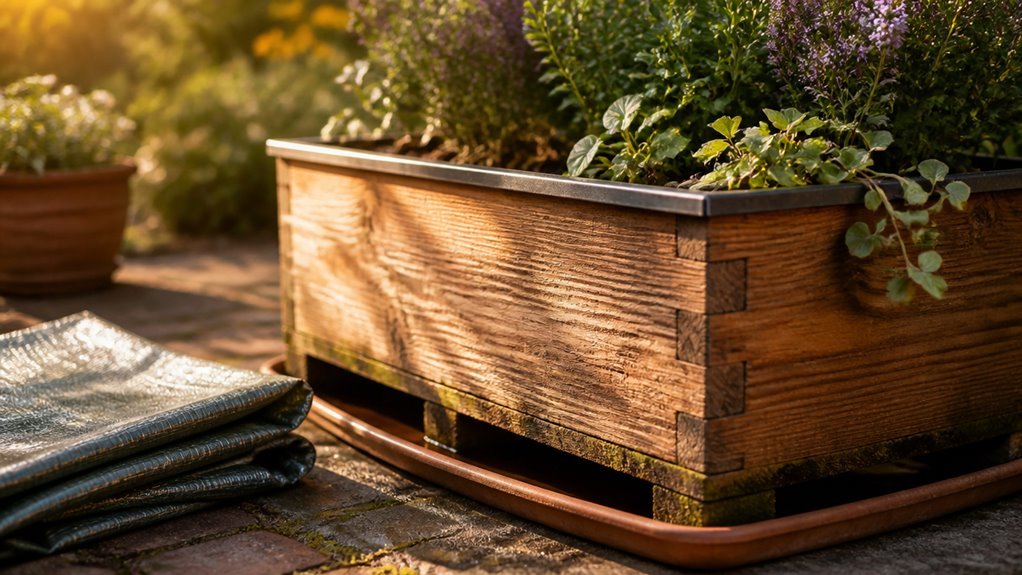
Practical guidance for extending planter life.
I line my boxes with 6-mil HDPE sheeting and add two inches of pea gravel at the base. I seal exterior cedar with tung oil or Garden Seal, never unlabeled deck stain. I caulk interior corners with non-toxic silicone. I drill quarter-inch holes every six inches. I check seals each spring.
These steps work, but one mistake ruins the wood anyway.
Line the Inside With Food-Safe Barriers
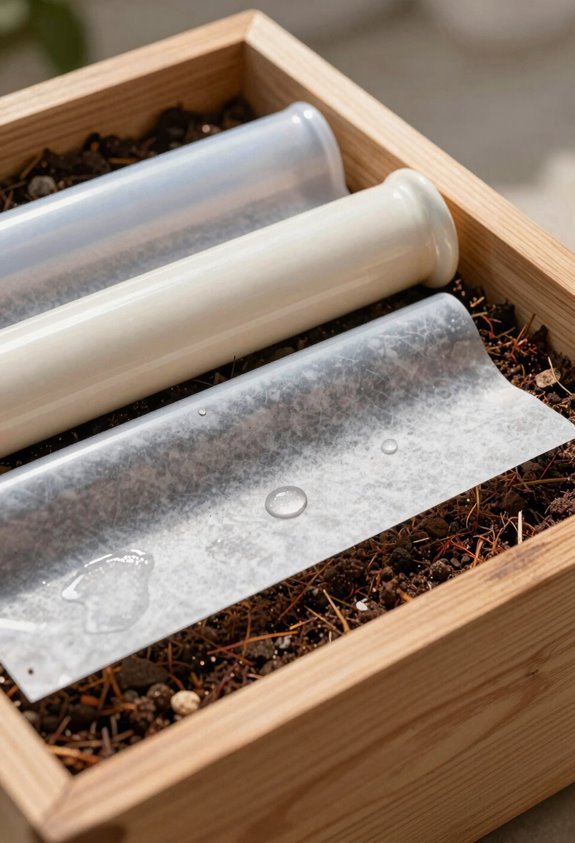
Wooden planter boxes rot fast. I’ve learned that an interior barrier saves the wood and keeps my plants safe.
A simple interior barrier protects both your wooden planter and the plants growing inside.
I use a food-safe barrier between soil and wood. An HDPE liner works well for moisture protection. It blocks water but needs drainage holes at the bottom. Without them, roots drown in standing water.
A non-toxic liner suits edible gardens. I check labels for food-safe ratings before I buy.
Landscape fabric offers another option. It lets water through while holding soil. I don’t need extra drainage holes with this choice.
For any barrier, I add a two-inch gravel layer at the base. This improves drainage and extends the barrier’s life. I inspect my liner each season and replace it when it wears thin.
Choose Food-Safe Sealants: Tung Oil, Wax, or Stain?
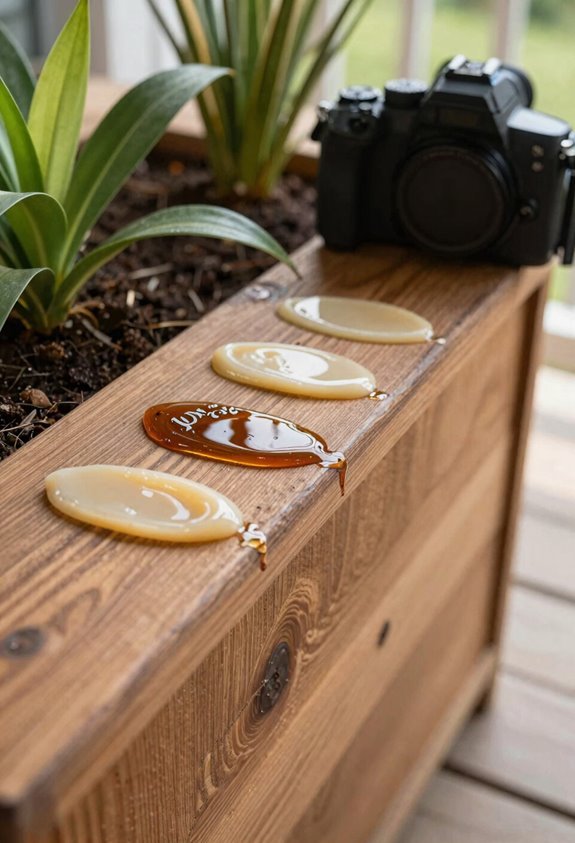
I seal my planter boxes to block moisture and extend their life. Choosing food-safe sealants matters for soil safety.
Tung Oil
Apply tung oil as a non-toxic option. Reapply annually. Long-term food-safety performance varies with soil contact.
Wax
Use wax for surface protection. It works as a food-safe barrier. Durability against moisture remains limited.
Stain
Avoid standard exterior stain for interior-to-soil contact. Chemicals leach without explicit food-safe labeling. Check labels carefully.
Better Protection
Prioritize food-safe sealants like Garden Seal or mineral-based treatments for interior-to-soil contact. Follow manufacturer instructions exactly.
Combined Approach
Pair interior lining with food-safe exterior seal. HDPE or landscape fabric reduces wood moisture exposure. This maintains soil safety while extending box life.
Seal Corners and Cracks to Stop Moisture
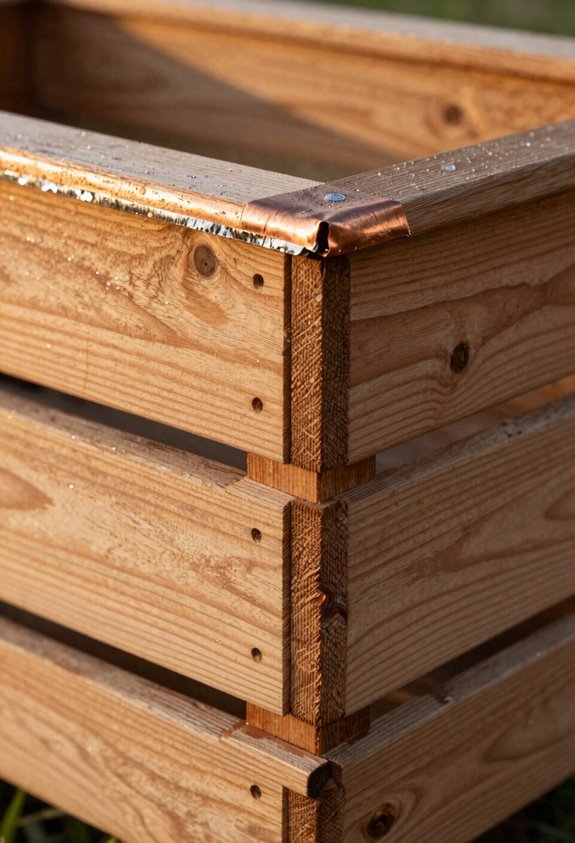
How do you stop rot before it starts? I seal the interior joints of my planter box with non-toxic sealant. Moisture sneaks into corners and cracks first. I use food-safe silicone or Garden Seal on all interior joints. One 10 oz tube covers a 4 x 8 ft bed with three coats.
I focus on corners and knots where moisture pools. I apply sealant deep into cracks. I smooth it while wet. I build three thin coats for full coverage. This extends my planter box life 5, 10 years. I choose non-toxic products for my edible garden. I never skip the corners.
Add Drainage Without Trapping Water
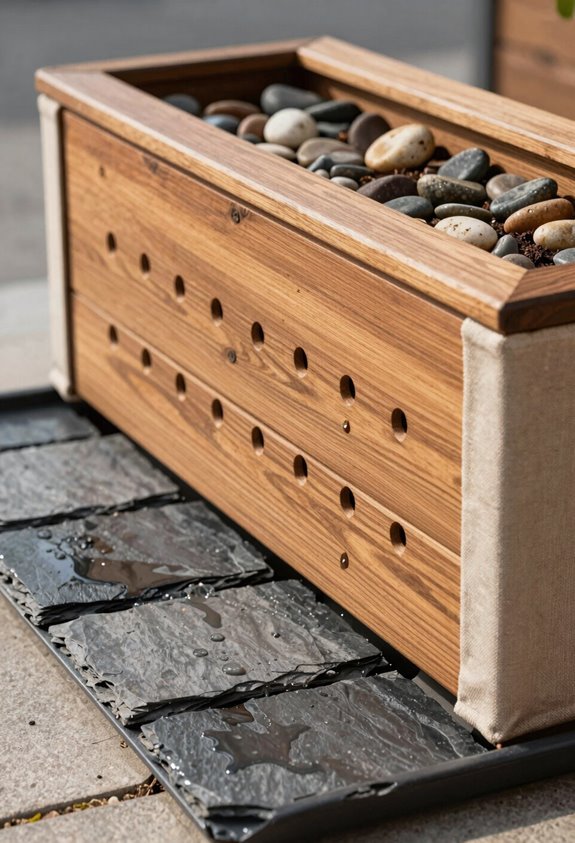
Where does excess water go when roots sit too long? It pools and rots your wood from the inside out. I fix this with smart drainage that keeps moisture protection intact.
- Drill drainage holes: Create 1/4-inch holes every 6 inches at the base. This stops waterlogging and lets excess moisture escape your planter box.
- Layer for airflow: Add 2 inches of gravel or broken pottery beneath your liner. This space promotes drainage and prevents standing water.
- Choose breathable liners: Use landscape fabric or puncture plastic liners with small holes. Add well-draining soil to finish. Your wood stays dry. Your plants do well. You belong among gardeners who build things that last.
Check and Reseal Before Each Planting Season
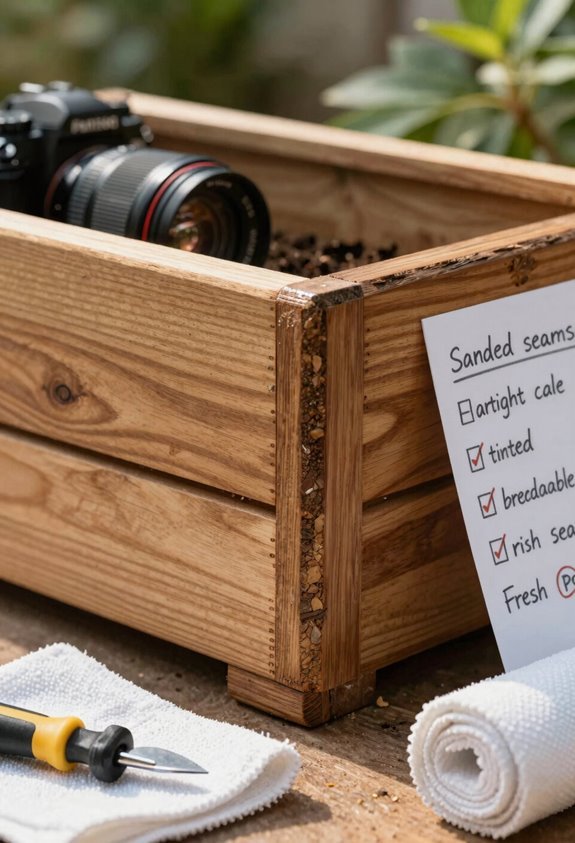
Once your drainage is set, protective coatings wear down. I check my boxes each spring for cracks, mould, and rot. This keeps our garden community in good shape.
Protective coatings wear down over time—I inspect my raised beds each spring to catch cracks, mould, and rot before they spread.
Inspect and Repair
I examine all surfaces, inside and out. I look for soft spots, discolouration, and split boards. I fix small issues before they spread.
Apply Raised Bed Sealant
I reseal every season for reliable wood planter protection. I use linseed oil, tung oil, or outdoor wood sealers. I reapply every six to twelve months based on sun and rain exposure.
Boost Untreated Cedar Durability
My untreated cedar lasts longer with consistent care. I add an interior barrier lining of landscape fabric or perforated plastic. This reduces direct moisture contact.
Maintain Drainage and Airflow
I elevate boxes on bricks or pot feet. This improves airflow and cuts base rot risks. I verify holes stay clear each year.