I use interlocking concrete blocks to build raised beds that drain well and last decades. Each block measures 16 inches long, 8 inches high, and 10 inches deep. You stack them dry or mortar them for permanent walls.
The real question is which configuration works for your space.
Build a Tiered Herb Garden With Stacked Planter Wall Blocks
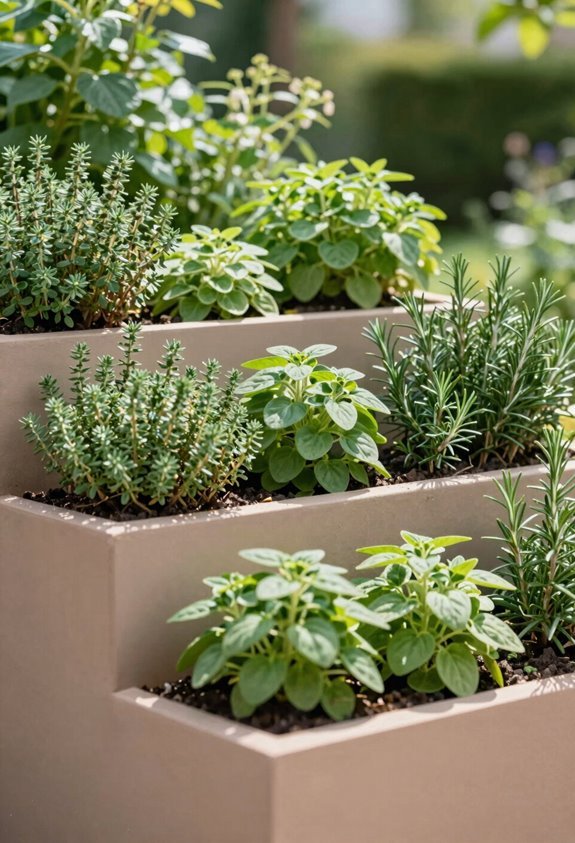
Why struggle with ground-level beds when you can grow upward? I stack interlocking planter wall blocks to create two to four customizable tiers in my outdoor space. This vertical design fits compact areas and places herbs at reachable heights.
Each tier improves drainage and soil depth. I control moisture better and reduce root competition between plants. Concrete or stone blocks withstand weather while holding rich topsoil. Clean lines give my garden a modern look.
I plant basil, thyme, parsley, and cilantro in separate beds. Organization stays clear. Harvest flows smoothly. The tiered layout suits all heights. Bending and kneeling decrease. Sun exposure improves for each herb level.
Mix Wood and Planter Wall Blocks for Textural Contrast
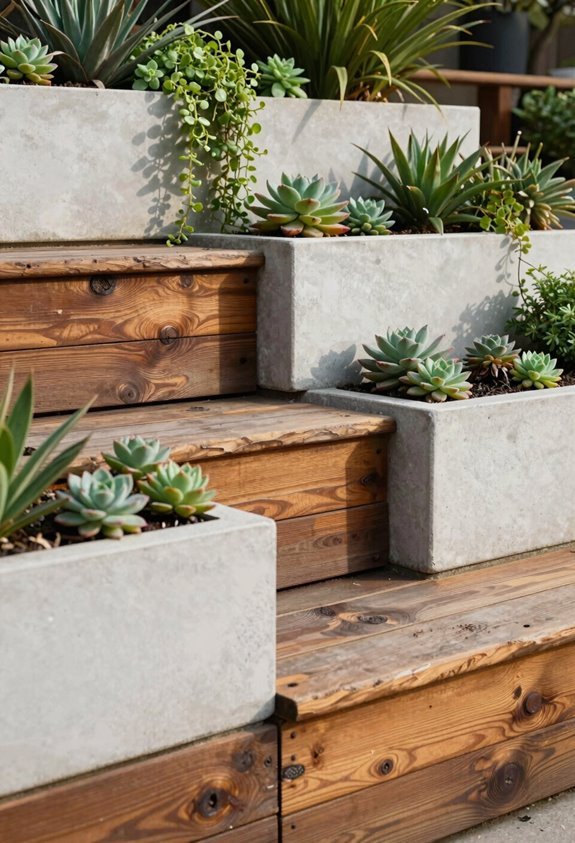
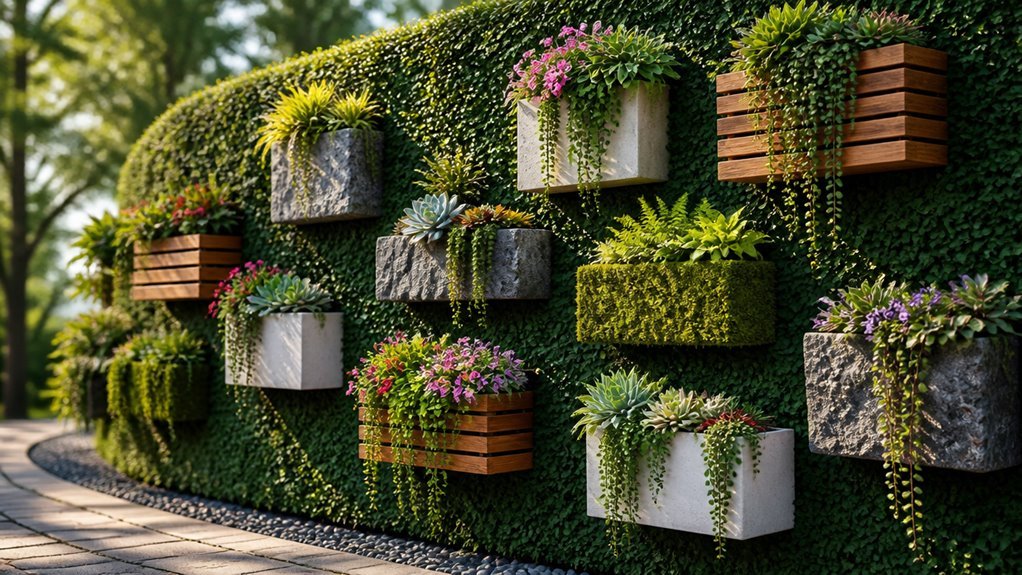
I combine cedar planks with concrete planter blocks to build raised beds that balance warmth and strength. This pairing creates tactile contrast between natural wood grain and solid stone structure.
Cap Features and Rails
I add cedar caps to Planter Wall tops. This softens sharp edges and echoes surrounding trees. Treated pine works for horizontal rails between vertical block columns.
Design Versatility
I vary textures to match any style. Rustic cottages need rough-hewn timber. Modern spaces suit smooth, stained wood against gray concrete Planter Wall faces.
Drainage and Structure
I position wood for horizontal elements. Planter blocks handle vertical load and soil retention. This split improves water flow and prevents wall stress.
Moisture Management
I seal all wood surfaces annually. I add gravel bases between materials. This stops rot and extends the build’s lifespan.
Curve Planter Wall Blocks Into Soft Garden Borders
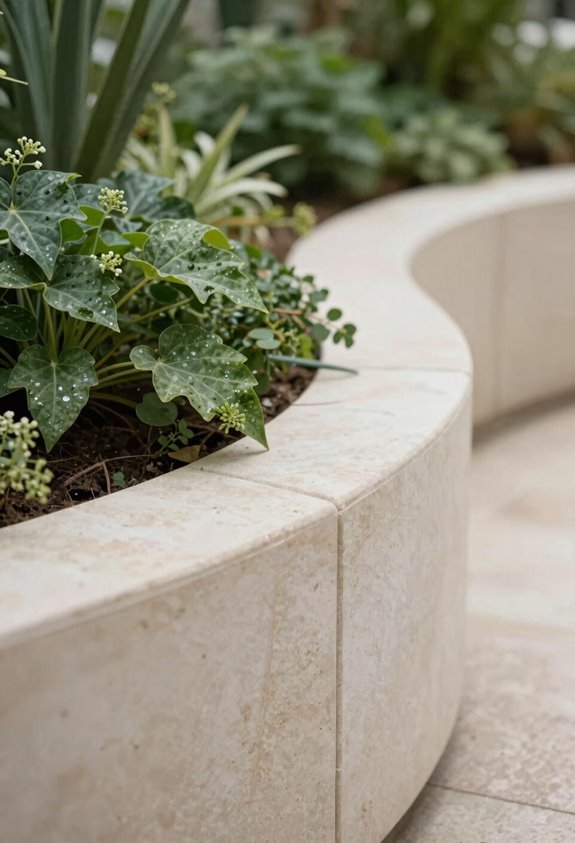
I shape gentle curved edging with concrete or stone blocks to replace rigid straight lines along my garden beds. This flowing border design guides foot traffic naturally and creates pockets for layered plantings at varied heights. I set arcs with 3-4 foot radii to maintain structural stability while softening the overall landscape silhouette.
Gentle Curved Edging
Where does your lawn meet your planting beds? I use curved edging to soften that line. Curved planter wall blocks follow natural contours. They replace harsh corners with gentle arcs.
Curved borders add depth. Your garden looks layered, not flat. Water follows the arc, so it pools less than at square corners. Soft curves invite walking. You reach plants without awkward steps.
I choose semicircular concrete or stone blocks. They withstand weather and hold soil in place. A 6-inch height contains mulch. A 12-inch radius creates subtle curves. You stack blocks dry or mortar them. Either way, curved edging turns boundaries into welcoming edges. Your garden feels intentional, not rigid.
Flowing Border Design
Curved planter wall blocks shape garden edges that move. I use flowing designs to guide visitors through my garden without rigid lines. Curved borders make small yards feel bigger by shaping what you see.
| Feeling | Design Choice | Result |
|---|---|---|
| Welcome | Crescent walls | Soft entry points |
| Calm | Gradual slopes | Better drainage |
| Connected | Layered heights | Deep planting beds |
I build semicircular configurations where lawn meets path. These curves handle odd-shaped lots with ease. I vary block heights from 6 to 18 inches for depth.
Soil stays drier with sloped edges. Water flows away instead of pooling. My curved borders frame plants like a gentle hug. You belong in a garden that breathes.
Install L-Shaped Planter Wall Blocks for Corner Gardens
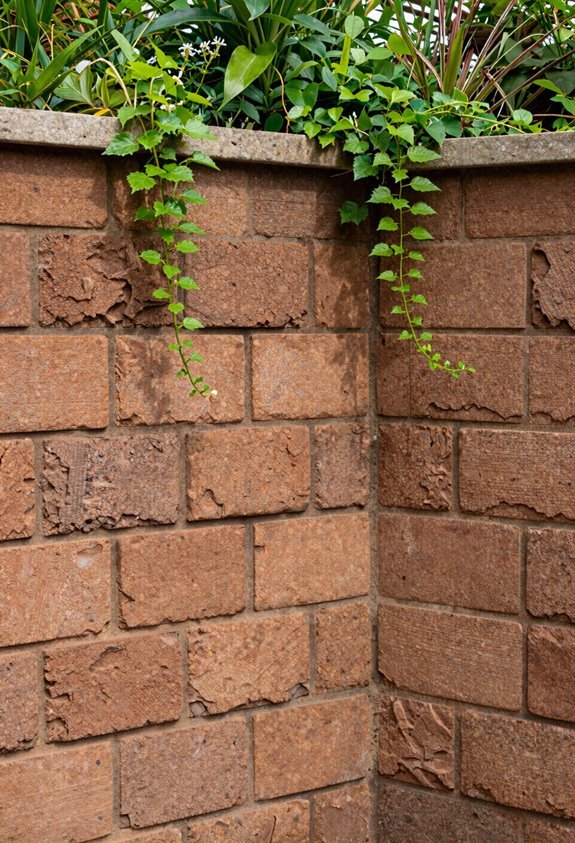
How do you turn an awkward yard corner into usable growing space? I install L-shaped planter wall blocks to build a retaining wall that claims every inch without crowding your beds.
- Water Control: The angled shape moves runoff away from your walkways. Your paths stay dry after heavy rain.
- Raised Beds: Stack blocks 12-18 inches high for warm soil and easy reach. You plant and weed without bending deep.
- Sun Capture: Stagger tiers along the outer edge. Your tomatoes and peppers drink in light while you keep corner access open.
I pair concrete L-blocks with stone caps for visual weight that matches nearby patios. The three-dimensional edge defines your space. You gain drainage, warmth, and a corner that finally works for your garden.
Stack Planter Wall Blocks at Varying Heights for Depth
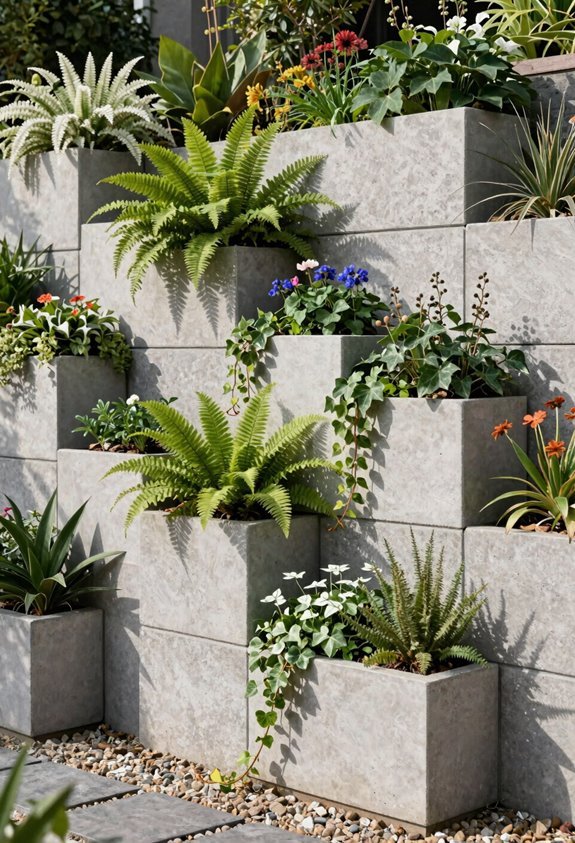
I stack planter wall blocks at 12-inch, 24-inch, and 36-inch heights to build instant visual depth in tight garden spaces. You gain tiered planting zones that separate thirsty vegetables from drought-tolerant ornamentals without mixing root systems.
This setup uses standard 4x8x16-inch concrete blocks with capstones to create clean edges and stable seating ledges.
Visual Depth Creation
Three distinct elevation changes transform flat garden beds into layered landscapes. I stack planter wall blocks at 6, 12, and 18 inches to build visual depth through stepped vertical planes. Each height difference casts shadow lines that pull your eye through narrow spaces. You gain perceived dimension without adding square footage.
Shadow Play: Low afternoon sun stretches block shadows across beds. This extends your garden’s apparent reach by 30 percent.
Focal Framing: Taller rear blocks spotlight specimen plants. Your eye travels upward then settles on layered greenery.
Architectural Integration: Staggered heights echo fence lines or roof angles. Blocks tie your planting beds to existing structures.
I alternate curved and angular block arrangements to match your landscape’s character. Small yards feel gallery-like with this stepped approach.
Tiered Planting Advantages
Stack planter wall blocks at 6, 12, and 18 inches. This setup creates depth in your garden bed. You maximize vertical space in small yards.
Tiered planting advantages include better air circulation between staggered beds. Disease risk drops when plants sit at different heights. Your garden gains dynamic silhouettes with curved or stepped profiles. Layered shapes improve the look from the street.
Higher tiers need more frequent watering. Lower tiers stay cooler and drier. This selective irrigation helps you manage moisture. Multi-level drainage channels direct runoff away from roots. Soil erosion slows on sloped ground.
I build these configurations with standard concrete wall blocks. The 6-inch increments work with common block sizes. Your garden changes with practical stacked levels.
Create Built-In Seating With Curved Planter Wall Blocks
How do you carve out a quiet corner in a wide-open yard? I build curved planter walls that wrap around like an embrace. These blocks create intimate nooks where you actually want to linger.
Match cap blocks to existing stone textures for seamless flow. Set seat height at 18 inches for natural comfort. Position drainage gaps to stop erosion and mud.
Planter walls do more than hold soil. They add dimension without eating space. You skip buying outdoor furniture. You skip maintenance headaches.
The curves guide the eye. They make small yards feel intentional. They make large yards feel connected.
Property data shows thoughtful integration raises value up to 12.7 percent. That matters when you invest time and money.
Build the seat first. Plant second. Enjoy third.
Raise Patios With Integrated Planter Wall Block Edging
Integrated planter wall block edging raises patio edges to create defined, multi-level outdoor space. A 6-inch raised border along the patio perimeter gains 8 to 12 inches of usable planting area without cutting into seating zones. Stone or concrete block edging in curved or straight runs blends hardscape with low shrubs or flowers.
Space Maximization Benefits
Raised edging along patios defines outdoor zones without adding square footage. I use planter wall blocks to carve out distinct rooms for seating and dining. The raised garden strips double as boundaries that keep foot traffic where it belongs.
, Drainage Control: Blocks guide water away from walking surfaces toward planting zones. This prevents puddles and extends patio life.
, Erosion Barrier: Edge restraints stop soil washout and block weeds from creeping onto stone or concrete.
, Flow Optimization: Modular blocks curve or run straight to open sightlines between patio, yard, and garden areas.
Choose stone, concrete, or brick finishes that match existing hardscape. This visual continuity makes the patio feel larger than its actual dimensions. Every inch works harder when edges multitask as planters.
Visual Appeal Enhancement
By raising patio edges with planter wall blocks, I create clean borders between hardscape and planting beds. The elevation adds depth to flat surfaces. I use curved or semicircular wall designs to soften harsh lines. These shapes create natural seating nooks. Guests gather there without extra furniture.
I select concrete or stone planter blocks for durability. Both materials suit modern or rustic styles. I match textures to existing patios. The integrated edging guides runoff into beds. This protects surfaces from water damage.
Raised planters increase perceived value. I gain a polished look without expanding the footprint. The visual layers make small spaces feel intentional. Neighbors notice the finished look. I build spaces that welcome people in.
Fit Planter Wall Blocks Into Narrow Side Yard Spaces
I want you to see your side yard as untapped real estate. I build vertical garden beds using planter wall blocks to reclaim these forgotten corridors. You gain usable planting space without sacrificing your walking path.
Curved Wall Design: Bend your blocks into a semicircle. This softens harsh angles. Your narrow space feels wider instantly.
Stone-Concrete Mix: Stack 6-inch concrete blocks with natural stone facing. You get durability without upkeep. Erosion stays out.
Height Coordination: Match your wall to fence height. Use 24-inch beds against 6-foot privacy fences. The street view pulls together.
Raised beds fix drainage problems in tight spots. Moisture stays where roots need it. Your plants grow despite limited sun. Coordinate materials with existing structures. The result pulls together the overall look.
Frame Pool Areas With Columned Planter Wall Blocks
Columned planter wall blocks turn your pool edge into a clean boundary. They create a spa-like perimeter that separates your water feature from lounge areas. I use stone, brick, or concrete to match pool decks and keep the look unified.
| Material | Best Use | Visual Effect |
|---|---|---|
| Stone | Natural pool settings | Rustic elegance |
| Brick | Traditional homes | Classic warmth |
| Concrete | Modern designs | Sleek minimalism |
Raised columns improve drainage and stop erosion near the deck. They stop water from pooling where you walk. The vertical shape adds architecture to your yard. I plant bold greenery or bright flowers for focal points.
Curve or straight layouts fit any pool shape. They also widen walkways around your water feature. Build them 12-18 inches wide and 24-36 inches tall for stability. Match the finish to your coping for flow. This planter style belongs in any outdoor space worth sharing.
Plant Entryway Planter Wall Blocks for Curb Appeal
Why settle for a plain front door when planter wall blocks can frame your entry with purpose? I build these walls curved or semicircular to guide guests toward your home with clear intention. Stone, brick, concrete, or wood each match your existing architecture without guesswork.
Raised beds improve drainage so your potted plants stay healthy without root rot near foundations. Dynamic silhouettes add dimension that flat flower beds cannot achieve beside walkways. Seasonal rotation maximizes impact with space for blooms or shrubs year-round.
Raised entryway planters reduce erosion and runoff where water collects heaviest. I position blocks to create defined thresholds that signal care and attention. Your neighbors notice. Your home belongs on this street. Choose durable materials once. Maintain potted plants simply. Enjoy a lasting, attractive front entrance without constant rework.