A windowsill is a blank canvas. You need 8–10 gallon pots for tomatoes, peppers, and eggplants.
Stack bricks for vertical tiers, or use lightweight 5-gallon buckets you can drag to the sun.
Gravel drainage and potting mix, not garden soil, keep roots alive.
Match water needs so you don’t drown one plant while another thirsts. The trick that saves the most space?
Choose Containers by Root Depth for Your Crops
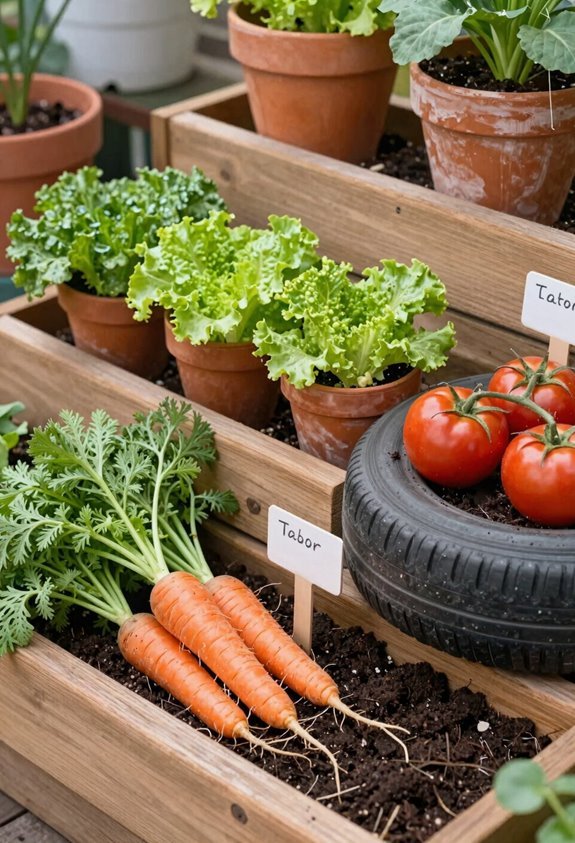
Attribution: Container gardening principles based on root system requirements.
Container gardening principles based on root system requirements.
I match container depth to root growth for every crop in my small-space garden. Most vegetables need 8 inches minimum soil depth. I use 8-10 gallon pots as standard. Deep-rooted crops demand more.
Tomatoes, peppers, and eggplants need larger pots or raised planters. Root growth drives the decision. I keep 5-gallon pails for smaller vegetables. Stock tanks hold multiple plants. Bushy or fruiting varieties get scaled-up containers.
Drainage matters. Every pot needs holes. I add gravel at the bottom. Waterlogged roots kill plants fast. I match container size to harvest goals and root growth potential. Small spaces work when I size pots right.
Stack Pots Vertically to Maximize Small Space Yields
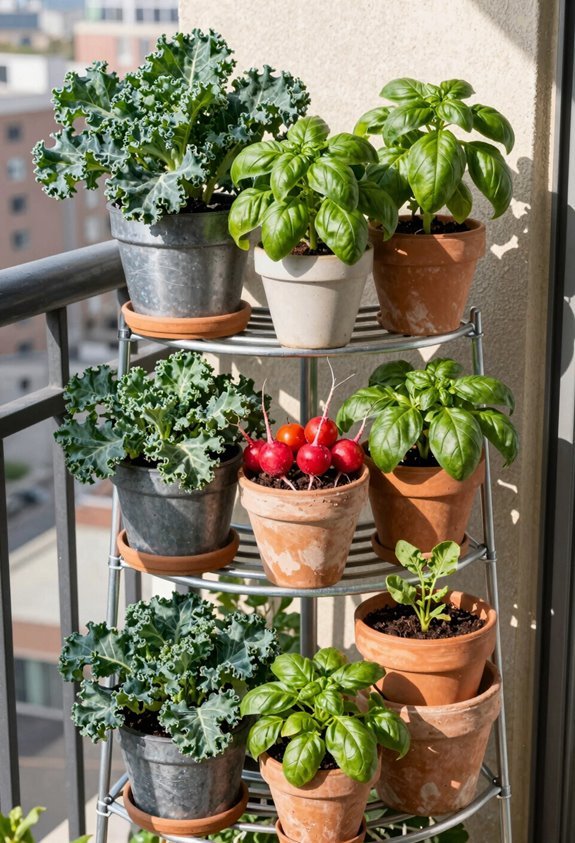
Attribution: Vertical gardening techniques for small-space productivity.
Stack bricks to build multi-level displays for container gardening in small spaces. Use varied heights to add depth. Place larger pots behind smaller pots as a foil to foreground plants.
Use concrete pavers to raise pots. This improves drainage and air circulation under containers. Move finished raised planters to define planting zones. Elevating containers reduces bending and kneeling when tending plants.
Source reclaimed bricks or pavers from online marketplaces or salvage yards. Build displays cost-effectively using common materials in standard sizes. Typical bricks measure 8 by 4 by 2.25 inches. Standard concrete pavers run 12 by 12 by 2 inches.
Raised planters improve ergonomics in tight spaces. Vertical displays maximize growing area without expanding ground footprint.
Use Lightweight Pots You Can Move to Follow the Sun
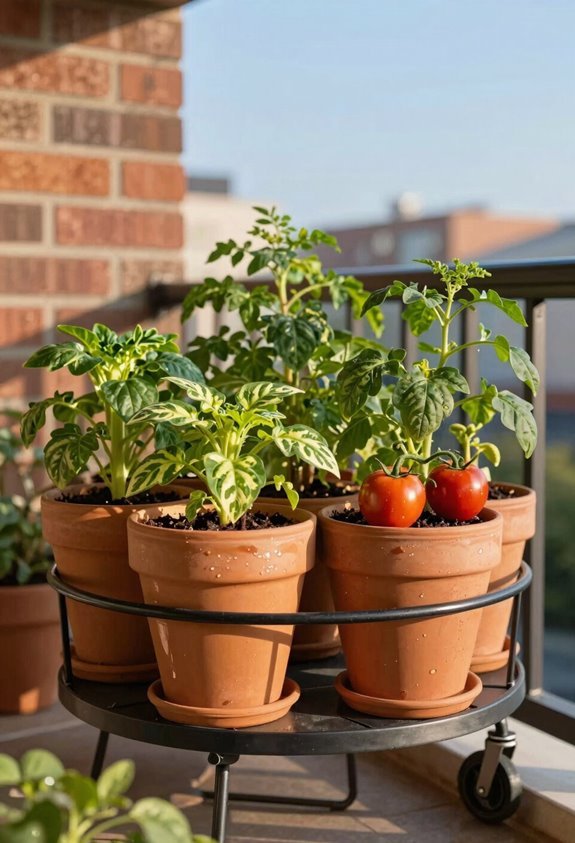
I use lightweight pots because I can shift them without strain. Plastic containers weigh less than terracotta or ceramic. I reposition my moveable containers throughout the day to track peak sun hours. This gives my tomatoes and peppers six to eight hours of direct sun exposure. My leafy greens do fine with three to five hours.
I choose stackable or grid-style designs for my balcony. I reconfigure my layout as the seasons change.
When heat spikes hit, I roll my pots into shade to prevent wilting. I move them back into sunlight once temperatures drop. This flexibility keeps my small-space harvest productive without heavy lifting or permanent placement.
Layer Drainage and Fertilizer When You Plant
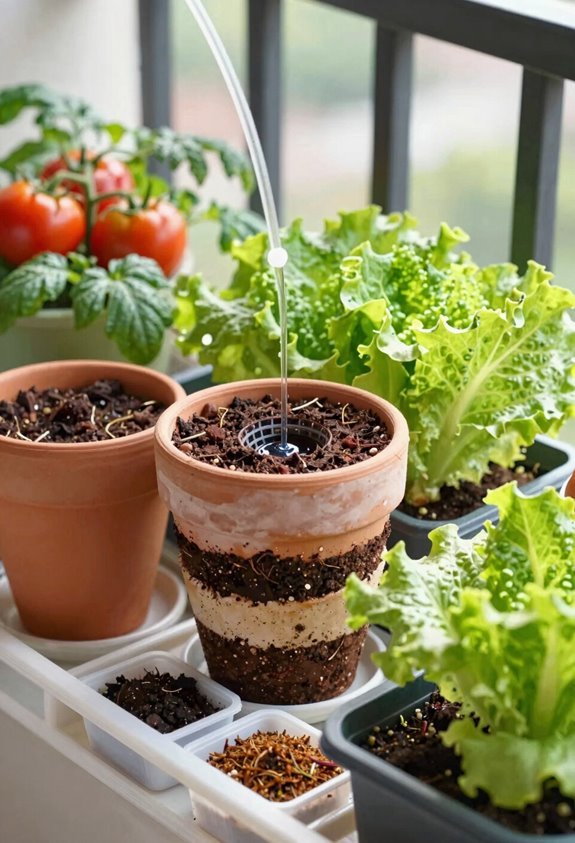
Where do most container gardens fail? They drown from the bottom up. I’ve learned that proper layering fixes this.
Where most container gardens fail isn’t neglect—it’s drowning from the bottom up. Proper layering fixes this.
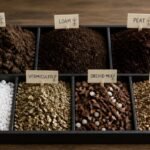
Start with one to two inches of gravel or small stones. This creates drainage space so roots don’t sit in water. Then fill with potting mix. Never use garden soil. It compacts and starves roots.
Mix in slow-release fertilizer now, about one tablespoon per gallon of soil. This feeds plants for six to eight weeks. After that, add liquid fertilizer every two months.
Water deeply until it runs out the bottom. Then mulch with straw or wood chips. This keeps moisture steady and cuts your watering in half. Your plants get what they need from day one.
Match Plants by Water Needs for Easier Daily Care
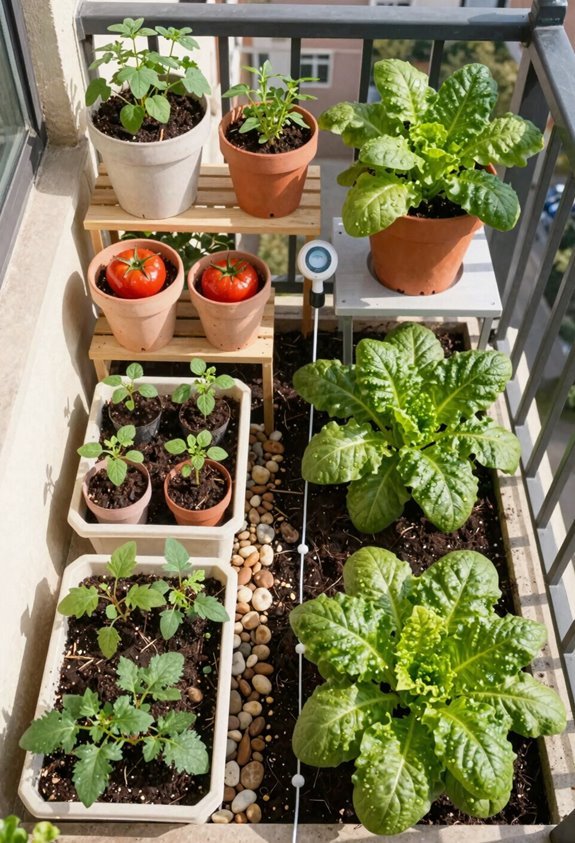
Grouping plants by thirst keeps your daily watering simple. In container gardening, I match water needs by putting tomatoes and peppers together. They want consistent moisture.
Leafy greens go in their own pots. They prefer lighter, more frequent watering. I use soilless mix with perlite or vermiculite. This balances soil moisture for grouped plants.
I check soil moisture daily, especially as temperatures change. High-water-demand plants share one schedule. I avoid mixing thirsty plants with drought-tolerant ones.
My routine prevents over-watering and under-watering. I adjust frequency when seasons shift. Matching water needs turns a chore into a quick task. You will spend less time guessing and more time growing. Smart grouping creates a sustainable small-space garden.