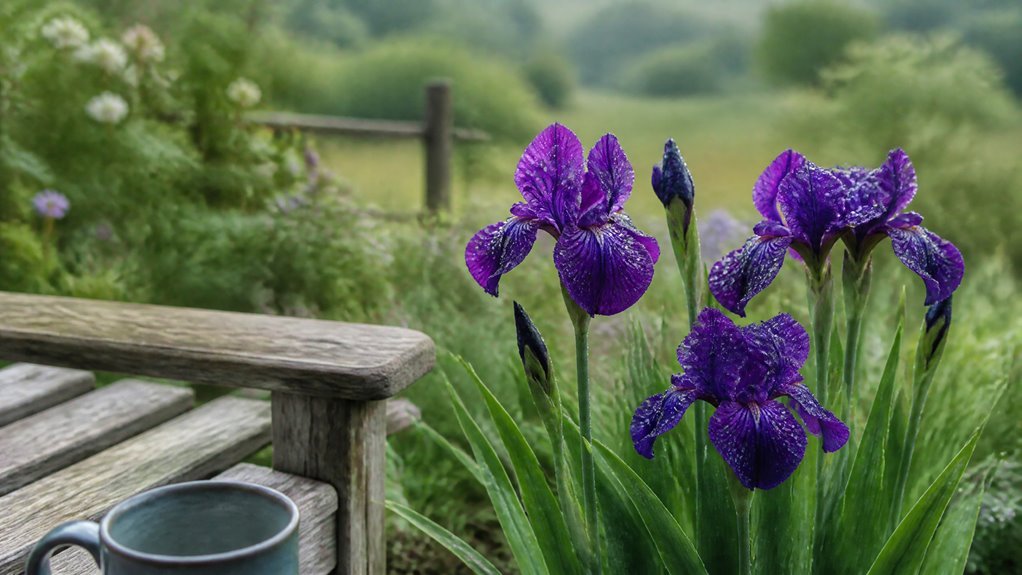
I’ve spent years watching Siberian iris transform ordinary garden corners into something extraordinary, and 2026’s standout varieties are worth your attention. These aren’t your grandmother’s floppy flowers; modern cultivars offer whip-thin 2–3 foot stems, intense blue-violet saturation, and foliage that refuses to turn ratty after blooming.
You’ll find options for sun-baked foundations, damp woodland edges, and everything between: hardy from zone 3 to 9 with zero coddling required. The trick is matching rootstock quality to your specific conditions.
And here’s what most gardeners miss: flower form varies wildly between varieties, from flat-faced “butterflies” to ruffled doubles that read almost like peonies. The ten selections ahead solve real design problems: vertical punctuation for borders,可靠的 deer resistance, and that elusive late-spring color window when tulips have exited and daylilies haven’t arrived. Some choices might surprise you.
| Perennial Farm Siberian Iris ‘Caesar’s Brother’ (#1 Container) | Best Established Plant | Product Type: Potted plant (#1 Container) | Sun Exposure: Full Sun to Part Sun | Hardiness Zone: Zones 4-9 | VIEW LATEST PRICE | Read My Analysis | |
| Siberian Iris Caesars Brother Blue Flower Bulbs (5-Pack) | Best Classic Blue | Product Type: Iris roots (5-pack) | Sun Exposure: Full sun to partial shade | Hardiness Zone: Zones 3-8 | VIEW LATEST PRICE | Read My Analysis | |
| Currier Siberian Iris Flower Roots Bulbs – 5 Pack | Best Rare Variety | Product Type: Iris roots (5-pack) | Sun Exposure: Full sun to partial shade | Hardiness Zone: Zones 3-9 | VIEW LATEST PRICE | Read My Analysis | |
| White Swirl Siberian Iris Flower Bulbs (5 Roots) | Best White Blooms | Product Type: Iris roots (5-pack) | Sun Exposure: Full sun to partial shade | Hardiness Zone: Zones 3-9 | VIEW LATEST PRICE | Read My Analysis | |
| Mixed Rare Iris Flower Seeds (200+) for Outdoor Planting | Best Seed Value | Product Type: Seeds (200+) | Sun Exposure: Various (thrives in varied climates) | Hardiness Zone: Various climates | VIEW LATEST PRICE | Read My Analysis | |
| Ruffled Velvet Siberian Iris Flower Bulbs (5-Pack) | Best Dramatic Color | Product Type: Iris roots (5-pack) | Sun Exposure: Full sun to partial shade | Hardiness Zone: Zones 3-9 | VIEW LATEST PRICE | Read My Analysis | |
| Mixrug Bearded Iris Seeds for Planting (75+ Seeds) | Best Dwarf Option | Product Type: Seeds (75+) | Sun Exposure: Not specified | Hardiness Zone: Zones 3-9 | VIEW LATEST PRICE | Read My Analysis | |
| Siberian Iris Flower Plants (3 Rootstocks) | Best Small Pack | Product Type: Rootstocks (3 plants) | Sun Exposure: Not specified | Hardiness Zone: Not specified | VIEW LATEST PRICE | Read My Analysis | |
| Mixed Color Iris Flower Seeds – Non-GMO (75+) | Best Pollinator Pick | Product Type: Seeds (75+) | Sun Exposure: Not specified | Hardiness Zone: Varied climates/soils | VIEW LATEST PRICE | Read My Analysis | |
| Created By Nature Wild Iris Seeds 400 Purple Perennial Flower Seeds | Best Wildflower Native | Product Type: Seeds (400) | Sun Exposure: Sunny or partially shaded area | Hardiness Zone: Not specified | VIEW LATEST PRICE | Read My Analysis |

More Details on Our Top Picks
Perennial Farm Siberian Iris ‘Caesar’s Brother’ (#1 Container)
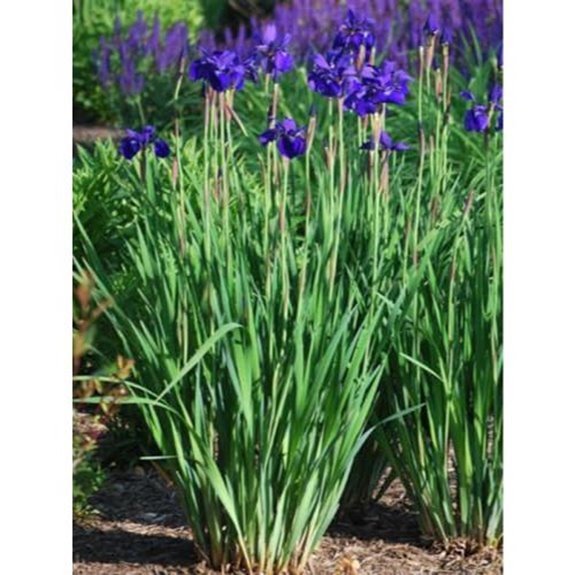
Why settle for seedlings when you’re after immediate garden presence? I’m reaching for Perennial Farm’s ‘Caesar’s Brother’ in a #1 container, and here’s why you should too.
This deep blue-violet Siberian iris arrives fully rooted, ready to plant right now. No waiting around for straggly bare roots to figure themselves out. The mature size means you’ll get that architectural clump structure faster.
Plus June blooms that actually show up this season, not three years from now.
I love the versatility here. Full sun? Perfect. Partial shade? It’ll handle summer afternoon relief without sulk. Those deep roots grip steep banks like nobody’s business, spacing 18 inches apart for solid coverage.
And drought? Once established, it shrugs off dry spells that would flatten lesser plants.
Deer problems? ‘Caesar’s Brother’ writes its own ticket there. No fencing drama required.
Hardy zones 4-9 covers most of us, though western states get left out due to shipping regs. Check your zone before ordering.
The seasonal foliage arrives trimmed and tidy, possible dormancy November through March. Don’t panic if it looks sleepy in winter, that’s normal behavior for Siberian iris.
Cut flower worthy, bank stabilizing, low maintenance. That’s my kind of perennial.
- Product Type:Potted plant (#1 Container)
- Sun Exposure:Full Sun to Part Sun
- Hardiness Zone:Zones 4-9
- Deer Resistance:Highly deer-resistant (Deer-Leerious)
- Cut Flower Suitability:Great cut flower
- Bloom Color:Deep blue-violet
- Additional Feature:Fully rooted container
- Additional Feature:Erosion control suitable
- Additional Feature:Seasonal dormancy possible
Siberian Iris Caesars Brother Blue Flower Bulbs (5-Pack)
If you’re after that iconic, true-blue blooms every gardener covets, Caesars Brother is where I’d point you first.
This Holland Bulb Farms bundle gives you five premium No. 1 roots, the largest grade available, so you’re starting with serious growing power right out of the gate.
Here’s what you’ll get with this variety:
- Stature: Plants reach 24-36 inches with sturdy stems that laugh at wind
- Foliage: Grass-like, linear leaves that stay green straight into fall (no ugly brown gap!)
- Performance: Perennial, naturalizing, and blessedly deer resistant
Growing it’s straightforward. Pop those roots into moist, well-drained soil somewhere between full sun and partial shade. Zones 3-8? You’re golden.
Come late spring, you’ll harvest deep purple blooms for cutting, or just admire them massed in the garden.
February birthdays and 25th anniversaries take note, this flower carries your symbolism. Eloquence, faith, hope, and wisdom, all in one package.
- Product Type:Iris roots (5-pack)
- Sun Exposure:Full sun to partial shade
- Hardiness Zone:Zones 3-8
- Deer Resistance:Deer resistant
- Cut Flower Suitability:Suitable for fresh cut bouquets
- Bloom Color:Deep purple/blue/green/purple
- Additional Feature:February birth flower
- Additional Feature:25th anniversary flower
- Additional Feature:Naturalizing growth habit
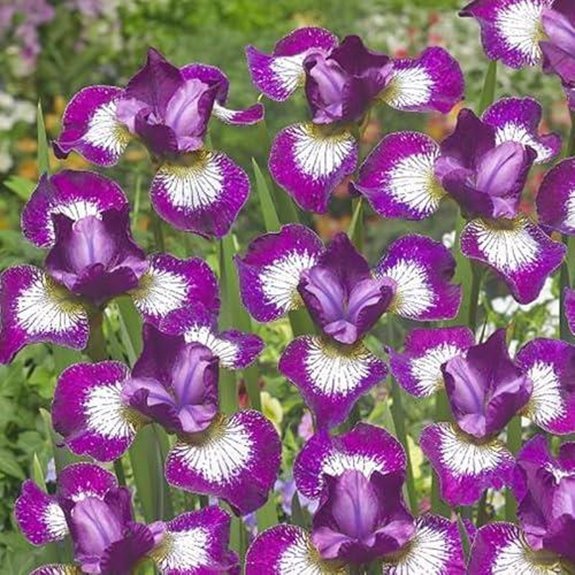
Currier Siberian Iris Flower Roots Bulbs – 5 Pack
I’ve got a soft spot for plants that play hard to get, and the Currier Siberian Iris fits that bill perfectly.
This variety’s been around since 2004, yet it remains genuinely rare and hard to find. Holland Bulb Farms packs five premium No. 1 size roots in each package, which means you’re starting with serious growing power.
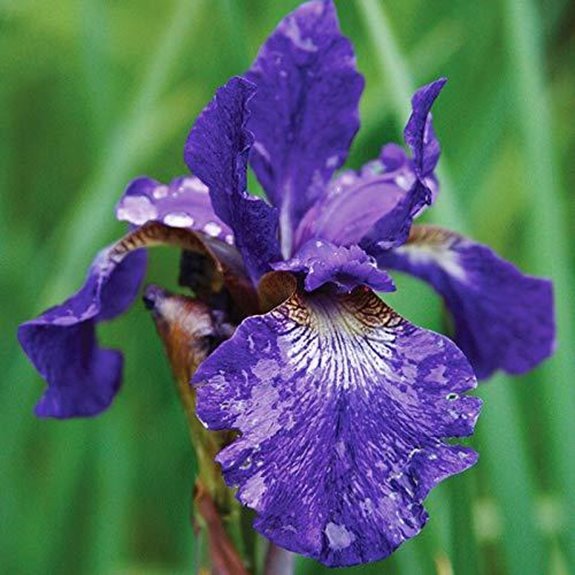
The blooms deliver that knockout combo of violet purple petals framing a crisp white center. And they last! I love a flower that doesn’t clock out early, especially one that doubles as a cut flower for your kitchen table.
At 24-30 inches tall, Currier hits that sweet spot for garden borders. Here’s the practical stuff:
- Full sun to partial shade keeps it happy
- Moist, well-drained soil prevents root rot
- Hardy in Zones 3-9 (that’s most of us!)
- Deer resistant (finally, something they won’t eat!)
The foliage stays attractive after blooming, so your border doesn’t look like a floral graveyard come July. Plant once, enjoy for years. That’s perennializing done right!
- Product Type:Iris roots (5-pack)
- Sun Exposure:Full sun to partial shade
- Hardiness Zone:Zones 3-9
- Deer Resistance:Deer resistant
- Cut Flower Suitability:Good as cut flowers
- Bloom Color:Violet purple with white center
- Additional Feature:Rare since 2004
- Additional Feature:White center contrast
- Additional Feature:Border filler foliage
White Swirl Siberian Iris Flower Bulbs (5 Roots)
Looking for pristine white blooms that’ll make your garden feel like a living watercolor? I’ve got just the thing: White Swirl Siberian Iris from Holland Bulb Farms.
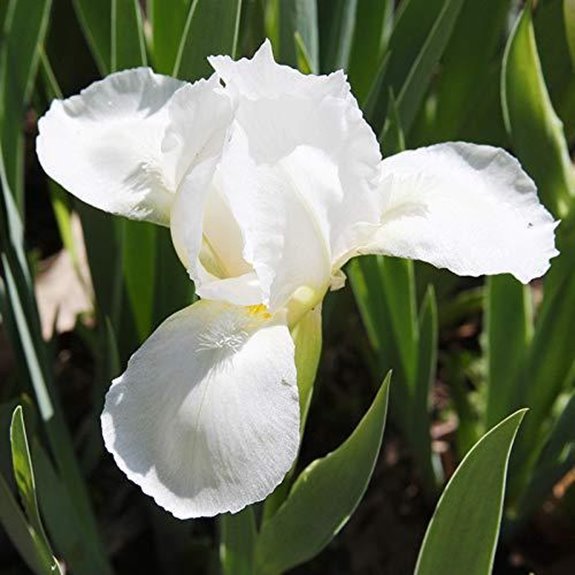
Each pack gives you five premium No. 1 roots, so you’re starting strong. The flowers? Crisp white petals with a discreet kiss of yellow at the center, held on stems that don’t flop when the breeze picks up.
And the grass-like foliage sticks around looking sharp long after the show’s over, which is more than I can say for some perennials I know.
Here’s why I’m pointing you toward these:
- Pollinator magnet — butterflies and hummingbirds can’t resist
- Deer look elsewhere for lunch
- Thrives in Zones 3 through 9 (that’s most of us)
- Hits 24-36 inches at maturity
- Loves moist soil, so plant it near a pond edge or that soggy corner of your yard
Full sun to partial shade, well-drained but dampish soil, and you’re set. They containerize beautifully too, if you’re working with a patio situation.
Bonus trivia: iris symbolizes eloquence and hope, doubles as February’s birth flower, and marks 25th anniversaries. Cut a few stems, and you’ve got instant gravitas on your kitchen table.
- Product Type:Iris roots (5-pack)
- Sun Exposure:Full sun to partial shade
- Hardiness Zone:Zones 3-9
- Deer Resistance:Deer resistant
- Cut Flower Suitability:Suitable as cut flowers
- Bloom Color:White with small touch of yellow
- Additional Feature:Butterfly hummingbird attractor
- Additional Feature:Water edge suitable
- Additional Feature:Yellow accent center
Mixed Rare Iris Flower Seeds (200+) for Outdoor Planting
Why settle for one variety when you can cultivate an entire iris collection from a single packet? I’ve found that starting with seeds opens up possibilities that bulbs simply can’t match.
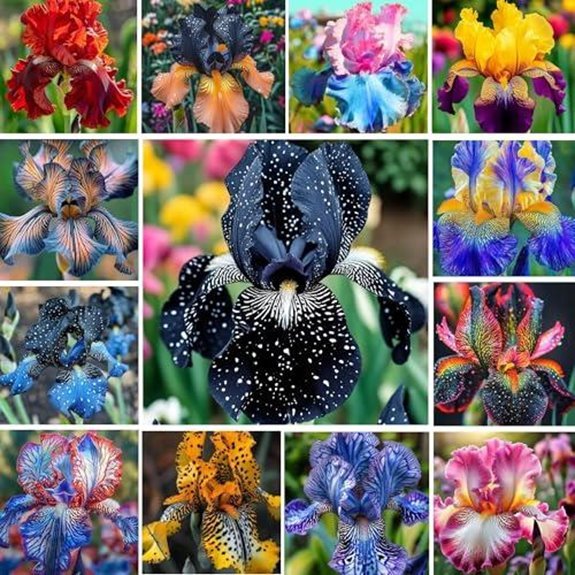
This Carpet Creeping offering delivers over 200 mixed rare iris seeds spanning diverse colors, sizes, and bloom patterns. Hardy and adaptable, they’ll thrive across various climates and soil types without fuss.
Once established, they demand minimal care and reward you with perennial returns, multiplying gradually year after year. Expect blooms from late spring through early summer, an extended window of color for your lawn or patio space.
Here’s why I recommend considering seeds:
- Economical way to build variety
- Natural selection favors your specific conditions
- Satisfaction of full life-cycle gardening
Patience pays off. While you’ll wait longer for flowers than with bulbs, the genetic diversity ensures some specimens will become garden stars perfectly suited to your microclimate.
And there’s nothing quite like spotting your first seed-grown bloom.
- Product Type:Seeds (200+)
- Sun Exposure:Various (thrives in varied climates)
- Hardiness Zone:Various climates
- Deer Resistance:Not specified
- Cut Flower Suitability:Not specified
- Bloom Color:Mixed
- Additional Feature:200+ seed count
- Additional Feature:Gradually multiplying clumps
- Additional Feature:Extended bloom season
Ruffled Velvet Siberian Iris Flower Bulbs (5-Pack)
Need a Siberian iris that stops traffic? I’ve found it in Ruffled Velvet from Holland Bulb Farms.
This pack gives you five large No. 1 bulbs of Iris sibirica, ready to produce absolutely show-stopping blooms. I’m talking red-purple standards with darker velvet falls, each one marked by a dramatic black and gold blaze. The color combo reads black, green, purple overall, and honestly? It’s unforgettable.
Here’s what makes these bulbs worth your time:
- They hit 24-30 inches at maturity, with vase-shaped foliage that hangs on into fall
- Hummingbirds and butterflies come running; deer and rabbits don’t
- They tolerate moist soil beautifully, making them perfect for problem spots
Plant them in full sun to partial shade, keep that soil moist but well-drained, and you’re golden across Zones 3-9.
And yes, they make excellent cut flowers, February birth month flower fans. They’re also the 25th anniversary bloom, symbolizing eloquence, faith, hope, and wisdom. Deep sentiment, delivered!
- Product Type:Iris roots (5-pack)
- Sun Exposure:Full sun to partial shade
- Hardiness Zone:Zones 3-9
- Deer Resistance:Deer resistant
- Cut Flower Suitability:Good as cut flowers
- Bloom Color:Red purple with darker velvet, black and gold
- Additional Feature:Black gold blaze
- Additional Feature:Rabbit resistant also
- Additional Feature:Red purple standards
Mixrug Bearded Iris Seeds for Planting (75+ Seeds)
I’m sold on a compact iris that doesn’t hog garden real estate. Mixrug’s 75+ Bearded Iris Seeds deliver exactly that, dwarf plants maturing at just 8-14 inches with surprisingly large, velvety blooms.
Here’s what you get:
- Rare exotic colors: purples, blues, whites, and bicolor combinations
- True dwarf habit: perfect for borders, containers, and front-of-bed displays
- USDA zones 3-9 hardiness: survives brutal winters without complaint
And these aren’t one-season wonders. They naturalize into expanding clumps, returning each spring with renewed vigor.
The heirloom, non-GMO seeds require cold stratification for germination, so plant them in fall or refrigerate for 4-6 weeks before spring sowing.
But patience pays off. While you’re waiting, plan your placement, these compact bloomers deserve spots where you’ll appreciate their intricate bearded faces up close.
The showy flowers belie their small stature, proving that garden impact isn’t measured in inches alone.
- Product Type:Seeds (75+)
- Sun Exposure:Not specified
- Hardiness Zone:Zones 3-9
- Deer Resistance:Not specified
- Cut Flower Suitability:Not specified
- Bloom Color:Mixed (purples, blues, whites, bicolor)
- Additional Feature:Dwarf compact size
- Additional Feature:Heirloom seed quality
- Additional Feature:Requires stratification
Siberian Iris Flower Plants (3 Rootstocks)
Looking for a low-commitment entry point into Siberian iris gardening? This three-pack of fresh rootstock from CZ Grain hits that sweet spot between investment and payoff.
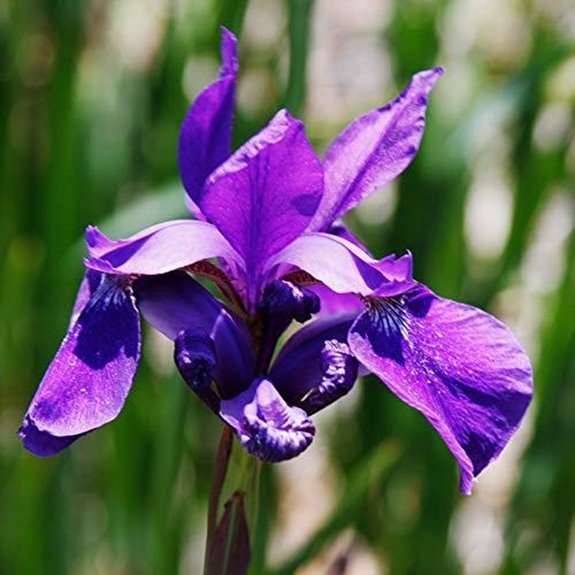
You get three ready-to-plant rootstocks, each destined to become a hardy perennial pumping out long-blooming purple flowers. I appreciate that you’re not gambling on seeds here, these are established starters with growing momentum already built in.
Here’s what arrives at your door:
- Three Siberian iris rootstocks, color labeled “purpe” (I suspect that’s purple, and we’ll roll with it)
- Fresh material primed for immediate planting
- CZ Grain’s quality guarantee backing the whole package
Siberian irises differ from their flashier bearded cousins, they’re tougher, more adaptable to wet feet, and frankly less demanding of your attention. Plant these in spring or fall, give them decent soil and partial to full sun, then watch them colonize politely over seasons.
At roughly three plants per order, you’ve got enough for a small drift or scattered punctuation marks through a border. And if something goes sideways? CZ Grain promises fast solutions, which matters when you’re nursing new plants through establishment.
- Product Type:Rootstocks (3 plants)
- Sun Exposure:Not specified
- Hardiness Zone:Not specified
- Deer Resistance:Not specified
- Cut Flower Suitability:Not specified
- Bloom Color:Purple
- Additional Feature:CZ Grain guarantee
- Additional Feature:Fresh rootstock ready
- Additional Feature:Three plant count
Mixed Color Iris Flower Seeds – Non-GMO (75+)
Why settle for a single bloom when I can grow a whole rainbow? These 75+ mixed color rare iris seeds from BuggyBeds let me paint my garden with yellow, pink, and blue all at once.
Here’s what I’m getting:
The visual payoff
- Eye-catching focal points for flowerbeds, borders, and pathways
- A vibrant mix that elevates my entire landscape design
The practical stuff
- Hardy, resilient growth that handles varied climates and soils
- Low maintenance once established (my favorite phrase!)
- Long-blooming season from spring through summer
The ecosystem bonus
- Pollinator-friendly: bees and butterflies arrive in droves
- Enhanced garden biodiversity without extra work
And they’re non-GMO, which matters to me. Plant these seeds, give them minimal care, and watch my garden become the neighborhood showstopper.
Sometimes more really is more!
- Product Type:Seeds (75+)
- Sun Exposure:Not specified
- Hardiness Zone:Varied climates/soils
- Deer Resistance:Not specified
- Cut Flower Suitability:Not specified
- Bloom Color:Mixed (yellow, pink, blue)
- Additional Feature:Bee butterfly attractor
- Additional Feature:Garden biodiversity enhancement
- Additional Feature:Three color range
Created By Nature Wild Iris Seeds 400 Purple Perennial Flower Seeds
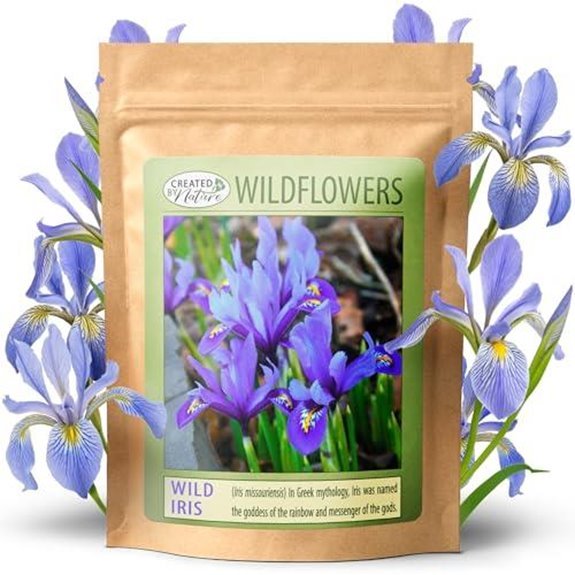
Want native wildflower irises that practically grow themselves? I’ve got you covered with Created By Nature Wild Iris Seeds. These are Iris missouriensis seeds, so you’re getting genuine native beauty, not some fancy cultivar that needs babying.
Here’s why I keep recommending this pack:
- Coverage — 400 seeds blanket up to 20 square feet
- No lab-modified genetics — Non-GMO, grown and packaged in the USA
- Germination — high success rate if you follow the light trick
The sowing couldn’t be simpler. Scatter in spring, press gently into soil surface, and don’t bury them. These seeds need light to wake up, so resist your instinct to tuck them in deep.
Water regularly until seedlings pop through, then let nature handle the rest. You should see blooms within 60 to 90 days.
And the pollinator buffet! Bees, butterflies, and hummingbirds all crash this party, so you’re boosting biodiversity without trying too hard.
Sun or partial shade, well-drained soil — that’s the whole requirement list. Low maintenance, high reward. Created By Nature has been family-owned for 40-plus years, which tells me they didn’t stumble into this expertise yesterday.
Purple blooms, native cred, pollinator goldmine. That’s my kind of garden math!
- Product Type:Seeds (400)
- Sun Exposure:Sunny or partially shaded area
- Hardiness Zone:Not specified
- Deer Resistance:Not specified
- Cut Flower Suitability:Not specified
- Bloom Color:Purple/Blue
- Additional Feature:400 seed pack
- Additional Feature:20 sq.ft. coverage
- Additional Feature:Light germination required
Factors to Consider When Choosing a Siberian Iris
Before you pick any Siberian iris for your garden, you’ll want to match the plant’s hardiness zone to your local climate, choose a bloom color that plays nicely with your existing beds, and decide whether you’re planting bare root stock in fall or grabbing a container-grown specimen in spring. Sun exposure matters more than you’d think with these beauties because while they’ll tolerate partial shade, you’ll get way fewer of those distinctive falls and standards without at least six hours of direct light. And don’t forget to check the mature height, nothing worse than planting a 3-foot stunner right in front of a dwarf conifer that disappears all summer!
Hardiness Zone Compatibility
Where exactly does your garden sit on the hardiness map? I ask because Siberian irises are remarkably forgiving, thriving in USDA zones 3 through 9, which covers a staggering range of winter temperatures.
Here’s what this means for you:
- Cold climates (zones 3-5): You’re golden. These plants laugh at freezing temperatures, though I’d give them slight wind protection during brutal snaps.
- Hot zones (7-9): They’ll survive, but consistent moisture becomes your best friend; dry heat stresses them.
And here’s the catch: not every cultivar plays equally nice across this whole range. Some varieties edge toward zone 5 minimums, while others push zone 9 limits. Check specific cultivar notes before buying, match your microclimate, and you’ll enjoy perennial blooms that naturalize beautifully year after year!
Bloom Color Selection
Now that you’ve matched your zone to a suitable variety, let’s talk about the fun part: picking your bloom color. Siberian iris blooms deliver serious range: deep blue-violet, purple, crisp white with yellow accents, or mixed cultivar combinations. I lean toward varieties sporting velvety purple standards paired with white centers, or those bold dark falls that practically demand attention in a bouquet.
Your color strategy matters. Solid tones create calm, unified beds, while bicolor patterns with lighter edges add visual kick to mixed borders. Those vase-shaped florals on sturdy stems? They’ll hold up for days in your favorite pitcher.
And don’t overlook symbolism if you’re gifting or memorializing. Deep purple conveys dignity and admiration, a meaningful touch without getting heavy. Pick what speaks to you, then build around it.
Root Stock vs Container
Your choice hinges on timing, temperament, and what your garden’s throwing at you.
Root stock arrives bare, ready to plunge straight into warm, moist soil where those exposed roots can establish deep, subterranean growth fast. But you’ll need to baby them with careful irrigation and soil adjustment at first.
Container plants? They come potted with rootballs intact, giving you structure for tricky spots like steep banks or tight corners. That pot protects during transit, though you’ll want to acclimatize them gradually to outdoor life.
Here’s my quick breakdown:
- Root stock = faster underground establishment, more initial fuss
- Container = easier handling, quicker visible top growth, gentler transition
And honestly? Both thrive once settled. Pick root stock for budget and patience, containers for convenience and instant garden presence!
Sun Exposure Needs
How much sun does your Siberian iris actually need? I’ve found these beauties remarkably flexible, tolerating anything from full sun to partial shade, though they’ll reward you most generously with several hours of daily light.
Here’s what I’ve learned about placement:
- Full sun equals stronger stems and more blooms. Simple as that.
- Hot climates demand afternoon shade to prevent scorched leaves and keep plants vigorous.
- Morning sun with afternoon shade often hits the sweet spot in warm regions.
And don’t overlook eastern or northern exposures with dappled light, provided your soil stays moist yet well-drained. Partial shade works, but expect fewer flowers and somewhat floppy stems. It’s a trade-off I’m usually willing to make in brutal summers!
Mature Height Planning
Most Siberian irises I’ve researched settle into that sweet spot between two and three feet tall, though there’s enough wiggle room within that range to make or break your garden design. You’ll find varieties topping out around 30 inches while others push toward 36, and that half-foot difference matters when you’re layering perennials.
I always check mature height before buying. Here’s why:
- 24–30 inch varieties work beautifully in containers and front-of-border positions where you want structure without overwhelming neighbors
- 30–36 inch selections command attention in middle borders, their upright, vase-like foliage creating elegant vertical accents that persist long after blooms fade
And don’t forget spacing! Those tall, slender stems need room to spread. I plan for 18–24 inches between plants to let that attractive foliage do its thing. Trust me, cramming them creates a floppy mess you’ll regret by midsummer.