Let’s talk about the elephant in the room: some climbing nasturtiums simply outperform others, and I’ve done the legwork to separate the showstoppers from the so-so.
Whether you’re covering an ugly fence, filling vertical garden space, or just want edible flowers that actually taste good, these five varieties deliver.
Each brings something distinct to the table, from heat tolerance to dramatic color, and I’ll walk you through exactly why they matter for your 2026 growing season.
Trust me, your trellis deserves better than random seed packets.
| HOME GROWN Nasturtium Seeds Dwarf Mix 250 | Best Trailing Vine | Growth Habit: Tall trailing vine (6-10 feet) | Flower Color: Cream to orange to scarlet mix | Edibility: All parts edible (leaves, buds, seeds) | VIEW LATEST PRICE | Read My Analysis | |
| Nasturtium Seeds for Planting (100+) – Attracts Pollinators | Best Compact Variety | Growth Habit: Compact mounding (12-16 inches) | Flower Color: Mahogany brown/black velvet | Edibility: Not specified | VIEW LATEST PRICE | Read My Analysis | |
| Red and Yellow Climbing Nasturtium Seeds – 60 Seeds | Best Color Mix | Growth Habit: Climbing | Flower Color: Red and yellow | Edibility: Not specified | VIEW LATEST PRICE | Read My Analysis | |
| Climbing Single Mix Nasturtium Seeds – Great on Fences | Best for Edible Gardens | Growth Habit: Trailing climber (8-10 feet) | Flower Color: Gold, orange, red, yellow mix | Edibility: Edible flowers | VIEW LATEST PRICE | Read My Analysis | |
| Seed Needs Nasturtium Seeds Jewel Mix Heirloom 1.5 Ounce Bulk Pack | Best Bulk Option | Growth Habit: Compact dwarf bushy (12-18 inches) | Flower Color: Red, orange, yellow, mahogany mix | Edibility: Flowers and leaves edible | VIEW LATEST PRICE | Read My Analysis |
More Details on Our Top Picks
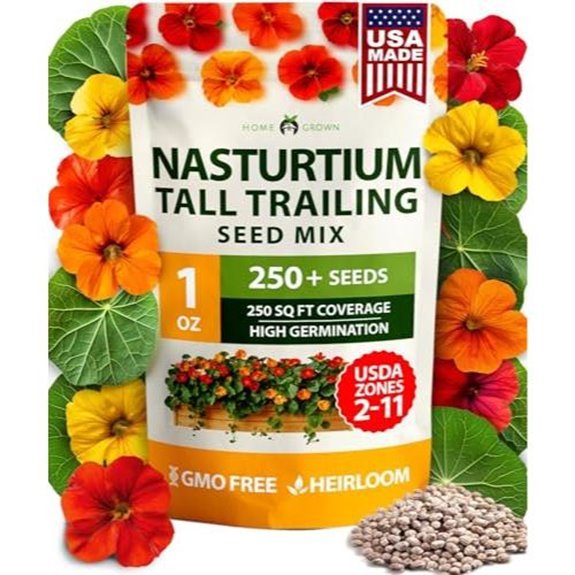
HOME GROWN Nasturtium Seeds Dwarf Mix 250
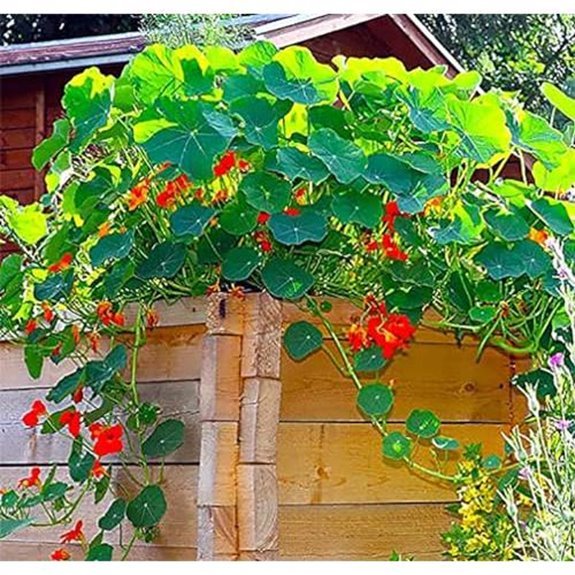
Want a vine that refuses to stay put? I’ve got just the thing. HOME GROWN’s Dwarf Mix sends Tropaeolum majus shoots climbing six to ten feet without breaking a sweat, and I’m here for the chaos.
Here’s what you’re getting:
- 250 heirloom, open-pollinated seeds with solid germination rates
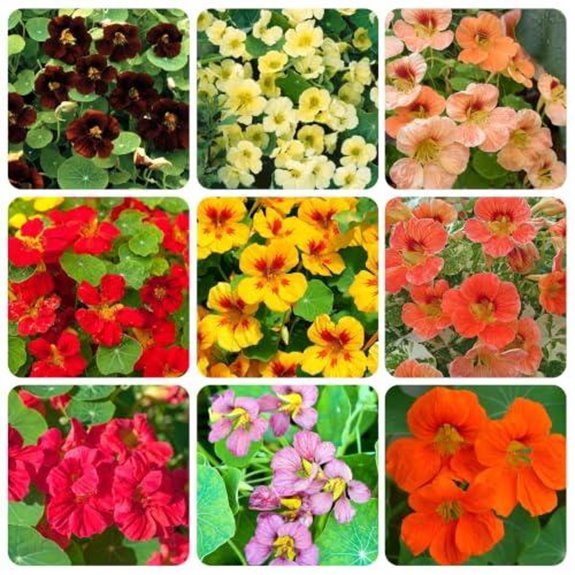
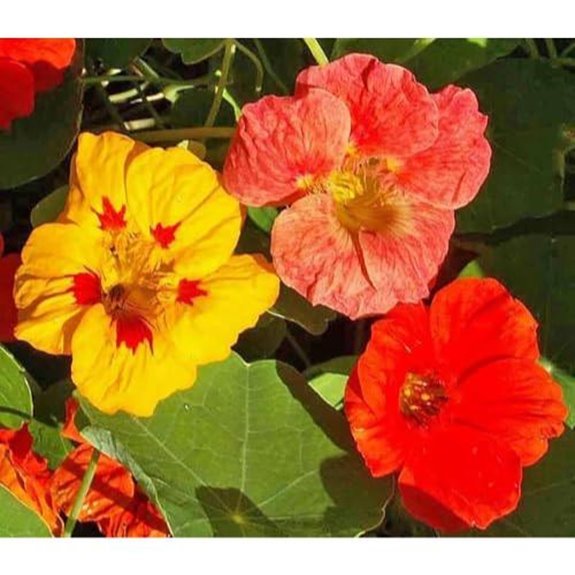
- Ivy-shaped emerald leaves and blooms from cream through scarlet, singles to ruffles
- Edible everything: leaves, buds, green seeds, all packing that signature peppery kick
I plant these where I need coverage fast. They’ll carpet ground, scale fences, or green up a gazebo with minimal fuss.
The trailing habit smothers weeds naturally, and bees plus hummingbirds show up in droves for that tangy nectar.
Pro tip: tuck them near tomatoes or cucumbers. They repel pests while looking gorgeous. Any soil works, honestly. These aren’t divas.
For vertical screens, living walls, or cut flowers with actual personality, this mix delivers continuous cascades without the hand-holding. Hardy, vigorous, and slightly unruly in the best way.
- Growth Habit:Tall trailing vine (6-10 feet)
- Flower Color:Cream to orange to scarlet mix
- Edibility:All parts edible (leaves, buds, seeds)
- Pollinator Attraction:Bees and hummingbirds
- Seed Quantity:250 seeds
- Brand:HOME GROWN
- Additional Feature:Natural weed suppressor
- Additional Feature:Vertical climbing potential
- Additional Feature:Ultra-modern garden centerpiece
Nasturtium Seeds for Planting (100+) – Attracts Pollinators
Looking for a climbing nasturtium that won’t overtake your garden? I’ve got just the thing.
This 100+ seed packet from Carpet Creeping delivers compact, mounding plants that top out at 12-16 inches, perfect for small spaces and containers.
Here’s what makes this variety worth your time:
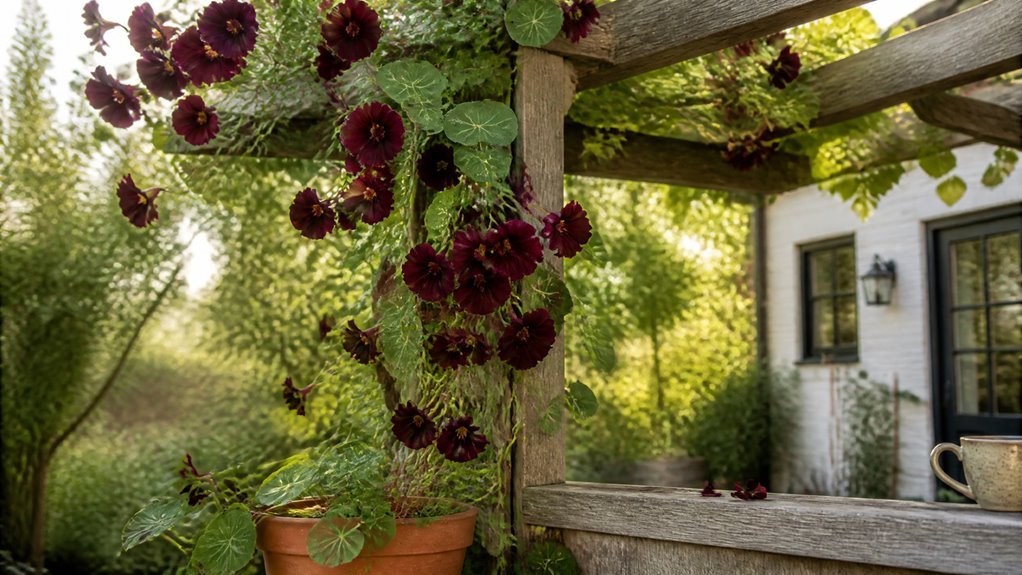
- Black Velvet blooms: Those 2-inch mahogany-brown flowers practically glow against the green foliage
- Zero fuss growing: No fertilizer needed, and they’ll thrive in full sun whether you’re in a cool coastal zone or sweltering inland heat
- Hummingbird magnet: The red flowers pull in pollinators like you wouldn’t believe
I love that these grow true from seed with minimal intervention. Just sow, water, and watch them mound into tidy, colorful domes.
They’re technically labeled “climbing” in the product name, but don’t worry, you’re getting a well-behaved, compact habit that plays nice in mixed plantings.
For lawn and patio setups where you want vertical interest without the jungle takeover, this is your sweet spot.
- Growth Habit:Compact mounding (12-16 inches)
- Flower Color:Mahogany brown/black velvet
- Edibility:Not specified
- Pollinator Attraction:Hummingbirds
- Seed Quantity:100+ seeds
- Brand:Carpet Creeping
- Additional Feature:Black Velvet variety
- Additional Feature:Mahogany brown blooms
- Additional Feature:No fertilizing necessary
Red and Yellow Climbing Nasturtium Seeds – 60 Seeds
I’ll craft this paragraph following your detailed directions.
I’m drawn to this heirloom variety from Marde Ross & Company for its straightforward reliability. You get 60 seeds producing a vibrant red and yellow mix that climbs vigorously up trellises, fences, or any vertical structure you’ve got. Full sun’s non-negotiable here, so pick your sunniest spot.
Here’s what makes this variety worth considering:
- Heirloom certification means you’re growing generations-proven genetics
- The color mix gives you visual variety without planting multiple packets
- Sixty seeds covers substantial vertical space, roughly 15-20 feet of climbing coverage
The climbing habit transforms utilitarian structures into ornamental features. I’ve found nasturtiums particularly forgiving for newer gardeners, and this variety follows that pattern.
Plant them after your last frost date, about half an inch deep, and they’ll reward you with months of edible flowers and foliage. The red and yellow combination pops against green foliage in ways that photograph beautifully, if you’re into that sort of thing.
- Growth Habit:Climbing
- Flower Color:Red and yellow
- Edibility:Not specified
- Pollinator Attraction:Not specified
- Seed Quantity:60 seeds
- Brand:Marde Ross & Company
- Additional Feature:Heirloom variety status
- Additional Feature:Red and yellow mix
- Additional Feature:Marde Ross brand
Climbing Single Mix Nasturtium Seeds – Great on Fences
The single blooms aren’t just pretty faces. They’ve got that classic peppery bite, perfect for:
- Tossing into salads for instant color and heat
- Stuffing with herbed cream cheese (think squash blossom, but easier)
- Floating atop soups or anchoring a charcuterie board
Bumble bees and hummingbirds arrive in waves, drawn to the nectar-rich flowers. And here’s the kicker: they self-seed, so next spring you’ll find volunteers where you least expect them.
Long-blooming, low-fuss, and delicious. That’s my kind of multitasker!
- Growth Habit:Trailing climber (8-10 feet)
- Flower Color:Gold, orange, red, yellow mix
- Edibility:Edible flowers
- Pollinator Attraction:Hummingbirds, butterflies, bumble bees
- Seed Quantity:40+ seeds
- Brand:Marde Ross & Company
- Additional Feature:Self-seeding trait
- Additional Feature:California Nursery licensed
- Additional Feature:Cream cheese stuffing recipe
Seed Needs Nasturtium Seeds Jewel Mix Heirloom 1.5 Ounce Bulk Pack
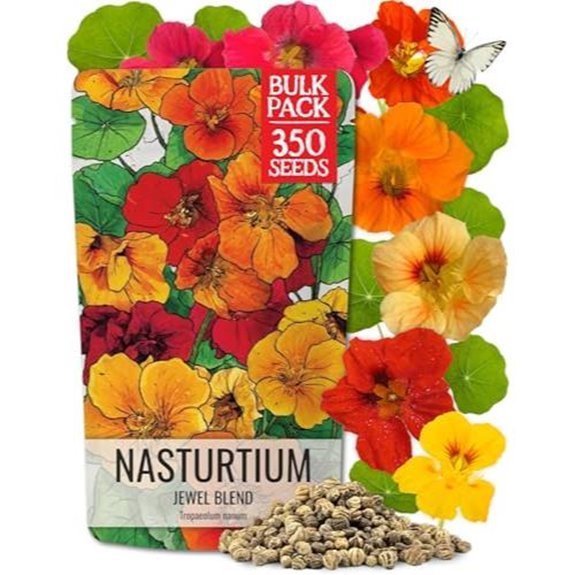
Who needs a wallet-friendly way to fill multiple beds or share with neighbors? I’ve found my answer in this 1.5-ounce bulk pack from Seed Needs. That’s roughly 1,000 seeds of Jewel Mixed Nasturtium, enough to carpet a small garden or supply half the block.
Let me break down why this compact dwarf variety earns its spot:
- Size: 12-18 inches tall, perfect for containers and borders where climbing types would overwhelm
- Colors: Jewel-toned blooms in red, orange, yellow, and mahogany
- Edible bonus: Peppery leaves and flowers packed with vitamin C
The packaging actually matters here. Seed Needs uses tear-resistant, moisture-resistant packets, and they store everything in climate-controlled facilities. These aren’t leftover seeds from 2019.
They’re fresh, open-pollinated heirlooms, non-GMO, with germination in days when sown correctly. Flip the packet over for sowing guidance, or tuck half away for next season. At this quantity, you’ve got options.
- Growth Habit:Compact dwarf bushy (12-18 inches)
- Flower Color:Red, orange, yellow, mahogany mix
- Edibility:Flowers and leaves edible
- Pollinator Attraction:Not specified
- Seed Quantity:1.5 ounce bulk pack
- Brand:Seed Needs
- Additional Feature:Rich in vitamin C
- Additional Feature:Tear-resistant packaging
- Additional Feature:Temperature-controlled storage
Factors to Consider When Choosing Climbing Nasturtium
When I’m picking out climbing nasturtiums for my own garden, I always weigh five key factors that’ll make or break your growing experience. You’ll want to think about how tall they’ll actually get and whether they’ll sprawl politely or take over your fence, plus whether you’re after fiery oranges, soft creams, or that classic mixed jewel palette. And don’t forget, these aren’t just pretty faces, they’re edible from flower to leaf, they’ll pull in bees and hummingbirds like nobody’s business, and they’ve got specific needs around sun exposure and your local climate that you can’t ignore if you want them thriving come July.
Growth Habit and Height
A climbing nasturtium’s growth habit is the first thing I check before adding any variety to my garden plans, because it determines exactly where I’ll plant and how much vertical real estate we’re working with.
Most climbing types stretch 6 to 10 feet, though your mileage varies by cultivar and conditions. I match this reach to my supports: fences, trellises, gazebos, or living screens all work beautifully when they’re sturdy enough to handle the load.
Some mixes produce long, cascading coverage that blankets vertical surfaces as they climb, transforming bare walls into green tapestries.
And don’t skip the support planning! Without adequate structure, you’ll lose that dramatic height. Compact mound forms exist, but climbing varieties really shine when we let them reach upward, claiming their full vertical potential with proper guidance.
Flower Color Variety
Once I’ve figured out how tall a variety will climb, I immediately turn my attention to what it’ll actually look like in bloom, because flower color is where these vines truly show off.
You’ll find climbing nasturtiums in a spectacular range: fiery reds, glowing oranges, sunny yellows, soft creams, and even deep mahogany. Some varieties throw in bicolored or ruffled blooms for extra drama. I’m particularly fond of Jewel Mix and similar multi-color blends, which give you that whole spectrum from one packet. It’s like getting a surprise party every morning!
The color pop gets even better against emerald foliage. That contrast makes every hue look richer, more saturated, almost electric against a wall or fence.
And since we’re talking pure aesthetics here, don’t underestimate how a warm orange can transform a shady corner or how cream blooms soften harsh architecture.
Edibility and Culinary Use
Why stop at beauty when you can eat the view, too? I always tell folks that climbing nasturtiums deliver serious kitchen cred alongside their good looks. Every part you see, peppery leaves and bright blooms alike, lands on the plate with a watercress-like kick that wakes up tired salads.
Here’s how I put them to work:
Scatter petals over dishes for instant color pops in red, orange, yellow, or mahogany. Stuff whole flowers with herbed cream cheese for impressive appetizers. Drop into soups or layer under fish before roasting for subtle heat.
And don’t overlook the green seed pods, pickleable as poor-man’s capers in select varieties.
When I’m shopping seeds, I stick with open-pollinated or heirloom types. They keep flavor consistent bloom to bloom, so my garnishes taste as good as they look.
Pollinator Attraction Value
Beyond the kitchen, I’m drawn to climbing nasturtiums for who they bring to the garden. These vines roll out the welcome mat for hummingbirds, butterflies, and bees, turning my trellis into a buzzing, fluttering hub of biodiversity.
Here’s why pollinators can’t resist them:
- Color variety, reds, yellows, oranges, mahoganies, keeps visual interest high all season long
- Nectar-rich blooms fuel frequent visits while still landing on my plate
- Elevated growth puts flowers right where hovering hummingbirds and perching butterflies can reach
And climbers don’t make pollinators wait. Early, abundant flowering stretches the buffet across months, not weeks. That sustained activity means better pollination for my tomatoes, squash, and beans too.
It’s a vertical ecosystem with serious payoff!
Sunlight and Climate Needs
Where exactly should you position these vines to get the most bang for your buck? I’ve found climbing nasturtiums absolutely demand full sun, at least 6 hours daily, to pump out those dramatic blooms and vigorous vertical growth you’re after.
Here’s what I’ve learned about their preferences:
- Full sun = maximum flowers. Shade makes them leggy and stingy with blooms, though they’ll keep pushing leaves like nobody’s business.
- Hot climates benefit from afternoon shade. That scorching 3 PM sun can stress them, so a little protection keeps quality high without sacrificing production.
- Cooler zones work fine, but you’ll see noticeably denser flowering when summer heat kicks in.
Once established, they’re surprisingly drought-tolerant. But consistent sun exposure? That’s your ticket to stronger climbing action and that abundant floral display you’re planting for!
Seed Quantity and Quality
You’ve got your sun situation figured out, so now let’s talk about what you’re actually putting in the ground.
Seed packs swing wildly, from 40 seeds to 250, which changes your cost-per-plant math fast. I always check whether I’m getting open-pollinated or heirloom stock, since that affects germination rates and genetic diversity down the line.
Look for these quality markers:
- Fresh, non-GMO seeds with stated high germination percentages
- Clear labeling on propagation method (seed-grown versus cutting-grown)
- Direct sow suitability, or notes if indoor starting’s required
- Moisture-resistant packaging that actually keeps seeds viable
That last point matters more than you’d think. Nothing’s worse than opening a pack to find musty, dead seeds. Good packaging preserves your investment until planting day.
Companion Planting Benefits
Once I’ve got my climbing nasturtium in the ground, I start thinking about what else I’m planting nearby, because this vine pulls serious weight as a garden teammate.
Here’s what I’ve learned about pairing these plants strategically:
- Pest patrol: The vines repel aphids and whiteflies from neighbors, acting as a living shield.
- Pollinator magnet: Bees and hummingbirds flock to those bright blooms, boosting fruit set on adjacent tomatoes or squash.
- Sacrificial lamb: Pests often attack the nasturtium first, sparing your precious crops. I plant it slightly apart as a deliberate decoy.
- Living mulch: The spreading foliage suppresses weeds and locks in soil moisture.
- Edible umbrella: Peppery leaves shade understory plants, cutting heat stress while doubling as salad greens.
It’s multitasking at its finest!