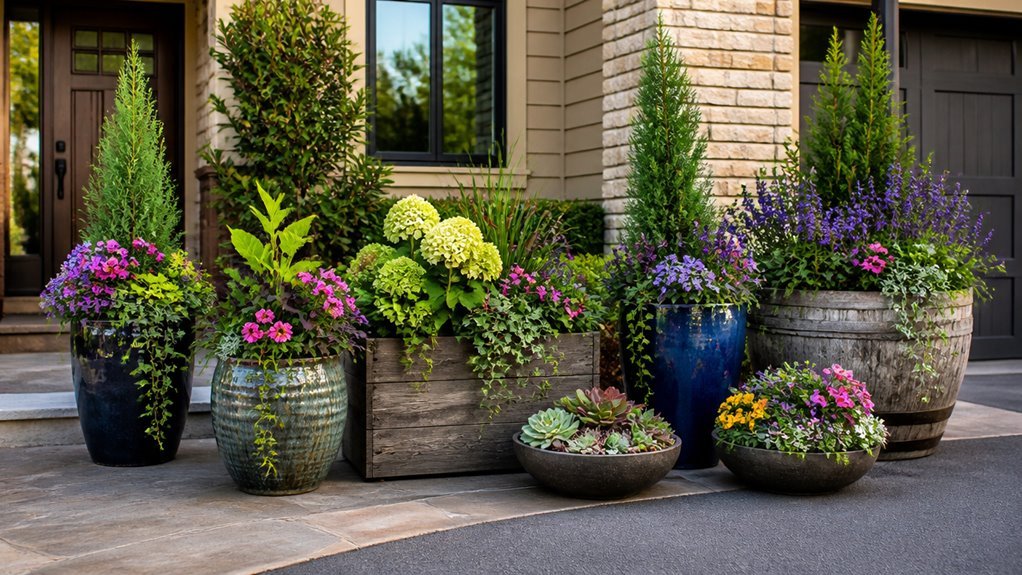
A red door framed by empty concrete steps stops no one. I have tested seven planter arrangements that change entryways in a single afternoon. You will learn which container combinations survive year-round and where to place them for maximum impact.
The first mistake most homeowners make starts with color.
Start With Your Door: How to Pick a Planter Color Scheme

Why guess at colors when your door already gives you the answer? I look at my front door first. It sets the tone for everything else.
I stick to two or three colors total. My blue door pairs with blue hues and boxwood greens. I layer similar tones for a monochrome effect that feels intentional.
My planter colors echo what is already there. I rotate plantings by season. Spring brings irises and tulips. Summer shifts to lantanas and cosmos. I keep the palette cohesive year-round.
I mix annuals, perennials, and small trees near my entry. Varied height adds structure. This approach builds a welcoming entrance without overcomplicating the look.
Combine Industrial Metal With Warm Terra Cotta
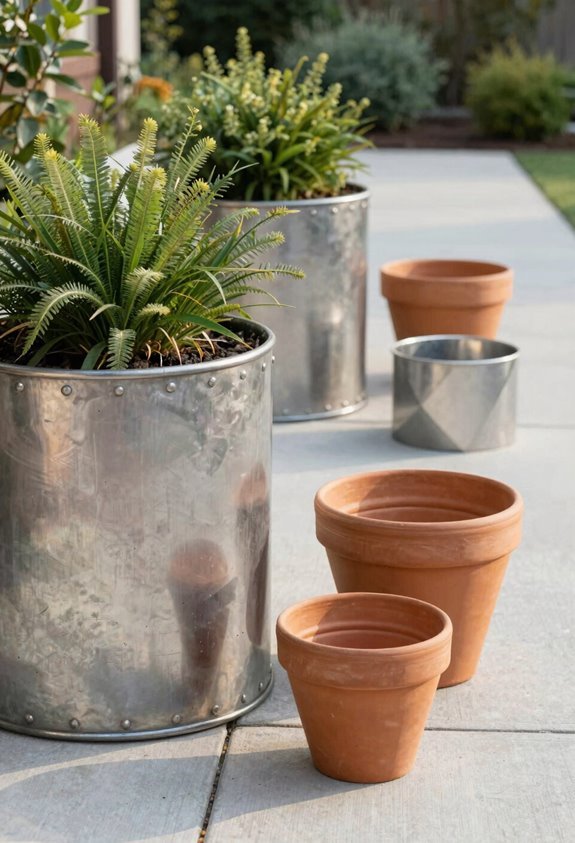
I mix galvanized metal planters with terra cotta pots for instant texture contrast. The cool industrial finish plays against earthy warmth. This pairing works for modern and traditional homes alike.
Layer Your Heights
Place galvanized metal planters on steps for vertical structure. Set terra cotta pots at ground level. This creates depth along walkways without blocking paths.
Match Your Palette
Coordinate colors with your door. Blue-toned galvanized metal planters echo navy accents. Warm terra cotta pots complement brick or wood tones. Add cobalt hydrangeas to metal. Plant rust-colored geraniums in terra cotta.
Choose Weatherproof Materials
Select rust-resistant terra cotta and sealed galvanized metal planters. These withstand rain and sun. Your home exterior stays sharp through every season.
Anchor Containers With Boxwood Topiary Centerpieces
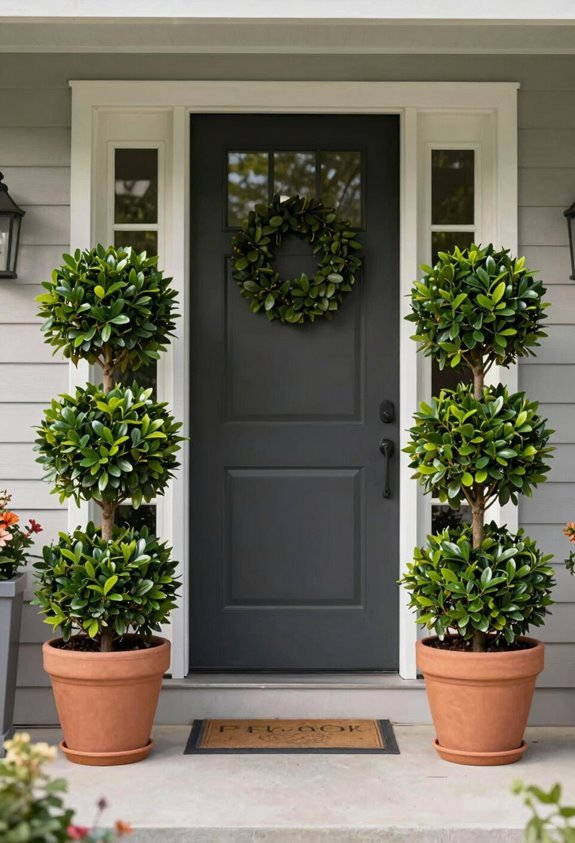
Boxwood topiaries give your front planters year-round structure and a clean, classic focal point that works in every season. I anchor my entryway with two 3-foot cone-shaped boxwoods in 16-inch galvanized planters, then ring the base with pink geraniums or white petunias for a crisp color contrast.
Place matching topiaries on each side of your steps or walkway to frame the approach and create instant symmetry.
Year-Round Structure
Anchor your front entrance with boxwood topiary centerpieces in substantial planters. These boxwood topiaries deliver year-round greenery that holds its shape through every season. Select galvanized metal or terra cotta planters that match your home’s blue or neutral facade.
Position the topiaries as fixed anchors. Ring them with seasonal plantings like pink geraniums or white petunias. Swap these outer plantings quarterly for fresh color. Layer ferns, impatiens, or ivy at the base for texture and depth.
Choose planters you can lift and move. This lets you rearrange quickly when seasons change or your taste shifts. The structured silhouette stays clean. The surrounding plantings keep your entrance welcoming. Your home’s exterior looks polished year-round. Your neighbors notice the consistency.
Classic Pairings
I’ll set two matching planters flanking my front door. I anchor each container with a boxwood topiary centerpiece. This creates year-round structure and a formal silhouette.
I pair galvanized metal and terra cotta planters with my boxwood topiaries. This mix delivers cohesive texture and a coastal-meets-classic look. I layer blue hydrangeas along front steps to frame the boxwood topiaries. This enhances vertical symmetry around my anchor containers.
I add seasonal transplants in surrounding planters. Pink geraniums and petunias provide color contrast against evergreen boxwood centers. I choose simple planters in blues and greens. This keeps focus on the topiary centers while maintaining a clean, welcoming line along the front of my home.
Stack Plants High to Low for Full, Lush Containers
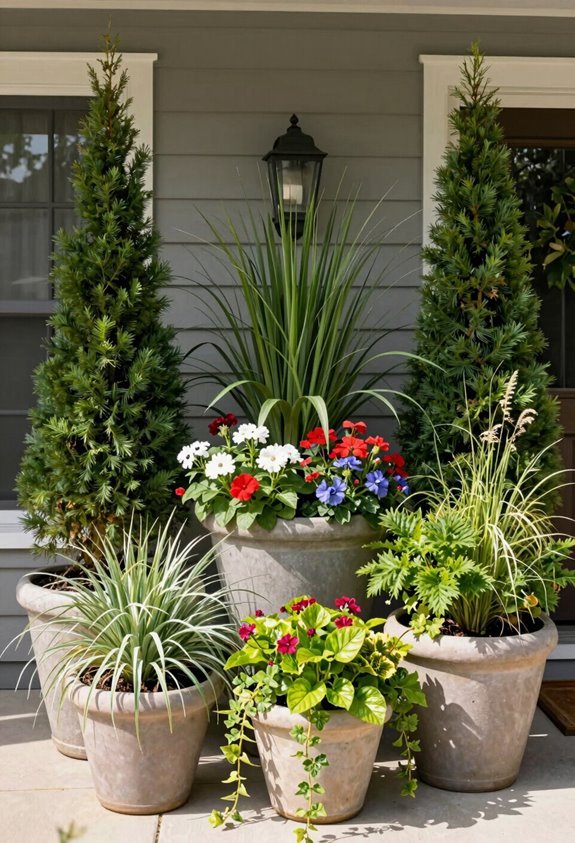
I arrange container plants in three distinct tiers to maximize visual impact in tight spaces. Stacking plants high to low turns ordinary outdoor planters into full, abundant focal points that command attention. I place tall specimens like ornamental grasses or small trees at the back. Mid-height flowers such as petunias or lobelias fill the middle. Trailing spillers like ivy or creeping Jenny cascade over front edges. This layering technique creates an immediate visual draw with minimal effort.
Height Anchors
Back row plants establish structure. Choose grasses or compact shrubs reaching 18-24 inches.
Mid-Layer Color
Center plants bridge visual gaps. Select blooms with contrasting textures.
Front Spillers
Edge plants soften container lines. Pick trailers extending 6-12 inches downward.
Drainage Essentials
Use pots with holes and well-draining mix. Check moisture daily in summer heat.
Pick Plants That Bloom From Spring Through Fall
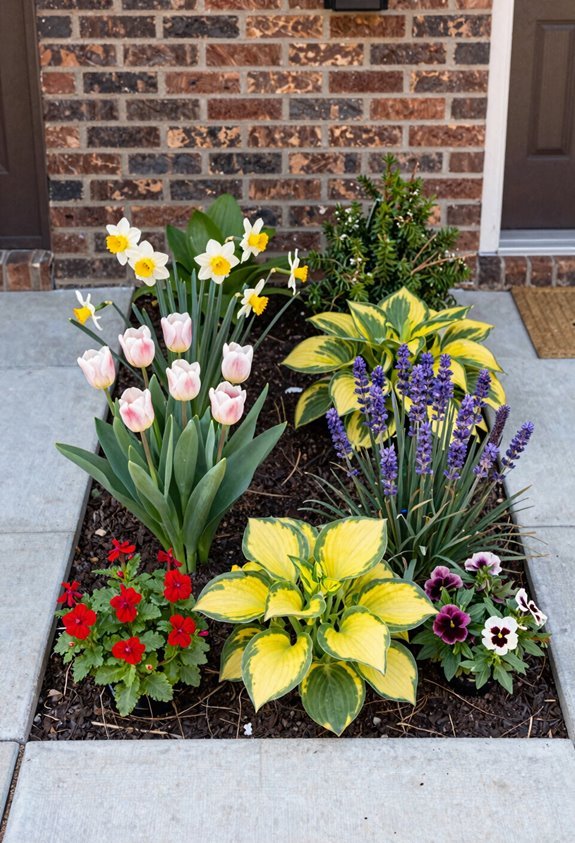
Once you’ve built your container structure, plant selection keeps color alive for months. I layer bloom times so my front porch never goes bare. Spring tulips and daffodils fade into summer geraniums and lobelias, then mums take over for fall. This staggered approach locks in visual interest through every season.
Layer bloom times so your containers never go bare—spring tulips fade to summer geraniums, then mums take over for fall.
Mix Perennials and Annuals
Daylilies give me permanent structure. I add petunias for seasonal color bursts. This combo saves money and keeps containers looking full.
Add Shrubs for Texture
Boxwoods and small topiaries maintain green structure when flowers rest. They anchor my design between bloom cycles.
Balance Water Needs
I pair drought-tolerant rosemary and lantana with moisture-loving impatiens. This prevents overwatering stress while extending flowering periods.
Plan Color Shifts
Cool spring blues transition to warm summer tones. This creates a cohesive look without jarring clashes.
Create Symmetry With Matching Citrus and Geranium Flanks
Why settle for one focal point when two work better? I flank my front door with matching citrus trees and geraniums. This creates instant symmetry that welcomes everyone home.
Match Your Containers
Choose terra cotta or galvanized metal finishes. Identical pots lock the look together.
Frame With Evergreens
Add boxwoods behind each flank. The blue-green foliage sharpens the mirrored effect.
Measure Your Spacing
Place planter groups eight feet wide at equal distances from the door. Balance demands precision.
Layer Your Heights
Put taller citrus trees in back with shorter geraniums in front. Both sides must mirror each other in silhouette and scale.
This pairing builds an entrance that feels intentional and complete.
Soften Hard Edges With Moss-Lined Planters
Stone or brick steps can feel harsh against soft landscaping. I use moss planters to create gentle borders that blend hard surfaces with garden beds. These textured containers add instant charm along entry paths.
Round and Scalloped Forms
Choose 12- to 16-inch round or scalloped moss planters. Place them every 24 inches along step edges. The organic shapes break up rigid lines.
Color Pairings
I pair moss planters with blue hydrangeas or boxwood topiaries. This combo gives year-round structure and color contrast.
Practical Placement
Set moss planters against concrete or metal edging. The moss masks small cracks and surface flaws. Keep moss evenly moist. Surround with drought-tolerant plants like lavender to balance care needs.