

I’ll walk you through a three-phase installation that covers planning, power setup, and fixture connection. You’ll need a 300-watt transformer, 12-gauge low-voltage cable, weatherproof wire nuts, and a trenching shovel.
The process demands precise load calculations and proper burial depth. One common mistake with transformer placement can void your warranty.
Plan Your Outdoor Lighting Layout and Power System

Before I buy anything, I map out where each light goes. I choose fixture types that fit my space. I pick step lights for stairs. I select post-mounted or surface-mounted options for other areas.
Map out every light placement before purchasing, matching fixture types to each specific space and need.
I decide on my power source early. I use low-voltage outdoor lighting. I plan for a transformer with wattage above my total load. I calculate my lights’ wattage and add 20 percent.
I handle layout planning with precision. I mark where wiring runs between key areas. I use multiple cable sections to prevent voltage drop. I plan waterproof connections for wet locations.
I note where I’ll bury cable six inches deep. I choose a sturdy mounting spot near my outdoor outlet.
Install the Transformer and Route the Wiring
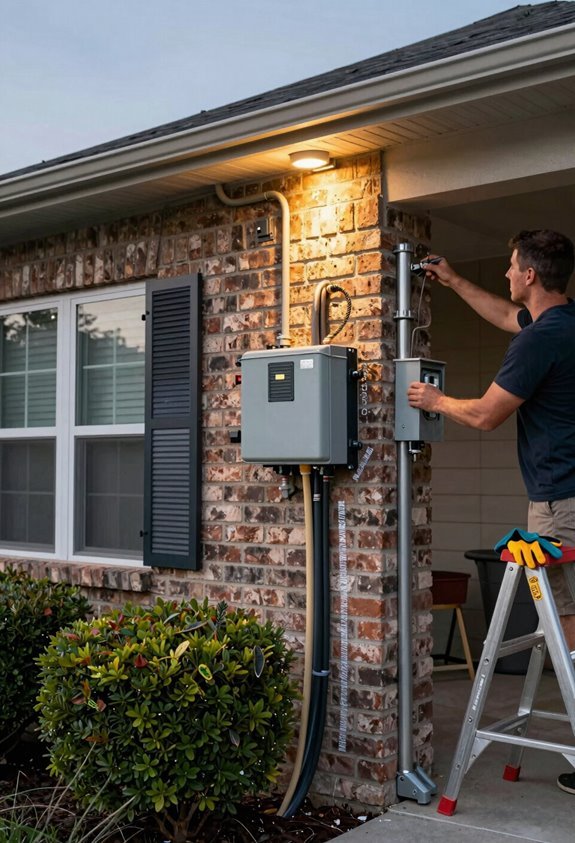
| Task | Details |
|---|---|
| Mount transformer | Sturdy surface, 4-6 inches above ground |
| Connect power | Weatherproof connectors, outdoor-rated outlet |
| Size correctly | Total wattage plus 20% margin |
| Route cable | Bury the cable 6 inches deep, use protective conduit |
I lay cable along planned paths. I keep runs short to limit voltage drop. I test continuity before covering.
I run protective conduit under walkways. I bury the cable at proper depth per local code. I secure my outdoor space wiring neatly.
Connect Fixtures, Test, and Complete the Installation

I attach each outdoor light to the main low-voltage cable with waterproof connectors. These caps seal out moisture and keep connections tight. I check each link twice.
I power up the transformer and confirm my low-voltage lighting runs at 12 volts. I test each outdoor fixture at dusk. I check brightness and beam direction. I verify timers and sensors work.
I inspect all weatherproofing. I re-seal any gaps in the wiring installation. I bury cables six inches deep per local code. I secure outdoor fixtures with ground stakes. I adjust angles for even coverage.
Testing lighting complete, I walk the yard once more. No loose wires touch gates or tools. The system runs clean. The job is done.