By a home gardening specialist.
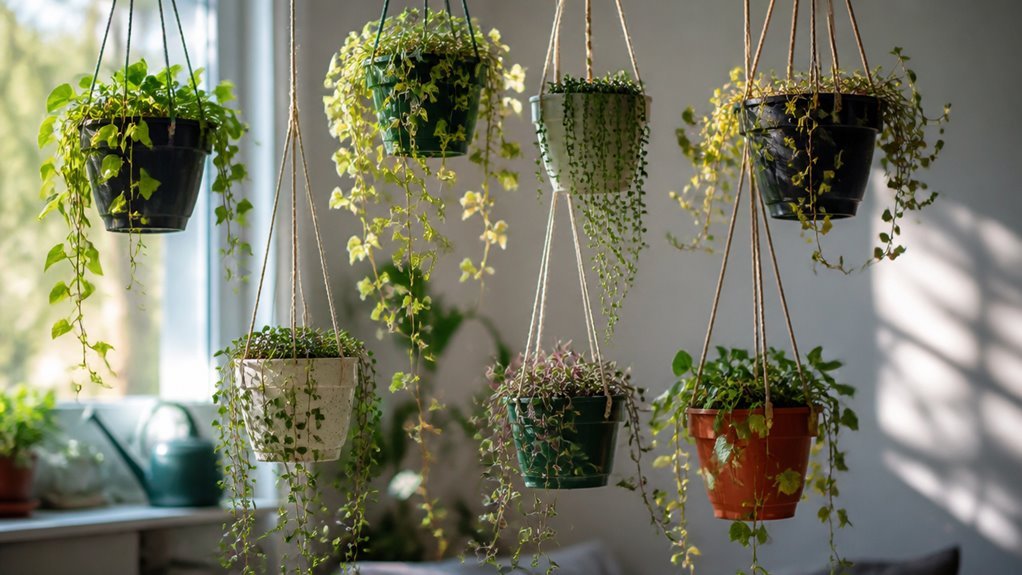
I have killed dozens of hanging plants. Most died from the same seven mistakes. Each failure taught me what hanging baskets actually need. I will show you the exact fixes that keep mine alive now.
Watering Hanging Baskets: How to Fix Overwatering and Underwatering
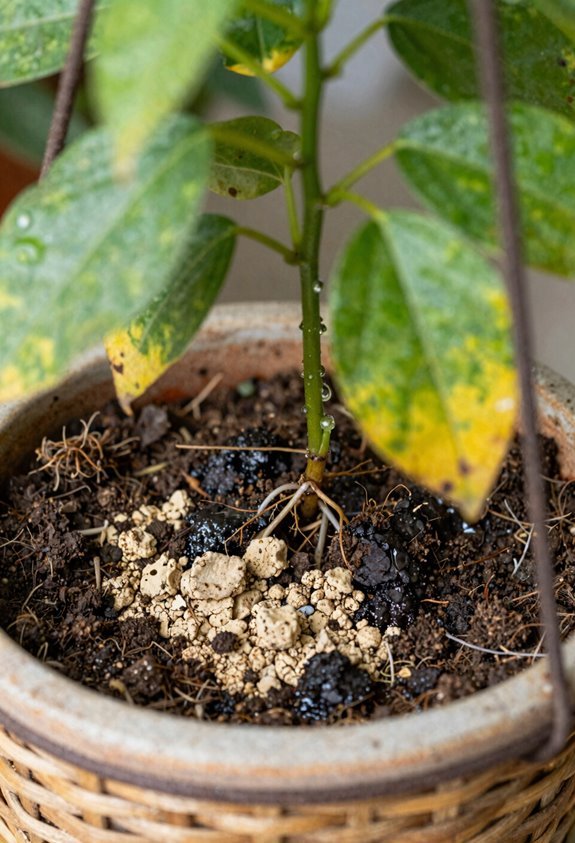
Improper watering kills more hanging plants than anything else I see. Overwatering saturates roots, causes swelling, blocks nutrient uptake, and leads to yellowing and rot. Underwatering shrinks roots and weakens foliage and stems.
Improper watering is the silent killer of hanging plants—overwatering drowns roots while underwatering starves them, both leading to decline.
Moisture Management Basics
I check soil dryness with my finger or a moisture meter. I water when the top two inches feel dry. Damp surface soil means I wait. This routine prevents bloom loss and extends basket life.
Timing and Tools
I water in the morning. Leaves dry before nightfall. Fungal problems drop. A moisture meter shows exact wetness levels in my hanging baskets. Consistent moisture management keeps plants healthy.
Root-Bound Hanging Baskets: Repotting for Better Growth
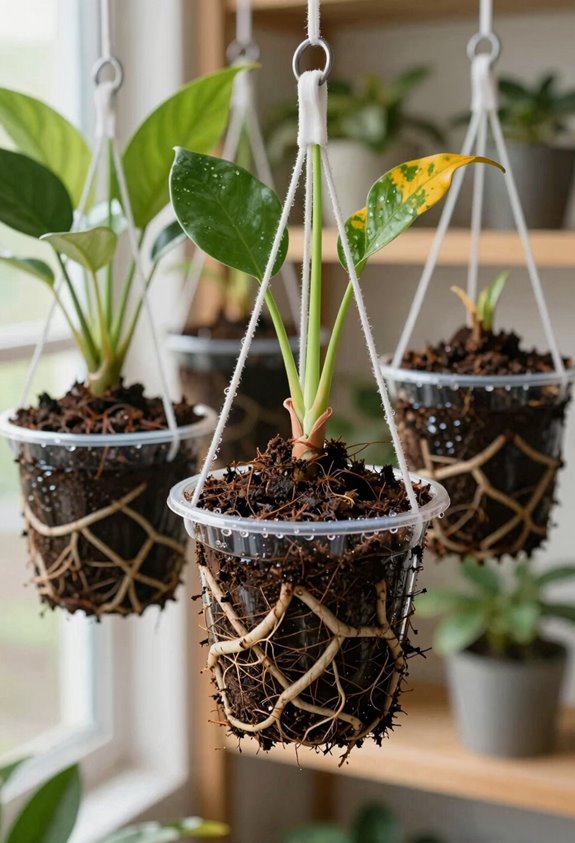
Why do your hanging baskets dry out hours after watering? I’ve found root-bound plants cause this exact headache. When roots fill the container, little soil remains. Water has nowhere to go.
Signs Your Plant Is Root-Bound
Check drainage holes. Roots growing out mean trouble. Soil won’t hold moisture. Plants wilt fast after watering.
Repotting Steps
- Pick a larger pot. Increase size by 2 to 4 inches.
- Remove the plant. Untangle roots gently. Cut any rotten sections.
- Add fresh potting mix. Water to settle soil around roots.
Other Options
Sometimes repotting hanging baskets isn’t possible. Transplant into a larger pot or alternate housing. This gives roots room to spread.
Your plants belong in containers that fit. Give them space, and they’ll do well with you.
Fertilizing Hanging Baskets So They Bloom All Season
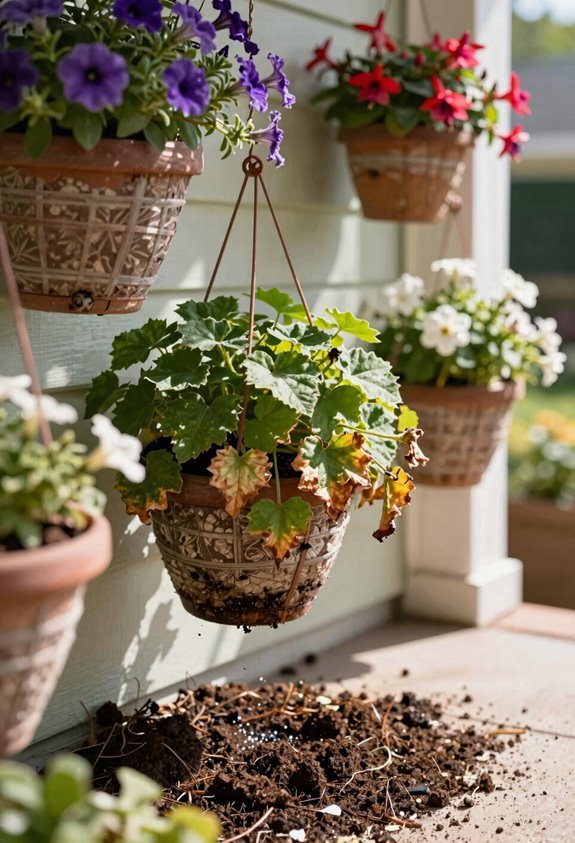
I feed my hanging baskets with half-strength liquid bloom fertilizer every 10 to 14 days for steady nutrient supply. I add a monthly top-dress of worm castings or aged compost for slow-release feeding. I watch for salt build-up and root burn by diluting feeds and checking plant response between applications.
Nutrient Timing Strategy
When do I feed my hanging baskets for all-season color? I stick to a steady rhythm that keeps blooms coming without burning roots.
Liquid Bloom Feeding
Apply liquid fertilizer at half strength every 10–14 days. This sustains continuous flowering without overwhelming container roots.
Monthly Top-Dressing
Add worm castings or aged compost monthly. These provide slow-release nutrients that activate with each watering.
Water Pairing
Combine feeding with proper watering. Nutrients must stay in the root zone to support repeat blooming.
I avoid full-strength doses. Excessive salts scorch roots and reduce flowering. Container baskets drain fast and run nutrient-poor quickly. Consistent hanging basket feeding prevents faded blooms and weak growth. Smart nutrient timing means steady color all season long.
Feeding Frequency Basics
How often do hanging baskets need food? I’ve found that consistent feeding keeps my baskets blooming strong all season.
Liquid Feed Schedule
Apply bloom-formulated liquid fertilizer at half-strength every 10 to 14 days. This fertilization frequency prevents nutrient deficiency without burning roots.
Monthly Top-Dress
Add worm castings or aged compost once per month. This provides slow-release nutrients with each watering.
Watering Integration
Mix nutrients into every watering for even distribution in compact basket soil. This supports steady flower production.
Warning Signs
Watch for weak growth or fewer blooms. These signal nutrient deficiency. Adjust your schedule if you see rapid leaf growth without flowers.
Avoid Over-Feeding
Too much fertilizer causes root burn. Stick to the schedule. Monitor your plants and reduce frequency if growth looks forced.
Matching Hanging Baskets to the Right Sunlight Conditions
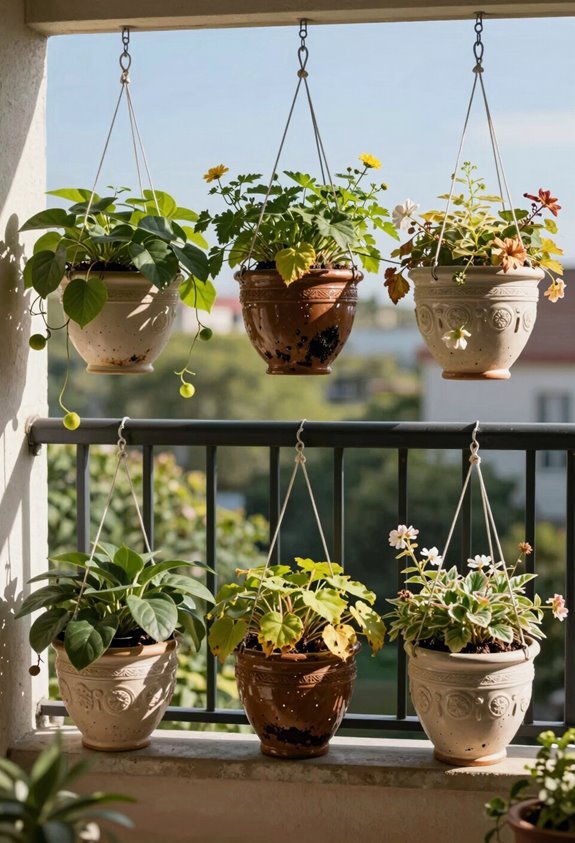
Where you hang your basket determines what’ll thrive, so read your light first. I learned that mismatched light requirements kill more hanging plants than pests. Get your sunlight exposure right, and you’ll keep your blooms alive through August.
Assess Your Site
Check your spot’s light pattern before buying. Morning sun differs from afternoon blast. Track hours of direct light across a typical day.
Match Plants to Conditions
Full sun plants need six to eight hours daily. Shade lovers like ferns burn in bright wind. Pick species that fit your actual conditions, not your wishes.
Adjust Plant Placement
Move baskets as seasons shift. Relocate scorched leaves to filtered light. Shift leggy stems toward brighter spots.
Correct sun assignment cuts heat stress. Your baskets hold color longer. You get reliable performance without guesswork.
Hardening Off Hanging Baskets Before You Hang Them Outside
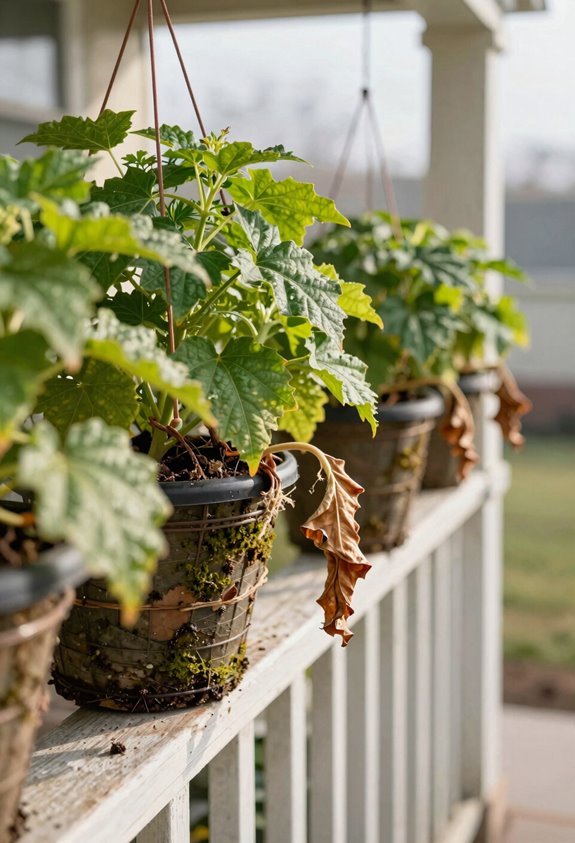
Once your basket’s location matches its light needs, you need to prep the plant itself. Hardening off hanging baskets prevents shock when moving from indoors to full sun. I start outdoor acclimation with 1–2 hours in a sheltered spot. I extend time gradually over 7–14 days.
| Stage | Action |
|---|---|
| Days 1–3 | 1–2 hours in shade or filtered light |
| Days 4–7 | Half day in partial sun |
| Days 8–14 | Full day, moving to final location |
I watch for wilting, leaf curling, or pale color during hardening off. I adjust exposure if stress appears. I keep soil consistently moist. I feed regularly to support roots. This process builds toughness. Your hanging baskets survive the move. Outdoor acclimation works when you go slowly.
When to Prune Hanging Baskets for a Mid-Summer Reblooming
I cut my hanging baskets back in early July to force a second flush of blooms through frost. I remove spent flowers half to two leaves down the stem, which releases side buds and thickens the plant from the center out. I keep feeding and watering steady during the 1–2 week recovery period, and by mid-July I see new growth and fresh color returning.
Optimal Timing Considerations
By late June, your hanging baskets need attention. I perform pinching back now to trigger reblooming through summer into the first hard frost. This mid-summer care sacrifices some blooms but stimulates new growth before heat peaks.
Timing Factors
Cut flowers to half their size. Leave two leaves. Target axillary buds for new leaders.
Growth Response
Pruning reduces apical dominance. Latent buds sprout. Bushier architecture follows with more foliage for flowering.
Recovery Timeline
Expect 1–2 weeks of visual decline. Center buds grow steadily. Re-flushing occurs in subsequent weeks.
Maintain consistent feeding and regular watering after pruning. Lobelia and verbena look worse before recovering. This temporary setback yields fuller baskets. Your patience rewards you with color through fall.
Haircut Technique Application
Leggy stems need cutting back to half their length. I use pinching back to remove the top growth two leaves down the stem. This stops the main bud and wakes up side shoots.
What Happens Next
The plant pushes new center buds in about one week. By week three, I see more leaves and blooms forming. The basket looks fuller and greener.
Mid-Summer Timing
I time this revival for mid-July before heat stress hits. I lose some flowers now but gain longer summer color. Two weeks of messy growth follow the cut.
Care After Cutting
I keep feeding and watering steady through recovery. This supports strong re-blooming. The plant rewards patience with fresh waves of color into late season.
Pet Urine and Hidden Damage to Low-Hanging Baskets
Hanging baskets sit at pet height, so I check mine often for hidden damage.
Spot the Burn
Pet urine kills fast. Salts and nitrogen scorch tender roots and newly established soil. I look for yellow patches and rapid wilting near leaf edges.
Flush or Fail
Regular watering dilutes salts after exposure. Without cleansing the soil, repeated hits compound stress and decline. I act immediately when I suspect trouble.
Rescue Steps
If damage shows, I remove the plant, rinse roots, and replace with fresh potting mix. This cuts accumulated salts and resets soil health.
Prevention That Works
I keep pets away from baskets. I use barriers and train them to avoid garden zones. Protecting low-hanging baskets takes consistent effort, but it keeps our shared spaces in good shape and intact.