Most frog enthusiasts don’t realize that arboreal species need vertical space three times their body length, while terrestrial frogs require floor area over height. I’ve spent considerable time researching habitat requirements across dozens of species, and the tank you choose can mean the difference between a stressed, short-lived pet and a thriving companion that actually displays natural behaviors like hunting and vocalizing.
The five setups I’ve compiled below address specific needs: security for escape artists, humidity retention for tropical natives, and ventilation to prevent that fatal bacterial buildup, so let’s hop right in.
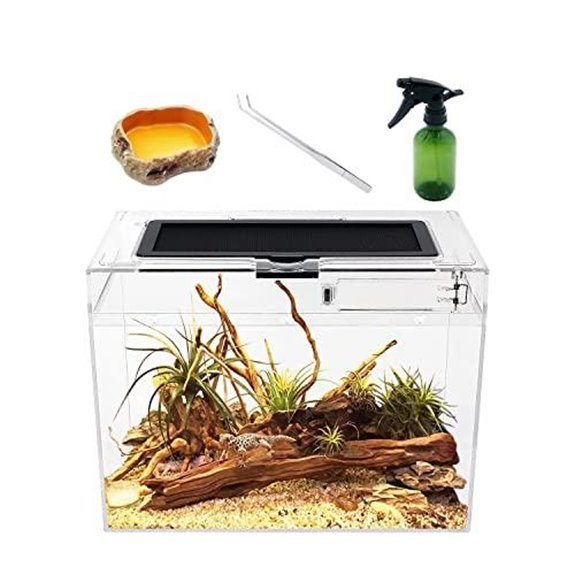
| Mini Reptile Terrarium Set 11.8″ x 7″ x 6″ Tank | Best for Beginners | Tank Material: PC plastic | Dimensions: 11.8″ x 7″ x 6″ | Opening/Access: Feeding port with magnet spring | VIEW LATEST PRICE | Read My Analysis | |
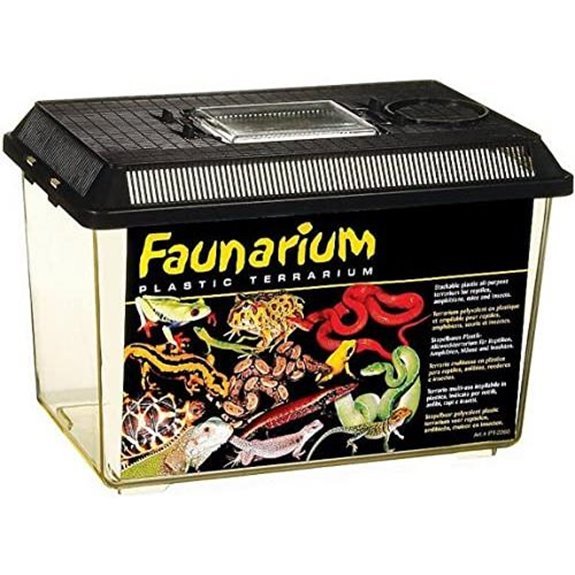
| Exo Terra Faunarium Plastic Reptile Terrarium Medium PT2260 | Portable Pick | Tank Material: Plastic | Dimensions: 12″ x 7.5″ x 8″ | Opening/Access: Transparent plastic door | VIEW LATEST PRICE | Read My Analysis | |
| Reptile Growth Mini Reptile Terrarium (12″ x 7″ x 9″) | Best for Display | Tank Material: PC plastic | Dimensions: 12″ x 7″ x 9″ | Opening/Access: Feeding port with magnet spring | VIEW LATEST PRICE | Read My Analysis | |
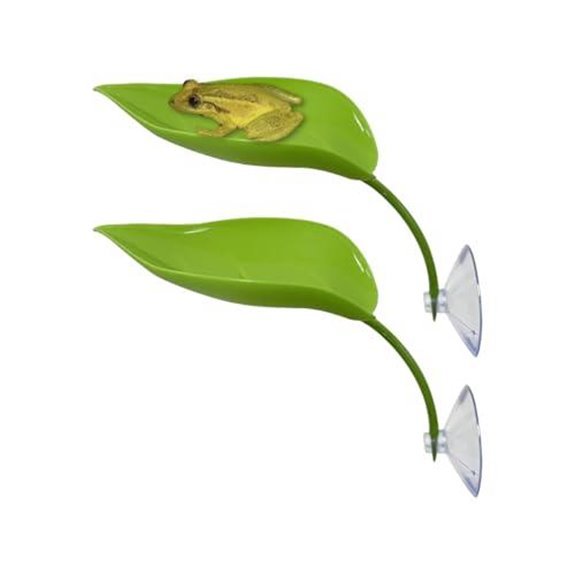
| KVZVK Tree Frog Leaf Decorations with Suction Cups | Decor Essential | Tank Material: Plastic | Dimensions: 7.5″ x 3″ x 8″ | Opening/Access: Suction cup attachment | VIEW LATEST PRICE | Read My Analysis | |
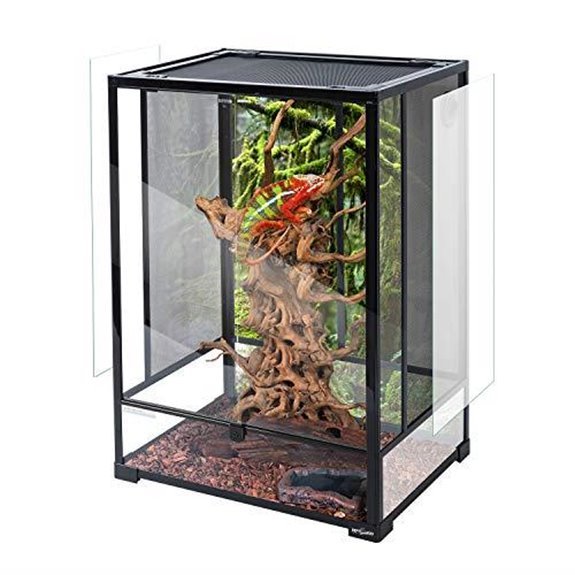
| REPTI ZOO 67 Gallon Reptile Glass Terrarium | Pro Habitat | Tank Material: Glass | Dimensions: 24″ x 18″ x 36″ | Opening/Access: Front and top doors with lock | VIEW LATEST PRICE | Read My Analysis |
More Details on Our Top Picks
Mini Reptile Terrarium Set 11.8″ x 7″ x 6″ Tank
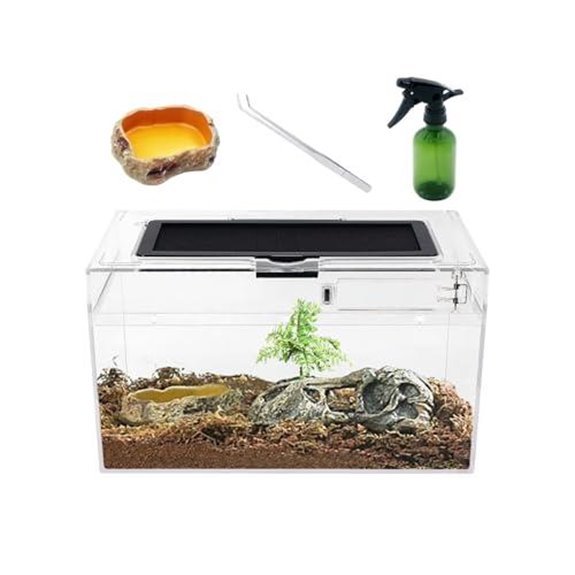
Looking for your first frog habitat without the overwhelm? I’ve got you covered with this compact gem from Reptile Growth.
The Mini Reptile Terrarium Set measures 11.8″ x 7″ x 6″, which makes it perfect for small amphibians like milk frogs, clown frogs, or even jumping spiders if you’re feeling adventurous. The crystal-clear PC construction gives you that 360-degree viewing pleasure. It’s explosion-proof, so your curious cat won’t turn your frog’s home into a disaster zone.
Here’s what seals the deal for me:
- Temperature range: -20°C to 120°C means you won’t warp the thing with your heat lamp
- Water-tight base: Build that rainforest humidity your frogs crave
- Magnetic feeding port: Push, feed, and it auto-closes. No escape artists here!
The kit includes tweezers, a feeding bowl, and spray bottle. Assembly? Practically nonexistent.
And if something’s off, they’ll replace or refund, no drama.
Small footprint, big functionality. Your frogs (and your sanity) will thank you!
- Tank Material:PC plastic
- Dimensions:11.8″ x 7″ x 6″
- Opening/Access:Feeding port with magnet spring
- Ventilation:Metal screen top
- Water Compatibility:Water-tight, holds water
- Intended Use:Reptile/amphibian terrarium
- Additional Feature:Explosion-proof PC construction
- Additional Feature:Magnet spring feeding port
- Additional Feature:Includes accessory toolkit
Exo Terra Faunarium Plastic Reptile Terrarium Medium PT2260
Who needs a permanent setup right away? Sometimes you’ve gotta start simple, and the Exo Terra Faunarium, model PT2260, gets the job done without the fuss.
This medium plastic terrarium measures 12 by 7.5 by 8 inches, so it fits small frogs comfortably for short stays. I like that the clear plastic lets you check on your amphibian without disturbing them.
The transparent door pops open for quick feeding or cleaning.
Here’s where this little box shines:
- Quarantine tank for new arrivals
- Travel carrier for vet visits
- Temporary housing during deep cleans
- Feeder insect storage (if you’re fancy about it)
It’s reusable, disinfectable, and weighs next to nothing. But don’t mistake “temporary” for “forever” – this isn’t your frog’s dream home, just a practical pit stop. Sometimes the best tool is the one that keeps things simple until you’re ready to build that rainforest paradise!
- Tank Material:Plastic
- Dimensions:12″ x 7.5″ x 8″
- Opening/Access:Transparent plastic door
- Ventilation:Solid construction, limited
- Water Compatibility:Not specified
- Intended Use:Temporary housing/transport/quarantine
- Additional Feature:Temporary housing optimized
- Additional Feature:Disinfectable reusable surface
- Additional Feature:Transport-friendly lightweight build
Reptile Growth Mini Reptile Terrarium (12″ x 7″ x 9″)
If you’re hunting for a tank that’s practically a showcase, this one’s worth your attention.
The Reptile Growth Mini Reptile Terrarium (12″ x 7″ x 9″) delivers serious visibility. Its explosion-proof PC shell boasts 98% brightness, meaning your frog basically lives in HD.
Here’s what stands out:
- Feeding made simple: A magnetic spring feeding port snaps shut automatically, so your little escape artist stays put
- Ventilation done right: Metal screen top allows airflow, UVB penetration, and dome lighting compatibility
- Built tough: Crystal-clear base handles -20°C to 120°C without yellowing or cracking
The compact footprint fits tight spaces while remaining accessible. No assembly required, though there’s a troubleshooting video if those plastic screws give you grief.
And the versatility! This tank moonlights as a spider enclosure, bug cage, or even a hermit crab habitat.
Reptile Growth backs it with a replacement-or-refund promise. For small amphibians needing crystal-clear observation without the glass-shattering anxiety, this ticks every box!
- Tank Material:PC plastic
- Dimensions:12″ x 7″ x 9″
- Opening/Access:Feeding port with magnet spring
- Ventilation:Metal screen top
- Water Compatibility:Water-tight
- Intended Use:Multi-species enclosure
- Additional Feature:98% brightness clarity
- Additional Feature:Anti-yellowing PC shell
- Additional Feature:No installation required
KVZVK Tree Frog Leaf Decorations with Suction Cups
Why settle for a bare tank when your tree frog’s climbing instincts deserve better? I’ve found that vertical space transforms an ordinary enclosure into something your pet actually wants to explore.
These KVZVK leaf decorations hit that sweet spot between function and aesthetics. Each pack includes two leaf-shaped platforms, roughly 7.5 inches tall and 3 inches wide, molded from non-toxic plastic that won’t degrade in humid conditions.
The suction cups grip glass reliably, and I appreciate how you can reposition them as your frog establishes favorite perches.
Here’s what makes these versatile:
- Works across habitats: tree frogs, geckos, even betta tanks wanting surface cover
- Sturdy enough for small bearded dragons or African dwarf frogs
- Natural green coloring blends with live plants or stands alone
And the best part? You’re not locked into one layout. As your frog grows or rearranges its territory, you simply detach and reattach. No tools, no hassle, no damaged silicone seals.
Your frog gets exercise, you get a prettier tank. Wins all around!
- Tank Material:Plastic
- Dimensions:7.5″ x 3″ x 8″
- Opening/Access:Suction cup attachment
- Ventilation:Open platform design
- Water Compatibility:Suitable for tanks
- Intended Use:Basking platform/decoration
- Additional Feature:Suction cup mounting
- Additional Feature:Natural mimic design
- Additional Feature:Adjustable positioning system
REPTI ZOO 67 Gallon Reptile Glass Terrarium
Looking for vertical real estate that works as hard as you do? The REPTI ZOO 67 Gallon Reptile Glass Terrarium delivers serious climbing space for your arboreal amphibians, measuring 24 x 18 x 36 inches of rainforest-ready habitat.
I love the dual-opening design here. Front doors swing wide for maintenance and feeding, complete with a connected lock that keeps escape artists contained. And the top opens separately, so you’re not wrestling with the whole enclosure just to drop in crickets or mist leaves.
The ventilation setup impresses too. A removable mesh top lets UVB and infrared penetrate while maintaining airflow, and you can swap side meshes for glass panels depending on your humidity needs.
The waterproof base handles water features without leaks, and the raised bottom frame accommodates substrate heaters for tropical setups.
Assembly’s straightforward with included instructions, and it ships flat-packed to survive delivery intact. Decorations aren’t included, so budget for plants, branches, and hides.
- Tank Material:Glass
- Dimensions:24″ x 18″ x 36″
- Opening/Access:Front and top doors with lock
- Ventilation:Removable mesh top
- Water Compatibility:Waterproof base, water-tight tested
- Intended Use:Reptile/amphibian habitat
- Additional Feature:Swapable side panels
- Additional Feature:Raised bottom frame
- Additional Feature:Connected lock mechanism
Factors to Consider When Choosing a Frog Tank
I’m about to walk you through five biggies you’ll want to weigh before pulling the trigger on any frog tank. Tank size requirements matter hugely here, since your little hoppers need room to, well, hop and hide without feeling cramped, and material plus durability will determine whether you’re buying once or replacing every couple years. You’ll also want to scrutinize ventilation systems, waterproof design, and accessibility features, because nobody wants a soggy, stuffy box that’s a nightmare to clean!
Tank Size Requirements
How do you know a frog tank is actually big enough? I always check the floor space first, because your frog needs room to move, hide, and thermoregulate, not just gallons on a label.
Here’s my quick sizing rule:
- Small frogs: roughly 10 gallons minimum
- Larger or hyperactive species: scale up accordingly
- Arboreal or swimming types: prioritize height for vertical exploration
But here’s where I see folks slip up. They pack in too many hides, decorations, or even multiple species, and suddenly that “spacious” tank feels cramped. Stress spikes, and your frog suffers.
Material and Durability
What really separates a tank you’ll love from one you’ll regret? Material and durability, plain and simple. I always look for clear, impact-resistant polycarbonate … that “explosion-proof” PC stuff that takes a beating without cracking.
Here’s my checklist:
- Temperature tolerance from -20 °C to 120 °C, so heat lamps and cold rooms won’t warp it
- Sturdy base construction that resists yellowing, because cloudy sides ruin the view
- UVB and infrared penetration for lighting setups that won’t degrade the enclosure
- Secure, water-tight seals to prevent leaks and maintain humidity
Skip the cheap acrylic that scratches when you blink. Polycarbonate costs more upfront, but you’ll replace it never. And frogs are messy, splashy little creatures, so that tight seal isn’t negotiable. Trust me on this one.
Ventilation Systems
Polycarbonate walls won’t mean much if your frog’s gasping for fresh air, so let’s talk about getting the airflow right.
I always look for a metal screen or mesh top, because that’s your golden ticket for air exchange without turning the tank into a moldy sauna. But here’s the tricky part: you want circulation, not a wind tunnel. Strong drafts stress frogs out something fierce.
UVB and infrared can zip right through mesh lids, which means basking zones work beautifully when paired with proper lighting. And adjustable vents? Absolutely clutch for tweaking humidity between species.
Quick checklist for top-tier ventilation:
- Metal screen or mesh top for steady airflow
- Adjustable components for customization
- Easy-to-remove sections for cleaning access
Get this balance right, and your frog’s lungs (and your nose) will thank you.
Waterproof Design
A soggy carpet or warped cabinet under your frog tank is the fastest way to turn a hobby into a headache, so I’m picky about waterproofing from day one.
I always check for these essentials:
- Water-tight base and sealed joints: they corral spills from misting or cleaning without springing surprises.
- Non-porous materials: tempered glass or quality plastics that shrug off water absorption and stubborn stains.
- Secure lid: cuts evaporation and keeps your jumper from pulling a Houdini during feeding.
And here’s a tip most folks skip: add a watertight drain if your setup allows it. You’ll thank yourself when partial water changes get effortless.
Check seams periodically; even tiny leaks invite mold and cabinet carnage. Trust me, five minutes of prevention beats replacing furniture every spring!
Accessibility Features
Once you’ve sealed every seam and stopped worrying about puddles creeping across your floor, it’s time to think about how you’ll actually interact with your frogs day after day.
I look for tanks with feeding ports or easy-access openings. These let me drop in crickets without disturbing shy inhabitants or risking a midnight escape artist making a break for it.
Top or side doors are game-changers! I clean, feed, and check water quality without removing anyone.
Clear viewing panels matter too. I spot health issues early when I can see clearly.
Secure, self-closing doors with locks: non-negotiable. One bump and a clever tree frog becomes a roommate.
And adjustable tops or mesh sections let me customize for different species, swapping out lids as needed.
Temperature Regulation
Why does temperature matter so much? Frogs are cold-blooded, so they can’t regulate body heat internally. I’ve learned that getting this wrong leads to stress, illness, or worse.
When I set up a tank, I aim for this gradient:
- Warm side: 78–82°F (26–28°C)
- Cool side: 72–78°F (22–26°C)
This lets your frog self-regulate, basking when chilly, retreating when warm.
I always place thermometers at multiple points. One reading won’t cut it, gradients matter! For heat sources, I use thermostats. Under-tank heaters or basking lamps work, but uncontrolled, they’ll cook your pet.
And here’s a pro tip: avoid dramatic swings. I adjust gradually, use timers for natural day-night cycles, and check substrate temperature too. Frogs burrow, and cold bellies cause digestion issues!
Habitat Enrichment
Now that we’ve got temperatures locked in, let’s talk about turning that empty box into a place your frog actually wants to live. Habitat enrichment isn’t just fancy tank dressing, it’s environmental psychology for amphibians.
I always start with textures and structures. Your frog needs climbing surfaces, basking platforms, and varied terrain that mimics their wild home. Think cork bark, smooth river rocks, and gently sloped substrates.
But here’s the key: create distinct microhabitats. Most species need water zones, dry land areas, and tucked-away hiding spots. Without these zones, you’ll see stressed, lethargic frogs hiding in corners.
Safety matters too. Use non-toxic decor with secure attachment, suction cups for climbing walls, and weighted bases. Escape artists love loose decorations!
I rotate enrichment monthly, swapping plants, rearranging leaf litter, and shifting background terrain. This prevents boredom and sparks natural foraging behaviors.
Just remember: every item must be removable for cleaning. Frogs are messy roommates.