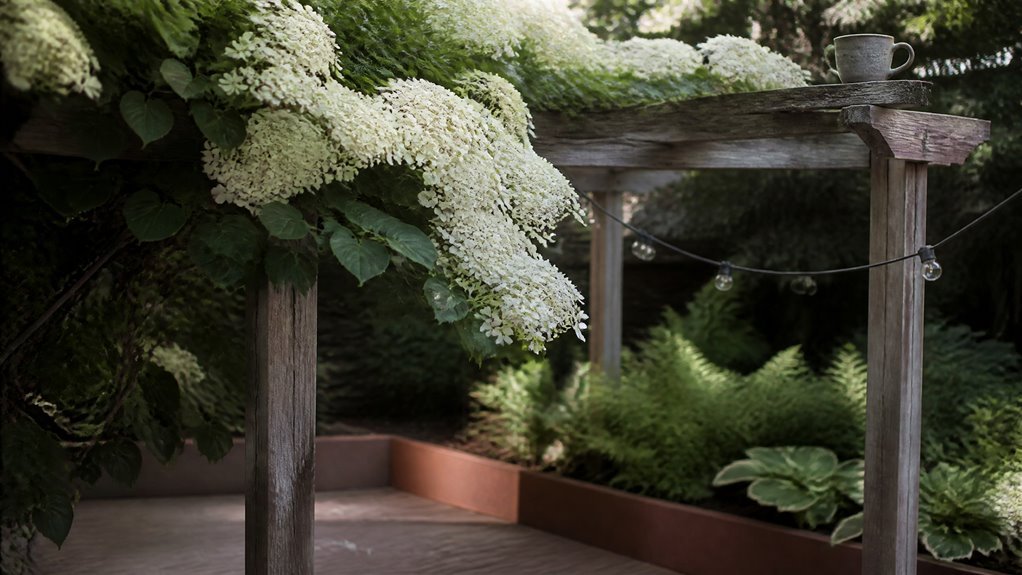
I’ve spent years helping fellow gardeners solve the puzzle of shady spots, and 2026 brings some standout performers worth knowing. Whether you’re masking a fence, softening a trellis, or simply craving vertical color where sunlight plays hard to get, these seven flowering vines offer real solutions, not just wishful thinking.
And here’s the thing about shade gardening: it’s less about compromise and more about choosing plants that actually prefer the dimmer conditions most gardeners dread.
But not all shade-tolerant vines are created equal, and picking the wrong one means watching a slow, sad decline instead of explosive growth. Ready to transform that dark corner into something spectacular?
| Hummingbird Trumpet Vine Seeds for Fence & Garden (300 PCS) | Best for Hummingbirds | Plant Type: Hummingbird Trumpet Vine (Campsis radicans) | Seed Quantity: 300 seeds | Bloom Color: Bright orange-red | VIEW LATEST PRICE | Read My Analysis | |
| 50+ Dark Red Morning Glory Seeds Climbing Vine Flowers Garden Planting | Best for Cottage Gardens | Plant Type: Morning Glory (Ipomoea) | Seed Quantity: 50+ seeds | Bloom Color: Dark red/dark purple (also pink, blue, white) | VIEW LATEST PRICE | Read My Analysis | |
| KVITER Red Trumpet Vine Seeds for Planting (Campsis Radicans) | Most Cold-Hardy | Plant Type: Red Trumpet Vine (Campsis radicans) | Seed Quantity: 100 seeds | Bloom Color: Red | VIEW LATEST PRICE | Read My Analysis | |
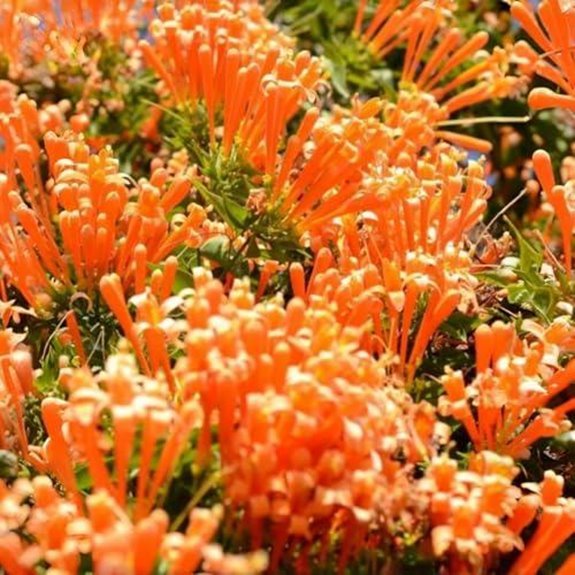
| Flame Vine Seeds 20pcs for Fences & Trellises | Best Winter Bloomer | Plant Type: Flame Vine (Pyrostegia venusta) | Seed Quantity: 20 seeds | Bloom Color: Bright orange | VIEW LATEST PRICE | Read My Analysis | |
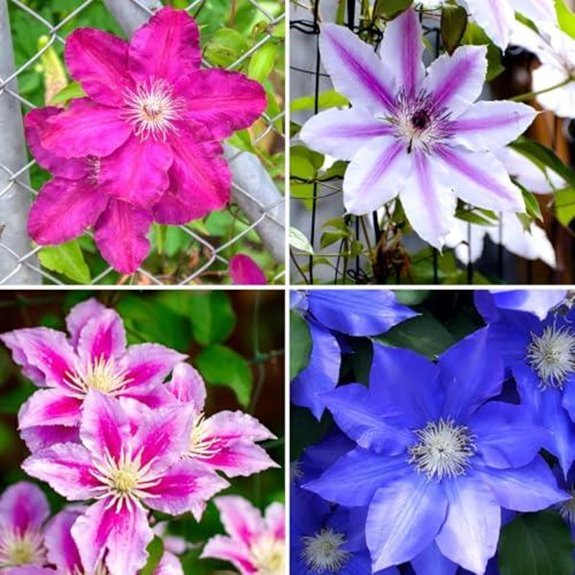
| CarpetC Mixed Clematis Seeds for Planting (200+) | Longest Bloom Season | Plant Type: Mixed Clematis | Seed Quantity: 200+ seeds | Bloom Color: Mixed colors | VIEW LATEST PRICE | Read My Analysis | |
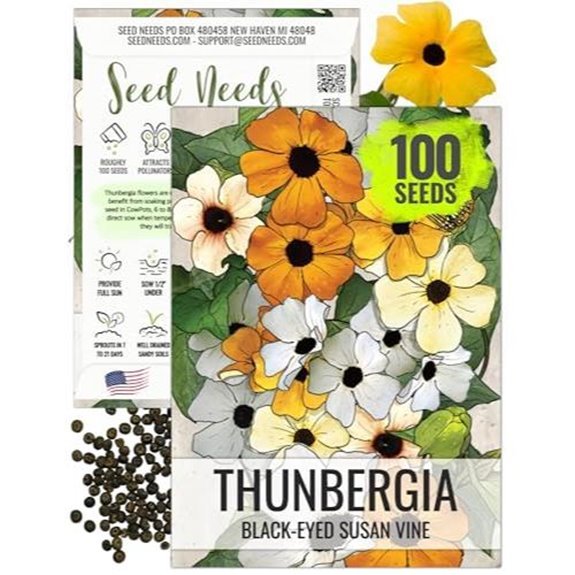
| Seed Needs Black-Eyed Susan Vine Seeds for Planting Thunbergia 1 Pack | Fastest to Flower | Plant Type: Black-Eyed Susan Vine (Thunbergia alata) | Seed Quantity: 1 pack (unspecified count) | Bloom Color: Yellow and orange (mixed) | VIEW LATEST PRICE | Read My Analysis | |
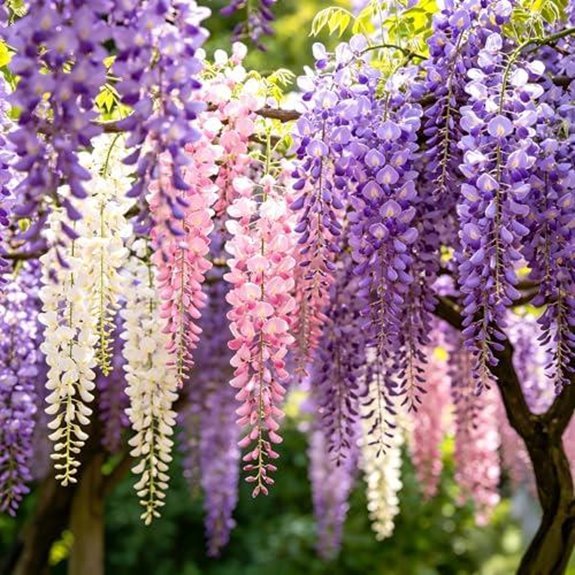
| CarpetC Wisteria Vine Seeds for Planting (30+) | Most Fragrant | Plant Type: Wisteria (Wisteria floribunda) | Seed Quantity: 30+ seeds | Bloom Color: Wisteria (typically purple/blue/white) | VIEW LATEST PRICE | Read My Analysis |
More Details on Our Top Picks
Hummingbird Trumpet Vine Seeds for Fence & Garden (300 PCS)
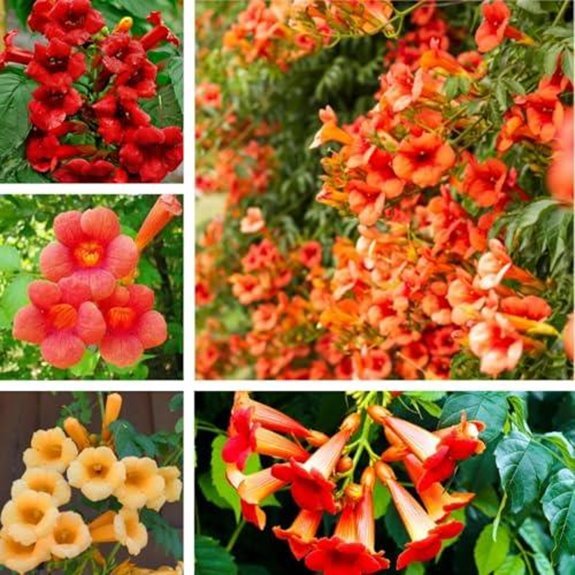
Looking for a vine that’ll turn your shady fence into a hummingbird hotspot? I’ve got just the thing. BuggyBeds packs 300 trumpet vine seeds into each envelope, which covers serious real estate along your vertical spaces.
Here’s what you’re working with:
- Color payoff – bright orange-red tubular blooms that read like neon signs to hungry hummers
- Wildlife magnet – butterflies and beneficial pollinators crash the party too
- Speed – fast-growing climber that doesn’t mess around filling in bare spots
- Versatility – fences, trellises, arbors, pergolas, walls; it isn’t picky
And the maintenance? Practically nil once established. This perennial toughs out varied climates and returns yearly without begging for attention.
I’m talking natural privacy screens without the hassle.
The tubular bloom shape isn’t accidental, by the way. Hummingbird beaks evolved for exactly this architecture, so you’re essentially serving fast food in their preferred packaging.
Whether you’re masking an ugly fence or adding vertical drama to a flat landscape, you’ll get coverage plus ecosystem support through the whole blooming season.
- Plant Type:Hummingbird Trumpet Vine (Campsis radicans)
- Seed Quantity:300 seeds
- Bloom Color:Bright orange-red
- Growth Habit:Fast-growing climber, 30+ feet if unchecked
- Supports/Structures:Fences, trellises, arbors, walls
- Pollinator Attraction:Hummingbirds, butterflies, beneficial pollinators
- Additional Feature:Minimal maintenance perennial
- Additional Feature:Abundant 300-seed coverage
- Additional Feature:Hardy across climates
50+ Dark Red Morning Glory Seeds Climbing Vine Flowers Garden Planting
Who needs sun-drenched vines when you’ve got shade to work with? I’m thrilled to share these SPROUTARAQ dark red morning glory seeds from GraceBee, because they’re a game-changer for vertical gardening in lower-light spots.
Here’s why these non-GMO seeds deserve your attention:
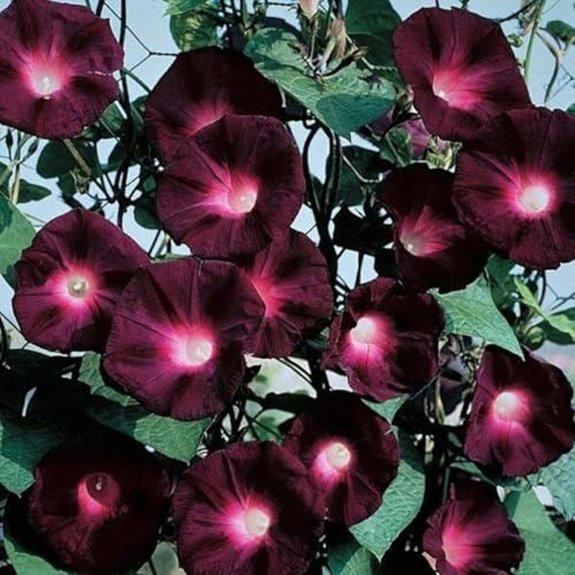
- Color payoff: You’ll get moody dark red and purple blooms, though the full range sneaks in purple, pink, blue, and white for surprise variety
- Pollinator magnet: butterflies and honey bees can’t resist these trumpet-shaped flowers
- Versatile structure: trellises, fences, containers, you name it, they’ll climb it
The cottage garden aesthetic comes built-in. These vines wrap and weave through vertical structures, creating living walls that soften garden borders beautifully.
Timing tip: soak seeds overnight before planting. Morning glories germinate faster that way, and you’ll see growth within a week or two in warm soil.
But remember, “morning glory” isn’t just a pretty name. Each flower opens with dawn and folds by afternoon, so plant where you’ll catch that morning show! With 50+ seeds, you’ve got room to experiment with placement.
- Plant Type:Morning Glory (Ipomoea)
- Seed Quantity:50+ seeds
- Bloom Color:Dark red/dark purple (also pink, blue, white)
- Growth Habit:Climbing vine for trellises/fences
- Supports/Structures:Trellises, fences, containers
- Pollinator Attraction:Butterflies, honey bees
- Additional Feature:Cottage garden aesthetic
- Additional Feature:Container-friendly growth
- Additional Feature:Non-GMO seed source
KVITER Red Trumpet Vine Seeds for Planting (Campsis Radicans)
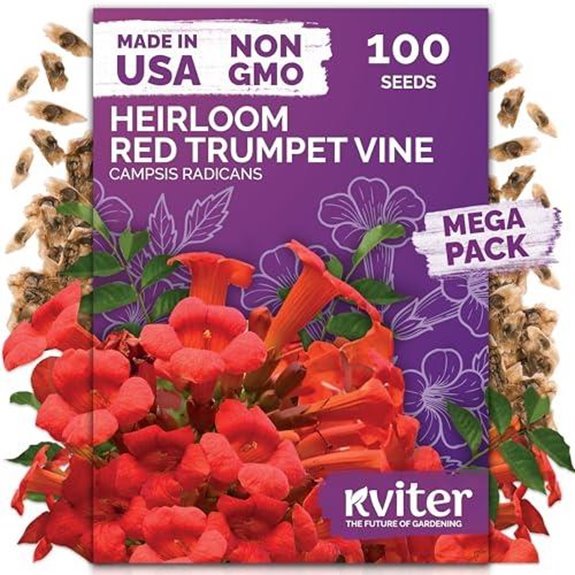
Need a vine that laughs at freezing temperatures? I’ve got just the thing. KVITER’s Red Trumpet Vine (Campsis radicans) shrugs off winter down to -4°F, and I’m genuinely impressed by its sheer determination.
Here’s what makes this heirloom standout:
- Serious height: 30 feet of rapid climbing glory if you don’t rein it in
- Germination stats: 90% success rate with proper prep
- Wildlife magnet: Hummingbirds lose their minds over those tubular red blooms
The thick, woody roots do double duty, anchoring your soil against erosion while pumping out perennial color year after year. I’ve found these non-GMO seeds give reliable results when you soak them 24 hours first, then sow shallow at 70°F or warmer.
Heirloom Trumpet Creeper, Hummingbird Vine, call it what you like. I call it bulletproof beauty for fences, trellises, and walls that need waking up.
- Plant Type:Red Trumpet Vine (Campsis radicans)
- Seed Quantity:100 seeds
- Bloom Color:Red
- Growth Habit:Rapid climbing, up to 30 feet
- Supports/Structures:Fences, trellises, walls, gardens
- Pollinator Attraction:Hummingbirds, birds, pollinators
- Additional Feature:90% germination rate
- Additional Feature:Erosion control roots
- Additional Feature:Extreme cold hardy
Flame Vine Seeds 20pcs for Fences & Trellises
Want winter color when everything else sleeps? Flame Vine delivers when you need it most.
Pyrostegia venusta, that’s the botanical name, bursts into clusters of bright orange trumpet-shaped flowers right through winter and into spring, turning your fence into a living sunset when the garden’s typically gray.
I love how this vigorous climber rapidly blankets trellises, walls, and fences with dense foliage that doubles as natural shade and privacy screening. BuggyBeds packs 20 seeds, enough to create that impressive vertical garden display you’re envisioning.
Here’s what makes this vine a standout:
- Fast establishment — it doesn’t mess around once it takes hold
- Hardy temperament — adapts to various conditions with minimal fuss
- Low maintenance demands after initial establishment
The dense growth means you’ll get coverage plus blooms, solving two garden problems at once. And because it thrives in shadier spots while still flowering profusely, it fills that tricky niche where many vines simply sulk.
Plant it, give it something to climb, then step back and watch the winter magic happen!
- Plant Type:Flame Vine (Pyrostegia venusta)
- Seed Quantity:20 seeds
- Bloom Color:Bright orange
- Growth Habit:Vigorous climber
- Supports/Structures:Fences, trellises, walls
- Pollinator Attraction:Not specified
- Additional Feature:Winter/spring blooming
- Additional Feature:Dense shade coverage
- Additional Feature:Low care once established
CarpetC Mixed Clematis Seeds for Planting (200+)
Looking for a flowering vine that keeps the show going from spring straight through fall? I’ve got you covered with these CarpetC Mixed Clematis Seeds.
Clematis earns its nickname “queen of the vines” honestly. These climbers hit 6-12 feet using leaf tendrils that grab anything: trellises, arbors, fences, or that ugly wall you’ve been hiding.
The mixed varieties pump out large star-shaped blooms in diverse colors, and they attract hummingbirds like nobody’s business.
Here’s what you need to know about getting started:
- Cold stratification is non-negotiable: 8-12 weeks in moist sand (your fridge works fine)
- Sow 1/4 inch deep, keep soil around 65-75°F
- Expect germination in 2-6 weeks
- Blooms arrive in 1-3 years, so patience pays off
They’re hardy in zones 3-9, handle partial shade beautifully, and once established, they’re drought-tolerant and deer-resistant. Well-drained, fertile soil keeps them happy.
With 200+ heirloom, non-GMO seeds, you’re planting serious vertical interest!
- Plant Type:Mixed Clematis
- Seed Quantity:200+ seeds
- Bloom Color:Mixed colors
- Growth Habit:Vigorous climber, 6-12 feet
- Supports/Structures:Trellises, arbors, fences, pergolas, containers
- Pollinator Attraction:Hummingbirds, pollinators
- Additional Feature:1-3 year bloom timeline
- Additional Feature:Deer resistant growth
- Additional Feature:Cold stratification required
Seed Needs Black-Eyed Susan Vine Seeds for Planting Thunbergia 1 Pack
Which shade gardener doesn’t crave instant gratification? I’ve found Thunbergia alata delivers exactly that, shooting up to 20 feet with blooms appearing in days when sown correctly.
This annual vine keeps pumping out 1.5-inch yellow and orange flowers all summer, then politely bows out after first frost. No lingering, no fuss.
Here’s what makes it indispensable for partial shade spots:
- Privacy coverage that actually works, fast
- Pollinator magnetism: bumblebees, honeybees, butterflies, even ladybugs
- Butterfly garden cornerstone with minimal effort
Seed Needs packages these in tear-resistant, moisture-resistant pouches, temperature-controlled for freshness across seasons. The 1-pack contains open-pollinated and heirloom varieties, no GMOs, germination-ready direct from growers.
Sow correctly, and you’ll measure results in days, not weeks. For shade gardeners who want color without the wait, this vine practically grows itself.
- Plant Type:Black-Eyed Susan Vine (Thunbergia alata)
- Seed Quantity:1 pack (unspecified count)
- Bloom Color:Yellow and orange (mixed)
- Growth Habit:Climbing vine, up to 20 feet
- Supports/Structures:Natural privacy screen, climbing support
- Pollinator Attraction:Bumblebees, honeybees, butterflies, ladybugs
- Additional Feature:Annual frost-cycle plant
- Additional Feature:Temperature-controlled packaging
- Additional Feature:20-foot vertical reach
CarpetC Wisteria Vine Seeds for Planting (30+)
Why settle for a shy wallflower when you could have a cascade of perfumed purple bells tumbling down your trellis?
I’m talking about Wisteria floribunda, specifically the CarpetC seed pack with 30+ seeds ready to launch your vertical garden dreams.
Here’s what won me over:
- Those drooping clusters stretch up to 12 inches long, packed with lightly fragrant blooms
- Dense foliage throws real cooling shade once it fills in
- Hardy zones 5-9, so it handles pretty serious winters
- Drought tolerant after establishment (translation: quit fussing after year one)
And the practical stuff actually excites me. Those nitrogen-fixing roots improve your soil while you do essentially nothing.
Full sun to partial shade means you’ve got placement flexibility, whether you’re draping an arbor or shielding a west-facing wall.
Fall delivers velvety seed pods for texture when flowers fade. Specimens live decades, so you’re planting shade equity, not just a temporary vine.
Loam, sand, or chalk? It adapts. Pest resistant? Naturally. Low maintenance? You barely deadhead.
Plant once, enjoy structure and blooms for literally generations. That’s the kind of long-term relationship I want in my garden.
- Plant Type:Wisteria (Wisteria floribunda)
- Seed Quantity:30+ seeds
- Bloom Color:Wisteria (typically purple/blue/white)
- Growth Habit:Ornamental climber, cascading
- Supports/Structures:Trellises, arbors
- Pollinator Attraction:Not specified
- Additional Feature:Nitrogen-fixing roots
- Additional Feature:Decades-long lifespan
- Additional Feature:12-inch bloom clusters
Factors to Consider When Choosing a Flowering Vine for Shade
Before you commit to any vine, I’m going to walk you through the five factors that separate a thriving shade climber from a disappointing purchase. You’ll need to assess your actual light conditions (because “shade” covers everything from dappled morning sun to deep north-side gloom), match your vine’s tolerance to those levels, and honestly evaluate whether you’re after subtle whites, moody purples, or something that pops against dim backdrops. And don’t skip the practical stuff: your support structure’s strength matters as much as your soil’s pH, since a 20-foot clematis in wet clay on a wobbly trellis is a heartbreak waiting to happen!
Light Requirements Assessment
How do you know if a flowering vine will actually thrive in your shady spot rather than just survive? I start by checking the light range, full sun to partial shade, because many shade-friendly varieties need that sweet spot of dappled or morning sun to really pop.
Here’s what I look for:
- Bloom timing in shaded positions, some flowers actually last longer when they’re not frying by noon
- Leaf density, evergreen or semi-evergreen keeps your trellis covered year-round instead of going bare in winter
- Regional provenance, a vine that works in Seattle’s gloom might sulk in your hotter, brighter shade
And don’t forget canopy structure! You want something that builds real coverage, not just lacy gaps. Dense foliage on arbors or fences means actual cooling shade, not decorative disappointment.
Shade Tolerance Levels
Where exactly does your shady spot fall on the light spectrum? I’ve learned that not all shade is created equal, and your vine’s happiness depends on getting this right.
Some flowering vines laugh off limited light, thriving in dappled conditions under tree canopies with just 3–4 hours of direct sun. Others sulk without 6–8 hours, blooming sparsely when shortchanged. Here’s what to watch for:
- Deeper shade often means fewer flowers, but cooler, subtler tones
- North-facing walls and filtered light suit adaptable climbers
- Moist, well-drained soil becomes critical as shade density increases
And don’t forget timing! Shaded conditions can nudge bloom peaks earlier or later than expected. Match your vine’s tolerance to your actual light conditions, not your wishful thinking.
Bloom Color Preferences
Once you’ve mapped your shade situation, it’s time to think about what you actually want to see climbing up that fence or trellis. Bloom color isn’t just about aesthetics: it’s about transforming dim corners into intentional spaces.
You’ve got options everywhere on the spectrum: fiery orange-red and yellow for punchy contrast, deep purple and blue for cool serenity, soft pink and crisp white for classic garden elegance. But shape matters too! Trumpet-shaped blooms cluster dramatically, star-shaped flowers add delicate texture, and cascading inflorescences create waterfall effects in the gloom.
Here’s what I always consider:
- Seasonal timing, spring-only color versus multi-season performers
- Bloom density, sparse flowering gets lost; dense packs a punch
- Duration, longer-lasting blooms maximize your investment
And don’t overlook pollinator appeal! Hummingbirds and butterflies will find your shade garden if you plant trumpet varieties. It’s far more lively than you’d expect under canopy cover.
Climbing Structure Needs
Before you fall in love with a vine’s bloom photos, you’ve got to ask yourself what it’s actually going to climb on, because a mismatch here means floppy mess or broken trellises down the road.
I always check three things first:
- Size match: Will it stop at 8 feet or blast past 30? Know your structure’s limits.
- Speed: Need quick privacy? Fast climbers deliver; slow ones test your patience.
- Support style: Twining vines need thin wires or lattice. Clinging types grip walls directly. And weight! Mature vines get heavy.
Also consider seasonal density. Evergreen types block light year-round; deciduous ones let winter sun through. Pruning keeps aggressive growers from swallowing neighboring plants whole.
Pick wrong, and you’re rebuilding trellises or hacking back monsters. Pick right, and your structure and vine grow old together gracefully.
Soil Condition Compatibility
How’s your dirt doing? I’ve learned the hard way that shade-loving vines won’t forgive soggy roots, so I always check drainage first. Most of these climbers want soil that’s moist but never waterlogged. Think wrung-out sponge, not swamp.
Here’s what I watch for:
- Well-drained beds. If water pools after rain, I amend with compost or plant in raised mounds.
- Consistent moisture. Shade often means slower evaporation, but don’t let that fool you into overwatering.
- Hardiness zone match. I pick vines rated for my zone so they survive winter and return reliably.
And here’s a pro tip: once established, many shade-tolerant vines handle dry spells surprisingly well. That drought tolerance matters in shaded corners under eaves where rain rarely reaches. Choose wisely, and your vine thrives for years!
Maintenance Commitment Level
Maintenance isn’t a dirty word in my gardening vocabulary, but it’s definitely a reality check I’ll level with you about. I always ask myself: how much time am I actually willing to spend?
Here’s my quick checklist for sorting vines by effort:
- Low-maintenance winners: Look for “drought-tolerant once established” on the tag. These tough customers basically run themselves after year one.
- Perennials over annuals: I love plants that return reliably. Less replanting, more consistent structure.
- Fast growth = fast pruning: Vigorous spreaders need shears ready. Skip these if weekends are precious.
- Pruning demands: Some cultivars need specific cuts to stay shaped. That’s moderate-to-high commitment right there.
- Hardiness matching: Check your zone! Tender plants mean winter protection headaches I personally avoid.
Wildlife Attraction Goals
Once I’ve wrapped my head around how much work I’m signing up for, I can’t help but think about who else might show up to enjoy these vines.
If you’re hoping to turn your shady corner into a buzzing, fluttering pit stop, I’ve got good news: the right flowering vine absolutely delivers. Here’s what I’ve learned about luring the good critters in:
- Go bold with color. Tubular orange-red blooms or nectar-rich purple clusters act like neon signs for hummingbirds and butterflies. Pale flowers? They practically disappear in dim light.
- Stretch the season. Vines that bloom across multiple seasons, or at least deep into summer, keep pollinators coming back instead of ghosting your garden after one visit.
- Think native first. Regionally adapted species sustain local pollinator populations far better than exotic imports in shady microclimates.
Dense foliage plus large flower clusters equals habitat and visual cues. It’s that simple, really.