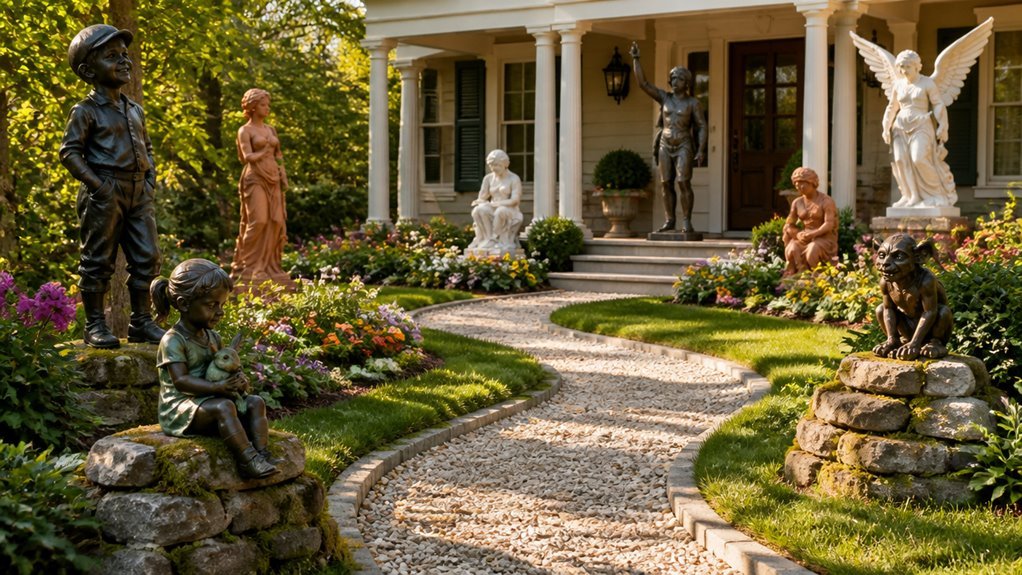
A single well-chosen statue anchors your landscape faster than any plant. I’ve tested welded steel spheres and 8-foot obelisks in narrow lots; scale beats detail. Match your piece to your façade height and shrub layer, then light it at 2700K.
The right material and placement matter more than the price tag. You’ll need specific measurements and sightline tricks to avoid a yard that looks cluttered instead of curated.
Find Your Style: Sphere, Obelisk, and Beyond
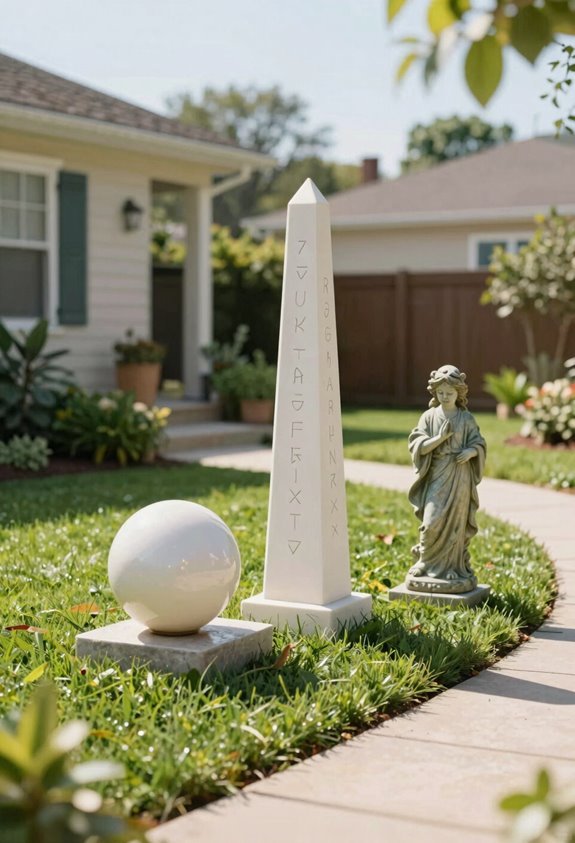
How do you choose between a sphere and an obelisk? I’ve faced this decision myself when upgrading my front yard. Both shapes deliver serious visual impact, but they speak different languages to passersby.
How do you choose between a sphere and an obelisk? Both deliver serious visual impact, but they speak different languages to passersby.
The Sphere
*Bold focal point for modern homes*
A scrap metal sculpture in spherical form catches light from every angle. I recommend welded steel plates or reclaimed auto parts formed into a 4-6 foot diameter globe. The curved surface softens hard landscaping lines. Rust develops naturally unless you seal it.
The Obelisk
*Vertical accent for narrow lots*
A tall, slender obelisk draws eyes upward without eating ground space. I’ve seen remarkable 8-foot versions built from stacked railroad spikes or industrial I-beams. The silhouette complements flat-roofed architecture and frames entryways.
Either choice announces you belong among homeowners who invest in distinctive exteriors.
Size Your Statue to Your Yard Without Overwhelming It
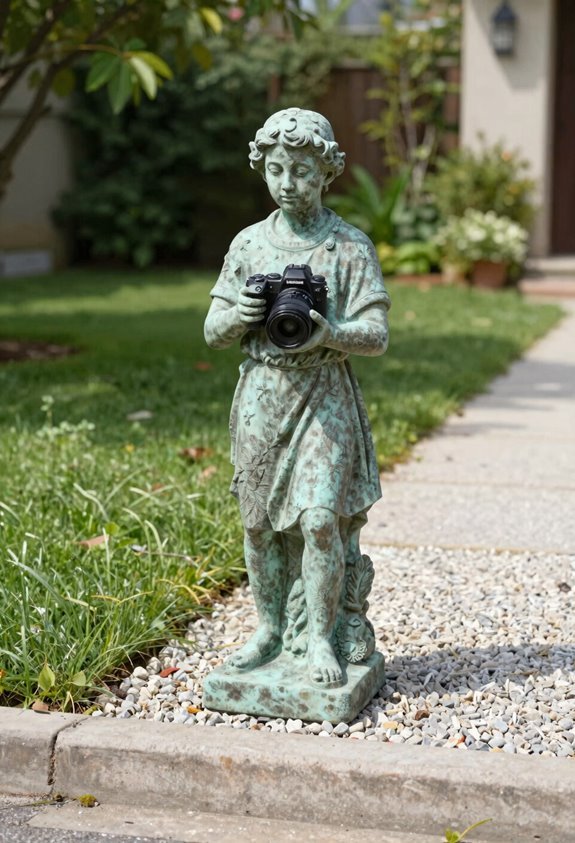
Several determinants govern statue scale in residential front yards. I measure my available viewing distance first. I check the space between curb and door. I want my sculpture visible without crowding my walkway or blocking windows.
I use this checklist to get proportion right:
- Match your statue to your façade. I compare my door width and porch height to my desired sculpture. I keep statue scale balanced with these fixed elements.
- Test your sightlines early. I place a cone or cardboard box where I want my piece. I walk the street, sidewalk, and driveway. I confirm my focal point reads clearly from every approach.
- Size against your greenery. I aim for 1.5 to 2 times my shrub height. This keeps my sculpture prominent without dominating my yard.
I build cohesion. I respect my space.
Position Your Sculpture for Curb-to-Door Impact
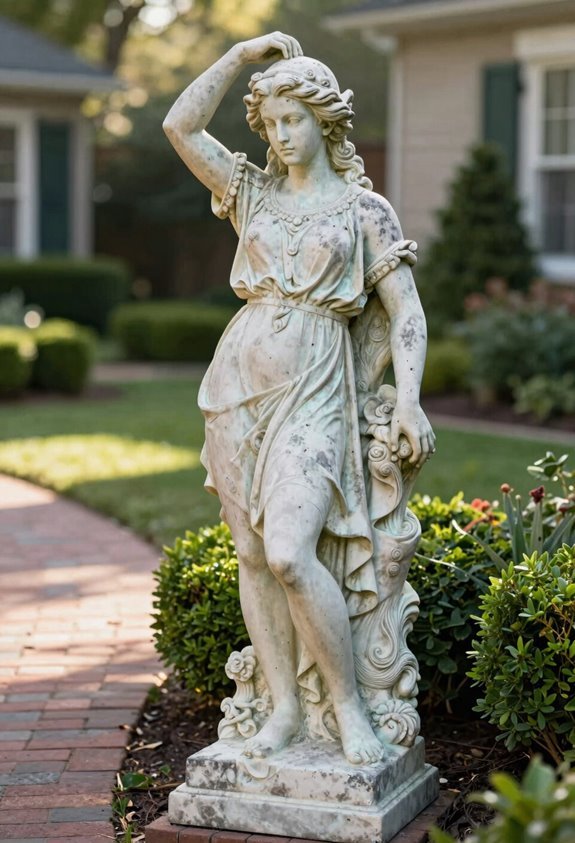
I place my sculpture where it catches the eye from the curb first, then pulls your gaze straight to my door. This front yard sculpture strategy builds a clear visual path that welcomes guests and catches attention from the street from the moment they arrive.
I choose a sphere or obelisk as my focal point. I size it 4 to 5 feet tall so it reads from the street without blocking my entry. I center it near my walkway or at the turn of my planting bed.
I elevate my piece with pedestal placement on a 12-inch plinth. This adds vertical emphasis and keeps sightlines open to my windows. I pair it with low contrasting plantings and uplighting to anchor the look and guide the eye home.
Frame Your Piece With Plants and Stone Borders
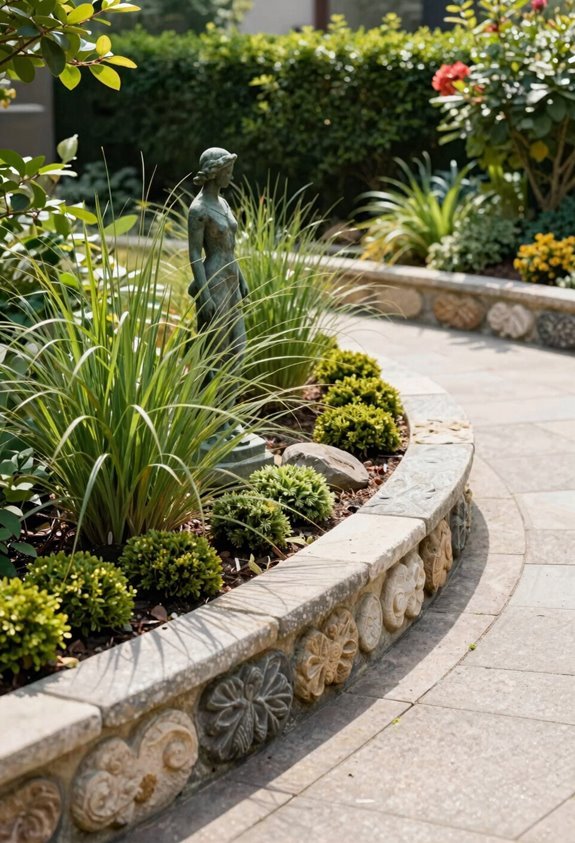
I frame every sculpture with defined plant beds and Tremron Munich Stone edging. I position tall focal plants behind low perennials to build depth and visual interest. I match bed shapes to my home’s architecture and add curved brick or paver pathways.
Strategic Plant Placement
A front yard statue needs structure around it. I frame mine with layered plant placement that builds vertical interest without stealing focus. Tall perennials anchor the back. Mid-height shrubs fill the middle. Low groundcovers soften the edges. This creates a natural frame that draws your eye straight to the sculpture.
I match my plant colors to my home’s exterior. My Behr Cracked Pepper door and limewashed brick guide my choices. Everything feels connected. Everything belongs.
I add stone borders to hold the mulch and define the space. They echo the hardscape around my statue.
Layer Your Heights
Use three tiers: perennials, shrubs, groundcovers. This builds depth.
Coordinate Your Colors
Match plants to your door and brick. Unify the look.
Guide the Eye
Place plants along the path. Lead visitors to your focal point.
Stone Border Design
Plants give your statue life. I frame mine with stone border edging to create structure and flow.
| Material | Purpose |
|---|---|
| Tremron Munich Stone in Sand Dune | Defines beds and contains mulch |
| Brick or concrete pavers | Connects paths to the sculpture focal point |
I widen my flower beds gradually as they approach the front yard piece. This draws the eye inward and builds depth. I pair my stone border with plants that complement my home’s colors. The border must match the house style for cohesion.
I maintain the tidy appearance with regular pruning and fresh mulch. A neat frame keeps attention on the statue, not the weeds. The stone border does the heavy lifting.
Pick Weather-Proof Materials for Your Climate
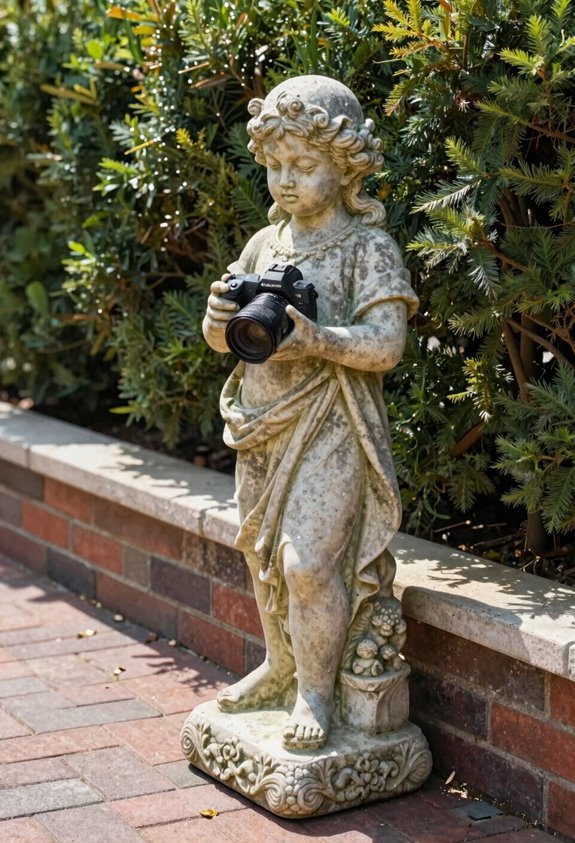
How do you keep a front yard statue looking good year after year? I pick weather-proof materials that match my local conditions. Climate-specific materials make a real difference for outdoor statues that last.
Choose Your Core Material Carefully
Powder-coated metal, stainless steel, or ceramic resist rust, corrosion, and UV fading. These options work in most regions.
Seal Scrap Metal Pieces
Apply clear sealants or powder coating to extend life against rain and humidity. This step prevents premature deterioration.
Adapt to Your Climate
Wet regions need rust-resistant alloys and sealed joints. Freeze-thaw areas require tight-fitting parts to block water infiltration.
I use fast-drying, UV-stable finishes and avoid porous metals. Annual cleaning and resealing preserve color, texture, and structural integrity in exposed conditions.
Match Statue Styles to Specific Architectural Types
Weathered obelisks or sphere sculptures in muted, earthy tones maintain architectural harmony without overpowering the entryway. I want you to feel confident pairing outdoor sculpture with your home’s unique character.
| Architectural Type | Recommended Statue Style | Material & Finish |
|---|---|---|
| Stone or brick-fronted | Weathered obelisk or sphere | Muted, earthy tones |
| Prairie-style | Sleek minimalist metal obelisk | Dark iron or bronze |
| Rustic aesthetic | Large-scale sphere or open-framework obelisk | Reclaimed metal |
| Traditional or colonial | Classic-form symmetrical statue | Subdued patinas |
Match statue styles to architectural types for cohesive curb appeal. Scale your outdoor sculpture proportionally to your facade. Verify the base and materials suit outdoor use.
Align your sculpture with surrounding hardscape like brick, stone, or pavers. Your front yard becomes an extension of your home’s identity.
Light Your Sculpture for Nighttime Appeal
I position spotlights at ground level to throw dramatic shadows across the statue’s surface and surrounding hardscape. Solar-powered LEDs with 2700K color temperature work well for bases and paths, drawing 2-3 watts each.
I mount weatherproof fixtures with powder-coated aluminum housings and 6-inch ground stakes to withstand wind and rain.
Strategic Spotlight Placement
While daylight lets your statue stand on its own, nighttime demands a plan. Front yard lighting turns your sculpture into a focal point after dark. Proper spotlight placement helps your investment shine around the clock.
Position Your Fixtures
Space spotlights 5 to 8 feet apart along pathways or driveway edges. This creates even coverage from multiple angles.
Choose Your Height
Place stake-style fixtures 14 inches off the ground. Angle them slightly upward to emphasize height and form.
Layer Your Approach
Integrate landscape lighting to highlight surrounding plantings and hardscape. This builds cohesive nighttime visual interest around your statue.
Use warm, soft-glow options with low-voltage or solar power. Aim lighting from at least two directions to reveal texture without harsh shadows. Your front yard becomes welcoming. Your neighbors notice.
Dramatic Shadow Effects
Why settle for flat lighting when your sculpture could command the whole wall? I position outdoor lighting 3, 8 feet from my piece to cast elongated silhouettes. This shadow play enlarges my sculpture’s presence and adds depth to plain surfaces.
I favor sculpture placement near walls or fences where dramatic shadows spread wide. FACETS CUTOUTS SPHERES catch light perfectly. These shapes throw bold contrasts that shift as angles change. I adjust spotlights seasonally to refresh the look.
I select warm LED bulbs at 2700, 3000K. This temperature produces natural shadows that blend with my home’s exterior. I mount fixtures in weatherproof housings with protected cables. Clean lines matter after dark. No glare means my art stays center stage.
Solar Power Options
How do you light a sculpture without burying cables? I use solar landscape lighting. It powers my outdoor sculpture without wires. It cuts energy costs. It looks good too.
Here is what works:
- Stake lights for paths. Place solar path lights 5 to 8 feet apart. Keep them 14 inches off the ground. This frames your sculpture evenly.
- Floodlights for drama. Angle solar-powered floodlights upward. They highlight texture and form. Warm, soft-glow bulbs match exterior finishes.
- Durable fixtures. Pick weatherproof, powder-coated metal. Make certain direct sun hits the panels daily. This maximizes battery charging.
Solar lights improve your yard’s appearance after dark. They create cohesive nighttime color. They need little maintenance. Position them right. Your yard stays inviting. Your sculpture stays visible.
Choose Between Still and Moving Sculptures
I’ll help you decide between static and kinetic yard art. Both choices shape your home’s exterior differently. Still sculpture options anchor your space with permanence. They need zero upkeep.
Moving sculpture elements catch wind and light. They shift as people walk by.
| Feature | Still Sculpture | Moving Sculpture |
|---|---|---|
| Maintenance | None required | Regular checks needed |
| Visual effect | Stable focal point | Dynamic energy |
| Mounting | Standard base | Secure anchoring |
| Best material | Stone, concrete | Metal, balanced steel |
| Yard role | Entryway symmetry | Conversation starter |
Pick a still sphere or obelisk for clean lines. These boost vertical presence. Choose a moving piece for motion and energy. Factor weather resistance into either choice. Metal scrap art develops patina over time. Check edges annually for safety. Match your pick to your time and your home’s style.
Source Statues: From Thrift Finds to Custom Commissions
Finding the right statue starts with knowing your budget and your yard’s needs. I look at thrift finds first. These second-hand statues cost little and add instant character. I check for cracks and stable bases before buying.
For something unique, I commission custom commissions. Local artists build pieces to my exact size and style. Metal works best outdoors. I choose aluminum or steel for weatherproofing.
Three Ways to Source Your Statue
- Scavenge thrift stores, Hunt ceramic or concrete figures under $50. Repaint and seal them.
- Buy mass-made sculptures, Order 24-36 inch resin or metal statues online. Match scale to walkway width.
- Commission original work, Hire a metalworker. Specify 48-inch height and powder-coated finish. Budget $500-$2,000.
Balance your statue with shrubs and lighting. Scale matters more than price for visual impact from the street.
Winterize, Clean, and Refresh Your Look Seasonally
I store my statues indoors before hard freezes hit, using bubble wrap and plastic bins in my garage or shed.
I apply a clear UV-resistant sealant each spring to protect stone, concrete, or metal surfaces from moisture damage and fading.
I inspect bases and surfaces each fall for cracks, chips, or corrosion, repairing small issues with epoxy filler or rust-inhibiting paint before they worsen.
Seasonal Storage Solutions
Protect your front yard statues through harsh weather with smart winter prep. I rotate my outdoor decor to keep the exterior looking fresh year-round. Here’s how I handle seasonal storage:
- Clear and winterize, I remove yard debris, drain planters, and bring lightweight pieces indoors before the first freeze hits.
- Use weatherproof bins — I store garden statues and spark lights in waterproof containers or covered sheds to block snow and moisture damage.
- Rotate displays — I swap in festive accents each season, storing non-seasonal items to maintain visual interest without clutter.
I seal fabrics in breathable containers to stop mold. I schedule pre-winter clean-ups and spring resets to refresh mulch, lighting, and planters fast.
Protective Coating Applications
How do you keep metal sculptures looking sharp year after year? I winterize mine with a quality weatherproof coating made for outdoor scrap-metal art. This seals the surface against rust through freeze-thaw cycles.
Clean Before You Coat
I pressure wash my statues each spring. I use the lowest effective nozzle setting. This removes dirt and algae without damaging the finish.
Prime Bare Spots
I spot any bare metal areas. I brush on rust-inhibiting primer before touching up paint. This stops corrosion before it spreads.
Refresh Annually
I reapply protective coatings once yearly. This maintains color integrity and UV resistance. Good outdoor sculpture care means staying ahead of the weather.
Emergency Protection
I cover or store pieces during severe storms. This limits moisture intrusion and preserves patina.
Weather-Damage Inspections
Where do I start when the thaw arrives? I begin with weather-damage inspections to protect my front yard investment.
- I winterize first. I seal statues and metal sculptures. I protect scrap metal from rust and ice damage.
- I inspect after winter. I check for cracks, corrosion, and loose hardware. Freeze-thaw cycles cause hidden problems.
- I clean and refresh. I use gentle pressure washing. I apply mild cleaners. I avoid paint and patina damage.
I reseal concrete and brick bases. I stop water intrusion and spalling. I rotate landscaping and lighting with seasons. I maintain a well-kept appearance through changing daylight. Seasonal care keeps my yard welcoming. I belong in a neighborhood that values well-kept homes.