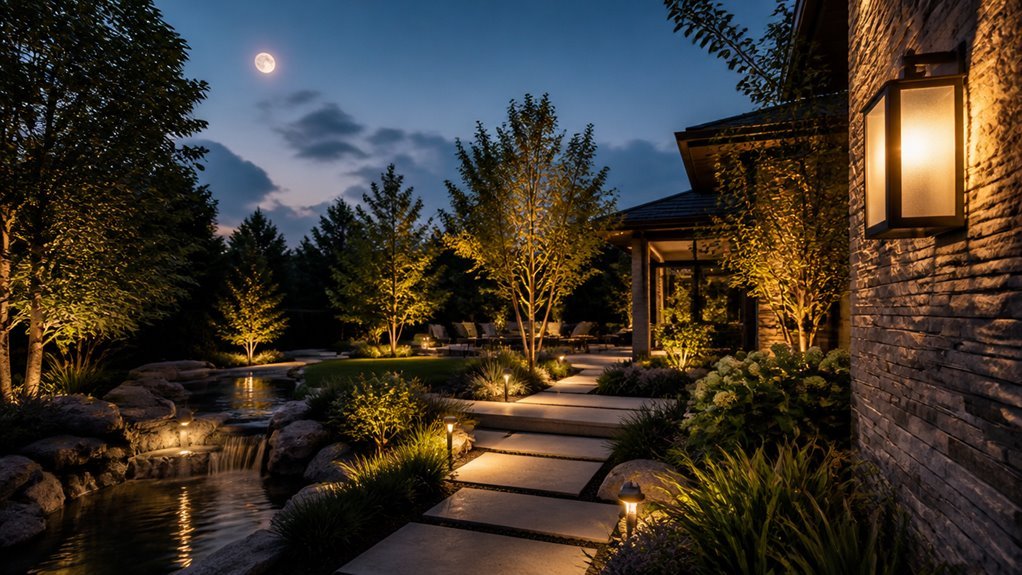
Picture your walkway at dusk with fixtures casting soft pools of light along every step. You’ll pay $1,200 to $5,000 for small to mid-sized setups. Full-property systems run $5,000 to $15,000.
Luxury estates hit $15,000 to $40,000. Your total depends on voltage choice, fixture count, trenching depth, and transformer size. I break down exactly where your money goes.
2026 Outdoor Lighting Costs: From Path Lights to Full Yard Systems
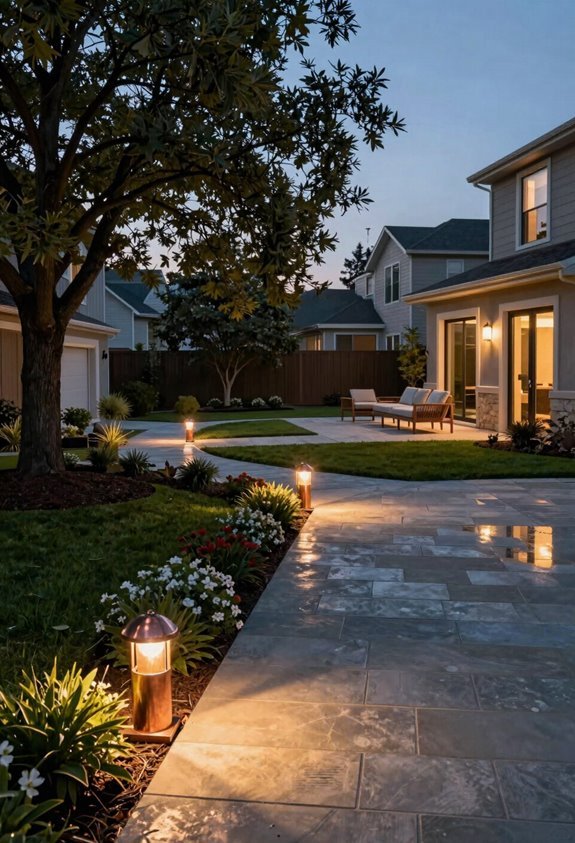
You want to know what you’ll pay.
Small Projects
Attribution: Typical 2026 market rates
A small front yard with 8–12 fixtures runs $1,200–$2,500. Path lighting costs $100–$300 per fixture. Total path lighting projects range $400–$7,200.
Mid-Size Packages
Attribution: Standard residential pricing
15–25 fixtures cost $2,500–$5,000. Low-voltage systems dominate this tier. Installation cost reflects wiring and transformer needs.
Full-Property Systems
Attribution: Comprehensive landscape lighting design
30–60+ fixtures reach $5,000–$15,000+. Luxury estates hit $15,000–$40,000+. LED fixtures cut energy use 75–80% versus halogen. They last 50,000+ hours.
Your Decision
Attribution: Long-term value assessment
Weigh upfront LED fixtures against savings. Choose low-voltage systems for reliability. Price scales with fixture count and yard coverage.
12V or 120V? Choosing the Right System for Your Yard

When I plan outdoor lighting, I weigh Low-voltage vs. 120V carefully. Most homeowners like us choose 12V systems. They’re safer, simpler, and keep installation costs down. I don’t need a professional electrician for basic 12V work. I just trench shallow, run wire, and connect to a transformer.
120V demands more. I face electrocution risk, deeper trenching, and mandatory permits. Cities require licensed pros for this work. Labor costs jump markedly.
For 12V success, I follow three rules:
- Size the transformer 25–50% above total wattage, a 150W unit handles 12–15 LED path lights comfortably
- Check local permit requirements, many areas exempt 12V entirely
- Plan for expansion, I buy larger transformers and heavier gauge wire upfront
120V limits my future changes. Complexity and cost lock me in. I stay flexible with 12V.
LED vs. Halogen: Where Your Installation Budget Goes Further
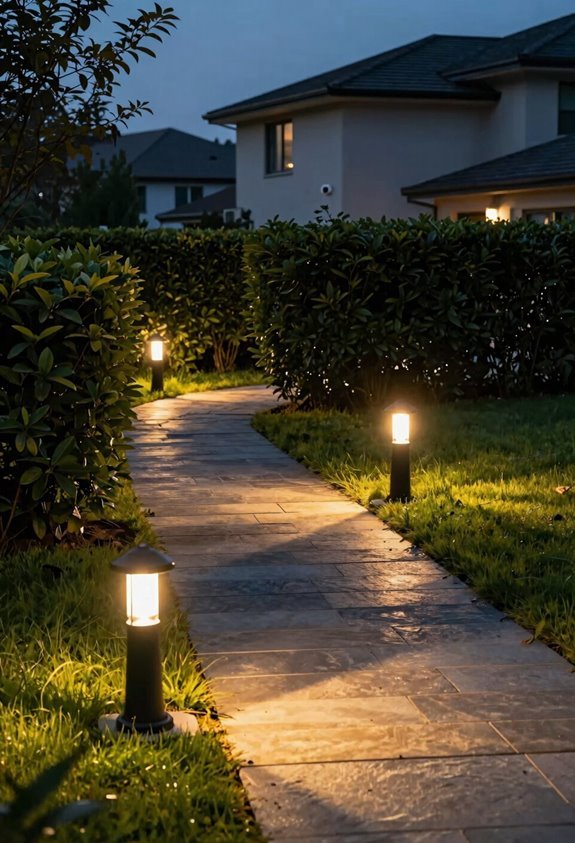
I want you to see where your money actually goes when you pick lights. LEDs cut energy use by 75–80% against halogen, so your electric bill drops month after month. That upfront gap closes fast when you count 20+ years of running time and fewer bulb swaps.
Energy Efficiency Savings
Most homeowners overlook operating costs when planning outdoor lighting. I want you to see where your money actually goes.
LED fixtures cost more upfront. They pay you back fast. Here’s what changes your budget:
- Electrical draw. LED lights use 75–80% less power than halogen. Your monthly bill drops immediately.
- Replacement schedule. LED runs 50,000+ hours. Halogen burns out sooner. You buy fewer bulbs. You climb fewer ladders.
- Coverage terms. LED carries 5–10 year warranty. Halogen rarely matches this. You’re protected longer.
Energy efficiency matters for your wallet. Operating costs stack up over years. Long lifespan means less hassle. The warranty backs your investment. A 12V LED system cuts your per-fixture electricity use dramatically. You belong with homeowners who spend smart.
Long-Term Cost Comparison
Your energy savings add up fast. I pay roughly $2 to $8 per LED fixture upfront. Halogen runs $2 to $5. That gap closes quick.
LED lifespan hits 50,000 hours. Halogen burns out faster. I replace halogen bulbs again and again outdoors.
LED efficiency cuts my energy use 75 to 80 percent. My annual electric bill stays lower year after year.
Maintenance matters. LED systems run 20-plus years. Halogen needs re-lamping sooner.
Total installed cost favors LED over time. Lower energy use offsets the initial price. Less maintenance seals the deal.
Halogen fades faster. Lumen drops quicker. Relamping needs pile up.
My budget goes further with LED. The math works.
How Fixture Count and Type Drive Total Project Cost
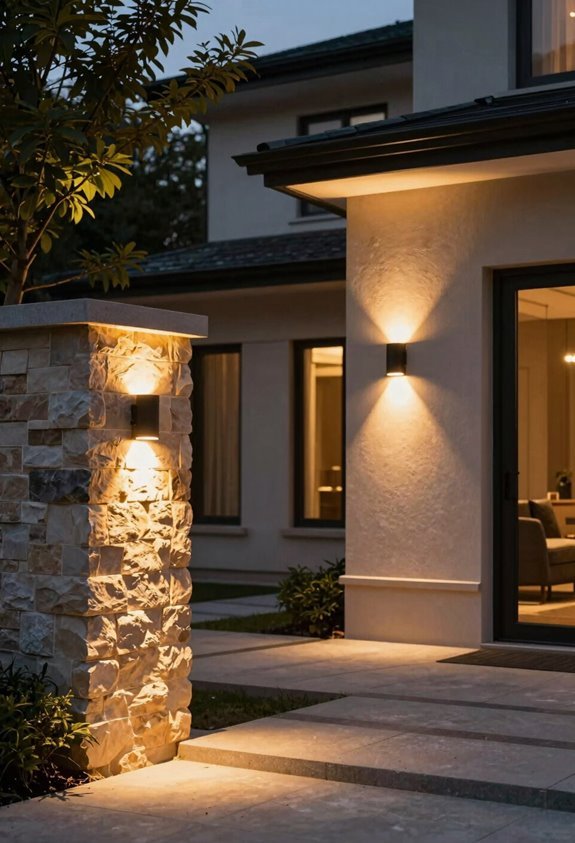
I’ll break down exactly how your fixture choices and quantity shape your final bill. Small projects with 8–12 fixtures typically run $1,200–$2,500, while 40+ light systems go past $5,000. Path lights cost $100–$300 each installed, and accent fixtures run $150–$500, so mixing types changes your total fast.
Fixture Quantity Impact
Your landscape lighting types selection changes everything. Path lights cost $100–$300 each. Tree uplights run $200–$500. Architectural fixtures reach $300–$600. Mixing these shifts your totals substantially before installation even begins.
Fixture Type Variations
Landscape lighting costs vary widely based on your selections. Low-voltage lighting runs $100 to $150 per installed fixture. Your fixture cost climbs fast when you add more lights.
Pathway lights
These cost $50 to $150 each. Line your walkways with many pathway lights and your total will increase.
Uplighting
Tree and house uplighting hits $150 to $400 per light. Have lots of trees? This becomes your biggest expense.
Specialty fixtures
Deck lights, pool lights, and in-floor niche lighting range from $80 to $2,500. Complex installs cost more.
Budget alternatives
Solar and battery-powered options reduce upfront spending. They limit how many fixtures you can use reliably. Plan your layout carefully to avoid gaps.
Total Cost Calculation
Installing outdoor lighting means doing the math upfront. I break down your landscape lighting cost by counting fixtures and mapping your installation scope. Here’s what drives your total:
- Count your lights. Your per-fixture price runs $100–$150 for low-voltage systems. Ten to twenty lights cost $1,000–$2,000. Forty-plus lights push past $5,000.
- Size your transformer. Transformer sizing determines expansion room. A 150W unit handles 12–15 LED pathway lights. Add 25–50% capacity for future fixtures.
- Price your specialty zones. Pool lighting runs $1,500–$4,000. Path lights cost $100–$300 each. Uplights hit $150–$500 apiece. Wiring and transformers add $500–$1,500.
Small front yards: $1,200–$2,500. Full properties: $5,000–$15,000-plus. Luxury estates: $15,000–$40,000-plus.
Don’t Burn Out Your Transformer: Sizing It Right
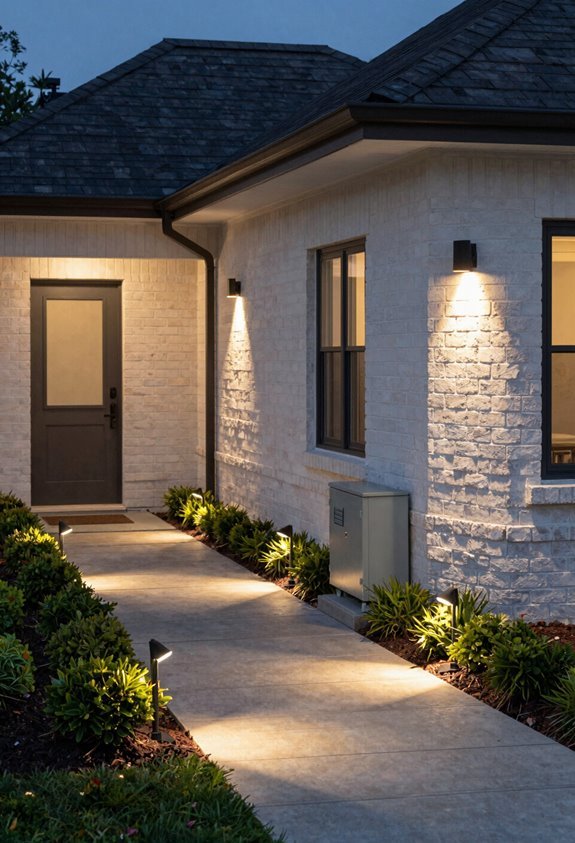
Every transformer I install needs breathing room. I follow one rule: transformer sizing must exceed total fixture wattage by 25–50%. This builds headroom for safety and future growth.
For load calculation, I add every fixture wattage together. A 150W unit handles 12–15 standard LED pathway lights. I pick a higher rating than my math requires. This prevents voltage drop, tripping, and premature burnout at peak load.
Low-voltage lighting at 12V rewards planning. I oversize from day one, and system expansion becomes plug-and-play. No rewiring. No replacements. Just add fixtures.
Skip this step, and you’ll cook your transformer. Do it right, and your setup grows with you. Get the math done. Pick the right unit. Move on.
Professional Installation Pricing by Project Size
$1,200 to $2,500 covers your typical starter install. That’s your small front yard with 8 to 12 fixtures. Project size pricing scales fast from there.
Mid-Size Properties
*15 to 25 fixtures*
You’ll pay $2,500 to $5,000. Professional installation at this tier adds pathway and accent lighting.
Full Property Designs
*30 to 60+ fixtures*
Cost ranges hit $5,000 to $15,000. Fixture count drives labor and materials up.
Luxury Estates
*60+ fixtures*
Expect $15,000 to $40,000+. Complex designs need specialized crews.
Landscape lighting installation averages $3,250 nationally in 2026. Match your budget to your property goals. Don’t buy fixtures you won’t use.
DIY Outdoor Lighting: The Real Savings and Hidden Tradeoffs
Low-voltage landscape lighting kits run under $200. That gets you started with basic fixtures and wire. I see homeowners gravitate toward DIY installation to cut labor cost entirely.
Hardware Reality
A 10-fixture low-voltage lighting project runs $1,000–$2,000 total. Per-light hardware hits $100–$150. Solar options drop to $50–$200 per light but struggle in shade. You’ll trench wire yourself. You’ll size your own transformer.
The Catch
DIY installation carries tradeoffs. Design suffers without training. Transformers fail from bad math. Some jurisdictions demand permits and inspections even for low-voltage work. Check local rules before you dig.
Bottom Line
You save labor cost. You absorb risk. Balance the math against your skill level.
Why Your Neighbor Paid Less: Location, Permits, and Labor
I see identical 10-fixture LED systems priced $1,800 apart across county lines. Your installed cost depends on where you live. Location drives every major price split in landscape lighting.
1. Permits
Permits add hundreds in regulated towns. 12V low-voltage systems often skip permits. 120V line-voltage systems trigger electrician rules and fees everywhere.
2. Labor
Labor rates swing hard by zip code. Albany and Scarsdale crews charge more than Hoboken or New Rochelle teams. Same trench, different invoice.
3. Material Access
Supplier networks favor some regions. Remote areas pay freight premiums. Well-connected towns get faster, cheaper fixture delivery.
Your neighbor paid less because their location cut permit hurdles and labor overhead. Check your local rules before quoting landscape lighting. Belong to your market, not someone else’s price tag.
How to Vet Contractor Bids: Questions That Reveal Hidden Fees
Why do so many homeowners get burned by a “final” invoice? I ask every contractor for itemized bids that split fixtures, trenching, wiring, transformers, controls, and labor. This shows me where my money goes.
Check What’s Included
I verify bids cover permits, inspection fees, and licensed electrician work. These add hundreds fast.
Get Warranty Details
I request clear warranty terms for fixtures, transformers, and labor. I ask about maintenance or recalibration charges after install.
Dig for Hidden Costs
I probe hidden costs like hard-to-reach trenching, landscape repair, or extra fixtures for future expansion beyond the transformer load.
Match the Design
I compare design assumptions in bids to my plan. Beam angles, fixture types, and transformer sizing must match. Implied upgrades raise costs later.