
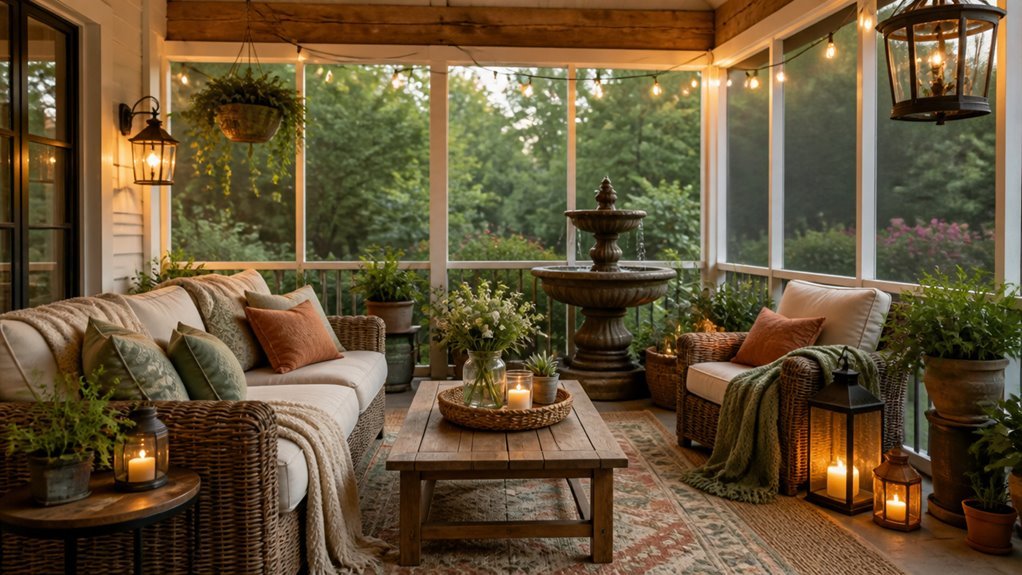
I pull my living room palette straight onto the porch. Blues, grays, and warm neutrals unify the spaces. I specify Sunbrella fabrics with 50,000 double rubs for cushions. This base sets up nine more decisions.
Start With Colors That Blur the Line Between Indoors and Out

Why should your porch feel separate from your living room? I don’t think it should. I want my outdoor space to feel like home, too.
Your porch shouldn’t feel separate from your living room—it should feel like home, too.
Start With Colors That Blur the Line Between Indoors and Out
I pull blues, grays, and earthy neutrals from my interior palette straight onto the porch. This color coordination creates instant indoor-outdoor cohesion. I pick outdoor textiles that mimic my living room fabrics: weather-resistant woven materials in matching tones. I add neutral, earthy tones through cedar accents and potted trees. I use rust orange or turquoise sparingly for energy.
I choose exterior rugs and cushions that echo indoor upholstery. I weave in natural textures like woven planters. These choices make the transition seamless. My porch becomes part of my home, not an afterthought.
Arrange Seating Like an Outdoor Living Room
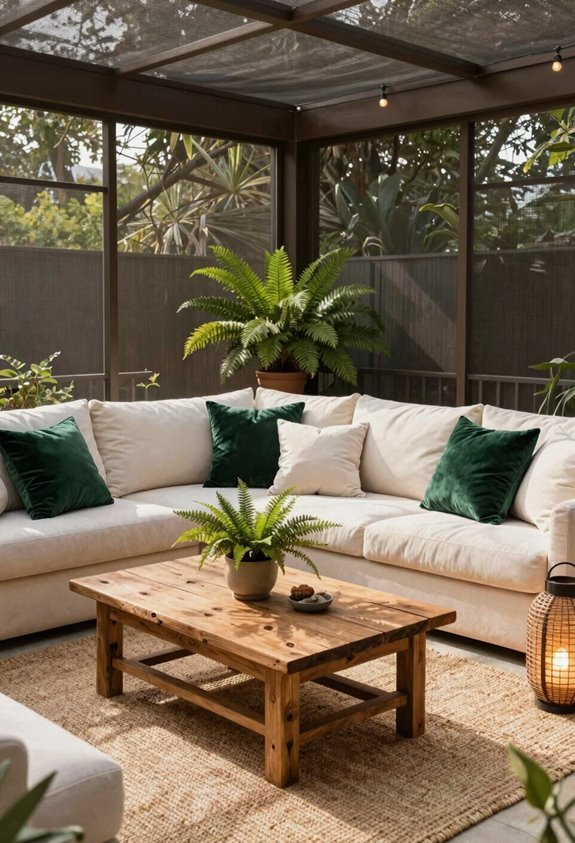
How do I turn my patio into a space where people actually want to linger? I create an outdoor living room that feels as inviting as my den.
Build Around a Center
I anchor my seating arrangement with a colorful outdoor rug or central feature. I place multi-seat banquettes and mixed chairs to face this hub. This setup draws everyone together.
Choose Tough Materials
I select weatherproof seating like sectionals or synthetic wicker. I check weave quality tightness. Loose strips unravel fast.
Save Space Smartly
I add banquettes that work as seats, tables, and décor. Console-height backs and bar stools give casual dining options too.
Keep Traffic Moving
I leave 30–36 inches between pieces. I make sure there are clear paths from indoor rooms onto the porch.
Anchor Your Screened Porch With a Fireplace or Focal Wall
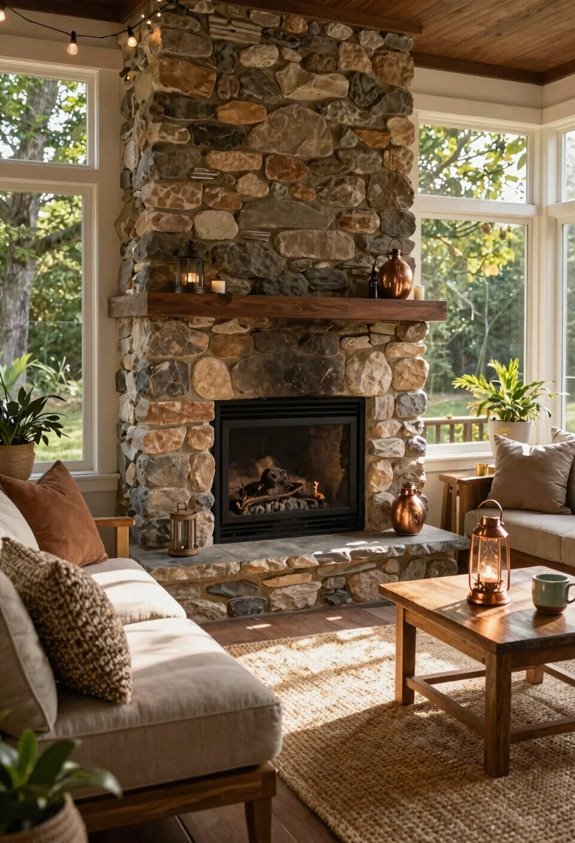
A stacked stone fireplace anchors your seating area and provides heat for year-round use. Pair it with a clean-lined mantel and weatherproof décor for a modern look. Position the fireplace near pass-through windows to connect indoor and outdoor spaces.
Stone Fireplace Charm
I’ll anchor my screened porch with a stacked stone fireplace built from 4- to 6-inch natural limestone or manufactured veneer. This outdoor fireplace creates an instant focal point that pulls seating arrangements together and grounds the entire space.
The stacked stone adds texture and permanence. It works in every season and gives the porch indoor comfort with outdoor air.
I position the fireplace on a wall that connects kitchen traffic to seating areas. This placement keeps walkways open and supports entertaining flow.
Warm lighting overhead and soft textiles nearby extend use after sunset. The result is a cozy ambiance that makes guests linger and conversations last longer.
Modern Mantel Style
My stacked stone fireplace can shift toward a cleaner look. I pair a sleek, heat-safe insert with a minimalist mantel to anchor my porch year-round. This setup blends with contemporary textiles and interior hues for seamless flow.
I keep decor crisp with metal accents and ceramic sculptures that resist moisture. A low-profile, weather-resistant surround maintains the look through every season. For gatherings, I add uplights or a sculptural chandelier without glare.
A two-sided or pass-through fireplace connects my kitchen and porch. It turns the wall into a central gathering point. This easy DIY project uses standard stone veneer and a 48-inch metal mantel shelf. I make it easy with affiliate links to heat-rated inserts and LED lighting kits below.
String Lights That Make Evenings Feel Special
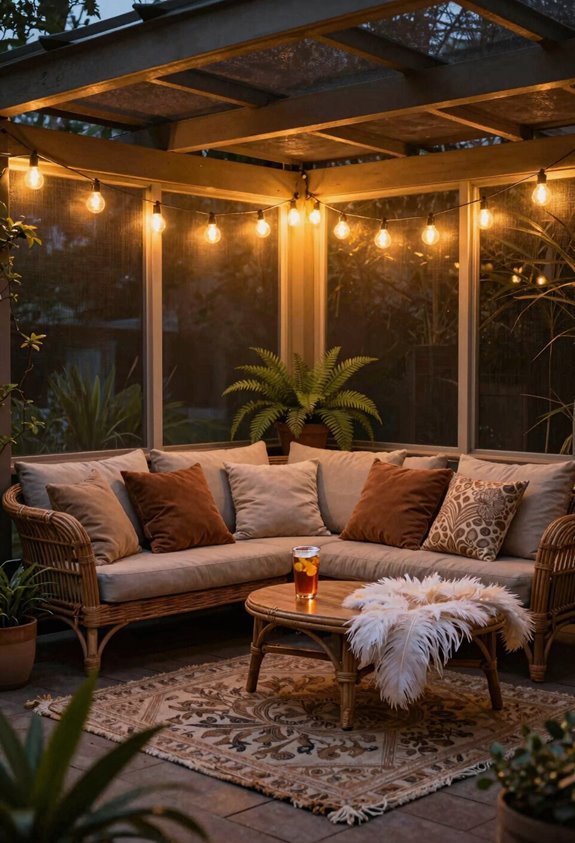
The right string lights turn a basic patio into a space you’ll actually use after dark.
Retractable Screen Pairing
Motorized screens with warm weatherproof string lights create flexible bug-free ambiance. Softened evenings flow as screens open to your yard.
Bulb and Control Specs
Choose warm white LEDs in 6–12 ft strands. Add dimmable controls for mood-adjustable light at dining or lounging zones.
Focal Layering
Combine string lights with a sculptural chandelier or pendant. This builds chic outdoor-living character after sundown.
Safe Installation
Run cords along ceilings or under eaves. Use UL-rated outdoor fixtures for damp porch safety and durability.
Color Coordination
Match light warmth to indoor fabrics and colors. Blues, grays, and natural neutrals keep indoor-outdoor flow seamless at night.
Ground the Space With Rugs and Easy-Clean Flooring
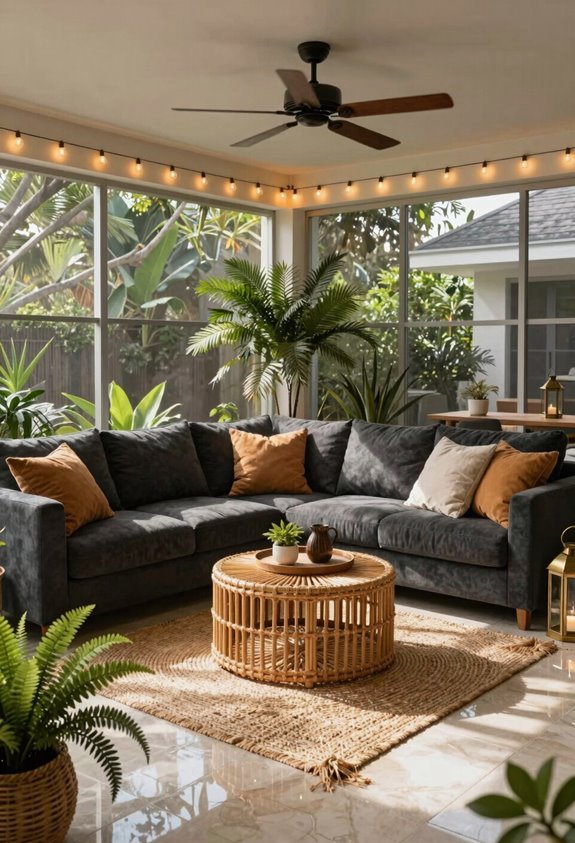
I start every patio refresh by laying down indoor-outdoor rugs that handle a quick hose-down after messy gatherings. I pair these with Trex decking or composite flooring that keeps its color without staining, sealing, or sanding. These materials let me spend less time on upkeep and more time actually using the space.
Durable Flooring Materials
Why fight with high-maintenance surfaces when you can install flooring that handles weather without complaint? I want you to have a space that welcomes everyone without demanding constant attention.
1. Composite Decking
*Trex and similar brands*
This material resists moisture, fading, and wear. Color runs through the entire board. You get decades of use without staining or sealing.
2. Stained Concrete
*Sealed concrete floors*
This surface supports any furniture arrangement. Spills wipe clean. The finish coordinates with metal, wood, or wicker seating.
3. Weather-Resistant Planks
*PVC and vinyl options*
These lock together for quick installation. Hose them down after gatherings. The texture prevents slips when wet.
Choose flooring that works as hard as you do. Your screened patio becomes the reliable gathering spot friends count on.
Indoor-Outdoor Area Rugs
Bare feet shouldn’t hit cold hard flooring. I lay indoor-outdoor rugs to warm the space and mark where we gather.
Define Your Zones
Polypropylene rugs resist moisture and fading. They define dining, lounging, and walking areas without rotting or mildewing.
Simplify Cleaning
Hose down spills and dirt. Weatherproof synthetics dry fast and need no special treatment.
Layer for Texture
Stack smaller rugs on larger ones. This adds depth while keeping quick-dry properties intact.
Match Your Materials
Pair rugs with synthetic wicker furniture. The look stays unified and care stays simple across seasons.
Blend Indoors and Out
Pick patterns and colors that match your cushions, plants, and built-ins. The porch feels like part of your home, not apart from it.
Low-Maintenance Surface Options
Trex and similar brands build solid foundations without sanding or staining. I choose composite decking for my screened patio because the color runs through the entire board. Fading and wear stay minimal even after years of foot traffic.
I layer indoor/outdoor rugs on top for warmth. These hose clean in minutes. Stained concrete underneath gives me another worry-free base that handles spills and supports dining setups without fuss.
Trex Decking
Composite material, color-through construction
This flooring resists rot and splinters. I never seal or stain it. The surface stays even and safe for bare feet.
Tempered Glass Tables
Nearly indestructible top material
Spills wipe off instantly. I skip coasters and tablecloths entirely.
Performance Fabric Rugs
Sunbrella or equivalent, hose-washable
These resist moisture and stains. I clean mine with a garden hose monthly.
Add Plants That Thrive in Screened Light
How do you soften a screened porch without stealing its light? I hang plants that tolerate shade and indirect light. Orchids, ferns, caladiums, petunias, and sweet potato vine do well here. They filter the air without blocking daylight.
Use Potted Trees for Scale
I place two potted trees to create a connection to the outdoors. They harmonize with earth-toned palettes. They do not overwhelm limited porch light.
Position Shade-Loving Species Carefully
I keep these plants out of direct sun. This prevents leaf burn. They still benefit from ambient daylight.
Group Plants in Focal Clusters
I arrange plants in tight groupings. I leave 30-36 inches between furniture pieces. This maintains easy movement without crowding light access.
Blend Natural Elements
I combine foliage with earthy hues and woven textures. This enhances the porch’s mood.
Choose a Ceiling Fan That Cools and Complements
I select ceiling fans with UL damp-location ratings for safe operation on humid, rain-exposed porches. I make certain there is eight to nine feet of clearance beneath the fan for unobstructed airflow. I match the finish and blade style to my exterior colors and interior design for visual continuity.
Airflow and Clearance
Where do you start when picking a porch fan? I measure my space first. I need eight to nine feet from floor to blades for airflow and safety.
Clearance Requirements
Minimum height protects heads and moves air. I mount blades at this height for best circulation. Lower mounts create stuffy zones.
Cross-Ventilation Placement
I position fans between open screens and doors. This pulls fresh air through my seating area. Drafts reach every corner without blasting one spot.
Multiple Fan Strategy
I use two smaller fans instead of one giant unit. Even distribution beats gusty pockets. Low-profile models work in tight spaces.
I pick weatherproof materials like synthetic wicker or treated metal. These resist moisture and fading. My fan matches my porch style while it runs.
UL Listing Importance
Why risk a fire hazard when the fix is simple? I always check for UL damp-location listing before installing any ceiling fan on my screened porch. This certification means the fan withstands humidity and moisture without electrical failure. It protects my family and my investment.
| Feature | Why It Matters | What I Look For |
|---|---|---|
| UL Damp Rating | Prevents electrical fires in humid conditions | Label marked “suitable for damp locations” |
| Blade Height | Ensures safe airflow without obstruction | Eight to nine feet from floor |
| Corrosion Resistance | Maintains appearance despite weather exposure | Powder-coated metal finishes |
| Motor Type | Cuts operating costs during seasonal use | DC motors for efficiency |
I pair my fan with outdoor-rated lighting to complete the setup. This combination keeps my retreat safe, functional, and ready for gatherings.
Style and Color
How do I make a fan look like it belongs? I match it to my porch’s bones and breathe easy knowing it fits.
Ceiling Color
Paint your ceiling haint blue. This traditional shade lifts mood and ties the fan into your color scheme.
Finish Coordination
Pick blade styles and metal finishes that echo your exterior materials. Cedar shakes and woven wicker guide your choice. The fan reads as indoor space flowing outward.
Fabric Pairing
Surround the fan with performance fabrics and outdoor rugs. These moisture- and fade-resistant layers hold the look together. Your cooling focal point stays cohesive through seasons.
I keep eight to nine feet of clearance under the fan. Air moves free and bodies stay comfortable.
Soften Hard Surfaces With Weatherproof Textiles
Weatherproof textiles transform cold concrete and wood into inviting, livable outdoor spaces built for every season.
You need textiles that work as hard as your patio does. I choose performance fabrics like Crypton and Sunbrella. They resist moisture, stains, and fading through every season.
Layer for Comfort
Add pillows and throws with outdoor-rated fabrics. They soften concrete and wood without falling apart in rain or sun.
Pick the Right Fill
Skip down inserts. I use water-resistant polyfill instead. It prevents mold and mildew in damp porch air.
Anchor with Rugs
Place indoor/outdoor rugs with plastic backings. Hose them down when they get dirty. Maintenance stays simple.
Match Your Home
Select colors and patterns that echo indoor spaces. This connects the porch to the rest of your house. Your retreat feels intentional and complete.
Use Banquettes and Stools to Maximize Every Square Foot
Where does all the seating go when the porch measures eight feet across? I build banquettes along the walls. They hug the perimeter and free up the middle for walking or extra chairs.
Banquettes seat more people than standalone furniture. I pair them with stools or ottomans. These pieces work as seats, side tables, or footrests. I tuck them under the banquette when guests leave.
I add weather-resistant cushions in Sunbrella or Olefin. These fabrics resist mold and fading. I store extra throws in built-in drawers beneath the seats.
1. L-Shaped Banquette Configuration
*Built-in bench seating*
I run benches along two adjoining walls. This seats six to eight people in tight spaces.
2. Nesting Stool Set
*Three round ottomans*
I slide these under the banquette edge. They pull out when friends arrive.
3. Storage-Base Bench
*Hinged lift-top seat*
I hide cushions and outdoor dishes inside. The porch stays neat.
Stock a Bar Cart for Effortless Entertaining
A stocked bar cart turns the porch into a serving station. I keep beverages and glassware within easy reach. This prevents clutter during gatherings.
I choose weatherproof materials like synthetic wicker or metal. A sealed surface withstands moisture and sun. The cart needs storage shelves and a small tray.
I stock spirits, mixers, and garnishes. I add outdoor-friendly cocktails that don’t need ice. Cleanup stays as easy as setup.
I pair the cart with nearby seating. I add bistro lights for a cohesive zone. Guests feel welcome without me running inside.
Mobility matters. I roll the cart where needed. The porch becomes a ready-to-serve retreat.