I see dead plants from fertilizer burn every week. You mix too strong or feed too often and the roots fry. The fix is simpler than the garden center makes it sound.
Three products handle every houseplant I own. I will show you the exact NPK numbers, dilution rates, and calendar that keep my ficus and pothos growing well without the guesswork.
What Your Houseplant Actually Needs: Reading the NPK Label
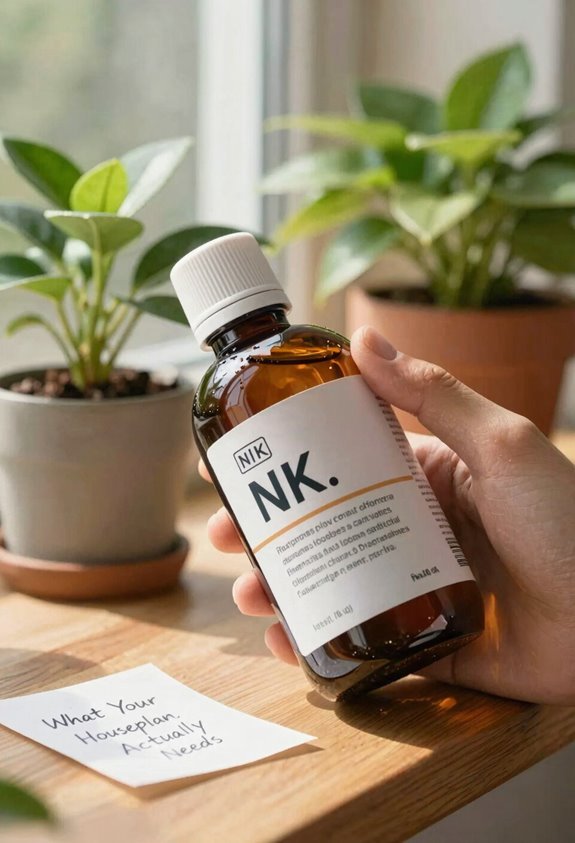
Every fertilizer label shows three numbers. I read them as nitrogen-phosphorus-potassium percentages. This NPK label tells me what my houseplants get.
Foliage Plants
Higher nitrogen fuels leafy growth. My pothos and ferns need this boost.
Flowering Plants
Higher phosphorus drives blooms and roots. My African violets respond well.
All-Purpose Balance
A 10-10-10 NPK balance works for most indoor collections. Potassium strengthens cells and stress resistance across the board.
Beyond the Big Three
Secondary nutrients like calcium and magnesium matter. Micronutrients including iron and zinc complete the picture. I check labels for these additions.
Avoiding Damage
I follow fertilizer dilution rates exactly. Nutrient burn scars leaves permanently. More concentrated does not mean more effective.
Apply Without the Burn: Diluting, Timing, and Watering Technique
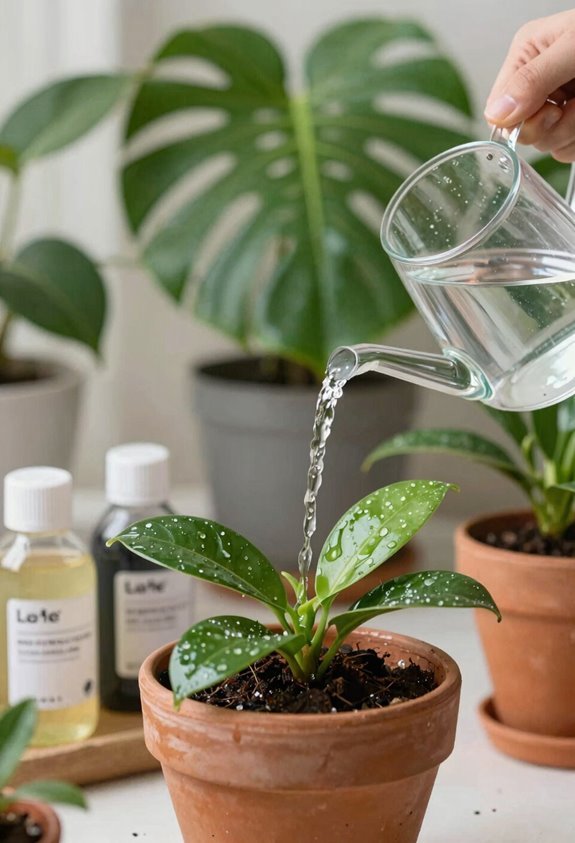
When I fertilize, I cut liquid fertilizer to half strength. This prevents root burn and protects delicate houseplant roots from salt buildup that stunts growth.
When I fertilize, I cut liquid fertilizer to half strength to prevent root burn and protect delicate houseplant roots.
Diluting Fertilizer
Start with half-strength for safety. Follow dilution guidance on labels, then reduce further for sensitive plants. Stronger mixes damage roots.
Timing
Match your feeding schedule to active growth periods. Feed when days lengthen and new leaves appear. Stop when growth slows.
Watering Technique
Water thoroughly before fertilizing. Flush soil with plain water between feedings to remove excess salts. This prevents root burn and keeps roots healthy.
Adjusting Practice
Watch for yellow leaves or brown tips. These signal over-feeding. Cut back concentration or frequency immediately. Every plant responds differently to fertilizer.
Spring Start to Winter Stop: Building Your Fertilizing Calendar
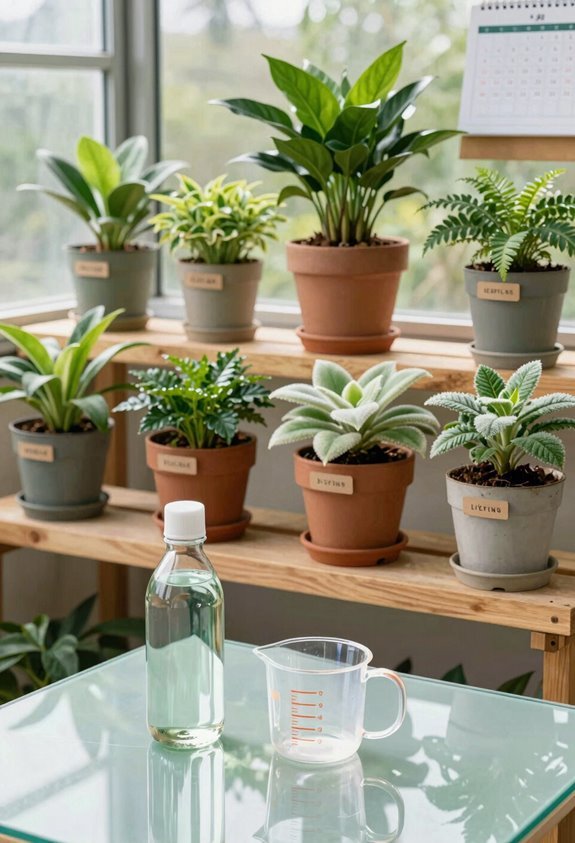
I build my fertilizing calendar around the spring start. I begin feeding my indoor plants in March when daylight grows and new leaves emerge. I mark every 2 to 4 weeks on my feeding schedule through September. This matches active growth and steady nutrient delivery.
I dilute fertilizer per label instructions. I watch for salt buildup. I cut strength by half when unsure. My plant growth drives the pace, not the calendar alone.
Come fall, I taper. I shift to monthly or hit winter stop by October. My indoor plants need less when light fades. I skip feeding dormant species entirely.
I check leaf color and growth rate. I adjust my fertilizing calendar for each plant type. Flowering plants get bloom formulas in their window. Foliage plants take steady nitrogen. I stay sharp. I adapt.