Borders do more than separate lawn from bed. A 4-inch Corten steel strip blocks weeds for fifteen years. Stacked logs at 2 to 3 inches deep hold soil without stakes.
The best edge matches your style, your budget, and your willingness to maintain it. You will see which method fits your yard.
Choose Garden Edging by Style: Rustic, Polished, or Whimsical
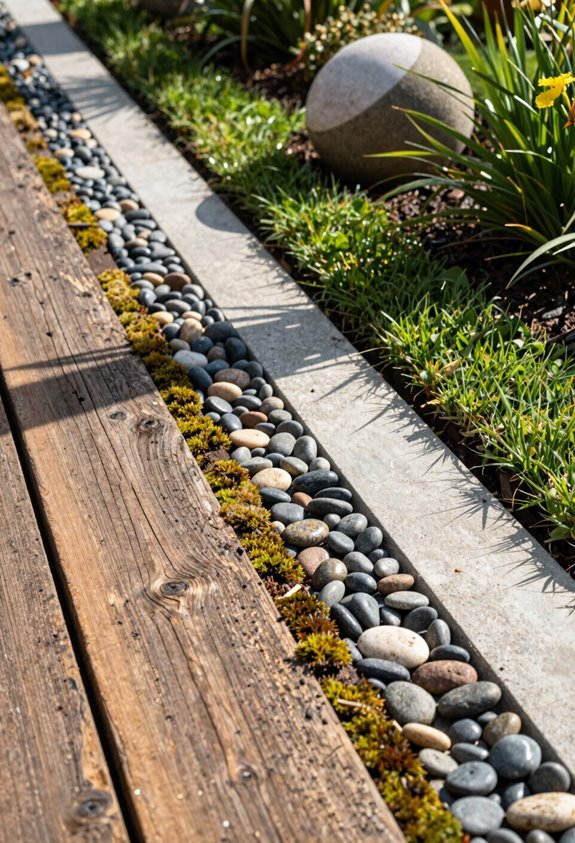
Downed tree limbs work well as natural borders. I use these rustic edging materials to create informal garden borders that feel like home. You achieve this look with logs arranged loosely along beds.
Downed tree limbs make natural, informal borders that feel like home.
Rustic
Terracotta pots or bricks placed casually build handmade charm. Stack materials two to three inches deep for stability.
Polished
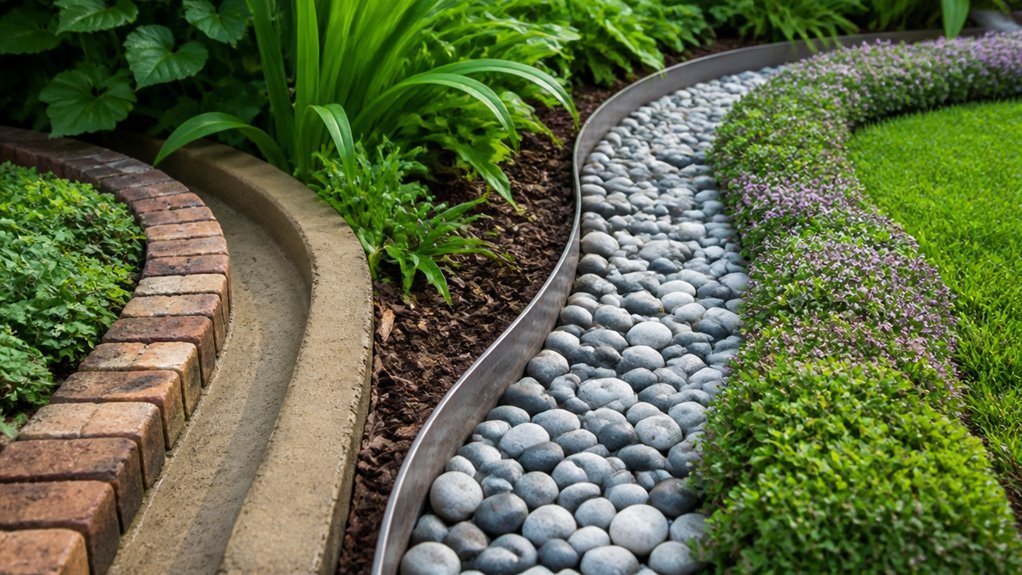
Glass insulators, copper-tinted stone pavers, or curved steel edging deliver clean lines. I prefer corten steel at 4-inch height for durable boundaries.
Whimsical
Mismatched decorative plates, seashells, or cinder block planters add personality. These garden border choices express individual style.
Living Edge
Plant lavender borders or blue star creeper groundcovers along stone or metal edging. I space plants 6-8 inches apart. This softens angles and creates low-maintenance whimsy.
Zero-Cost Garden Edging From Logs, Pots, and Bricks
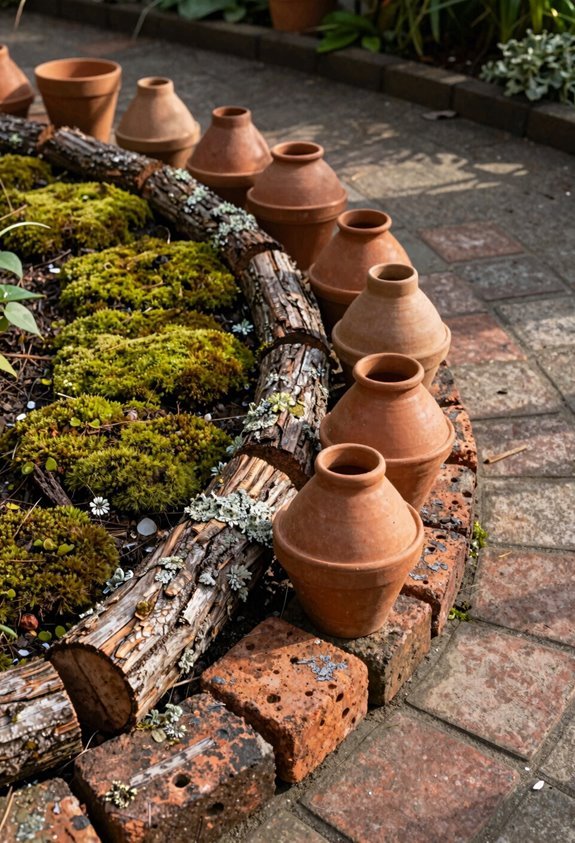
I build zero-cost borders from logs, pots, and bricks I already have. This repurposed edging approach turns found materials into low-cost garden boundaries.
- Logs. Roll fallen limbs or leftover firewood into place. These create rustic edging for vegetable beds. I use branches 4-6 inches in diameter. They rot slowly and blend with soil.
- Pots. Line terra cotta craft leftovers on their sides. These border paths with distinctive orange accents. I nestle them halfway into soil for stability.
- Bricks. Inlay clay or cement bricks randomly. This classic edging defines beds with pattern. I source these from demolition piles or yard sales.
Glass insulators work too if you spot vintage turquoise pieces. This zero-cost method belongs to anyone with patience and a willingness to look around.
Weathered Metal Garden Edging: Corten and Galvanized Steel
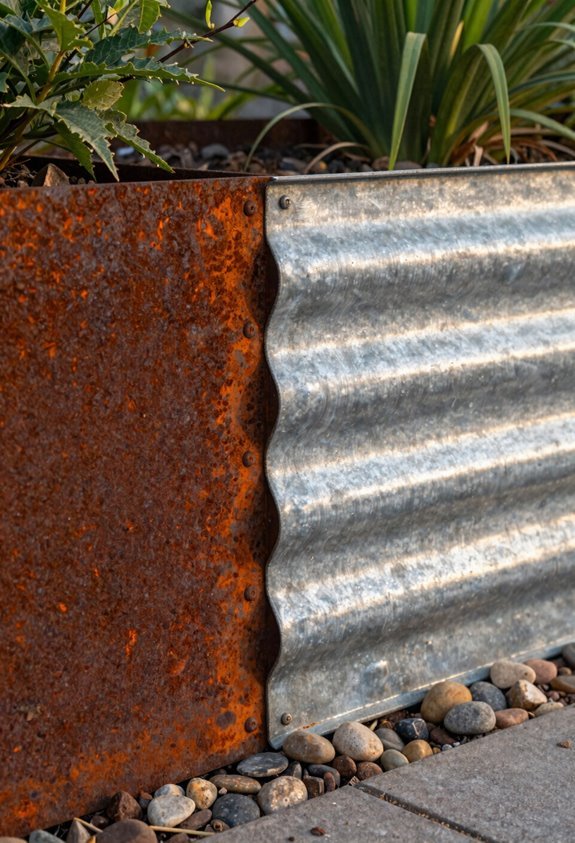
Metal edging brings clean lines and lasting structure to garden beds. I use corten steel and galvanized steel to create durable boundaries that age with character. These materials form a solid boundary between beds and lawns.
Corten Steel Edging
Weathering steel develops a rust-colored patina. I install corten steel edging flush with soil using stakes and a rubber mallet. It resists weed whacker damage and provides decades of service. This edging works for straight runs or gentle curves.
Galvanized Steel Edging
Zinc-coated steel offers a silver-gray finish. I select galvanized steel edging for modern designs requiring corrosion resistance. It creates crisp separation between materials.
Both options deliver weed control through physical barriers. Metal edging suits contemporary gardens seeking low-maintenance, lasting solutions.
Salvage Garden Edging From Thrift Stores and Demolition Sites
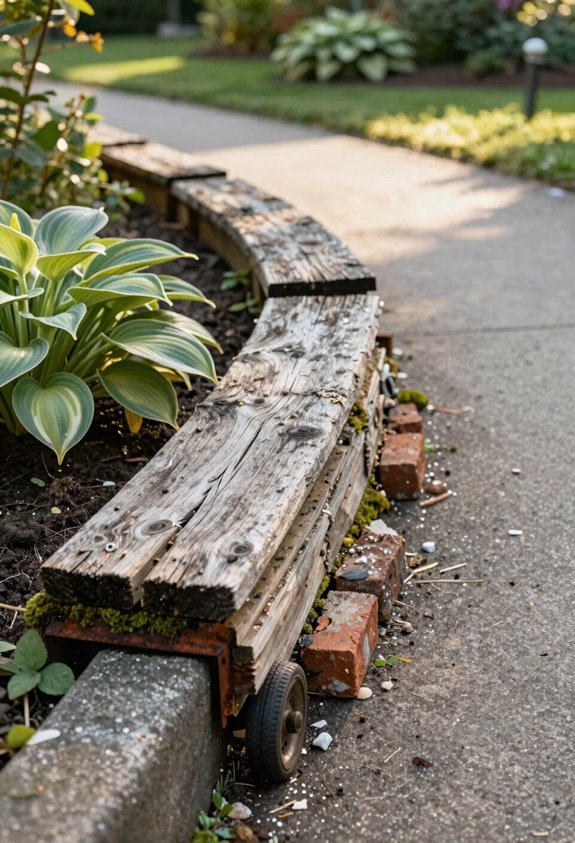
I checkdemolition-reclaimed timber for rot. I rinse all salvage edging before placing it. Drainage matters. Stability matters. My repurposed materials last years with basic care.
Combine Plants and Hardscape for Living Borders
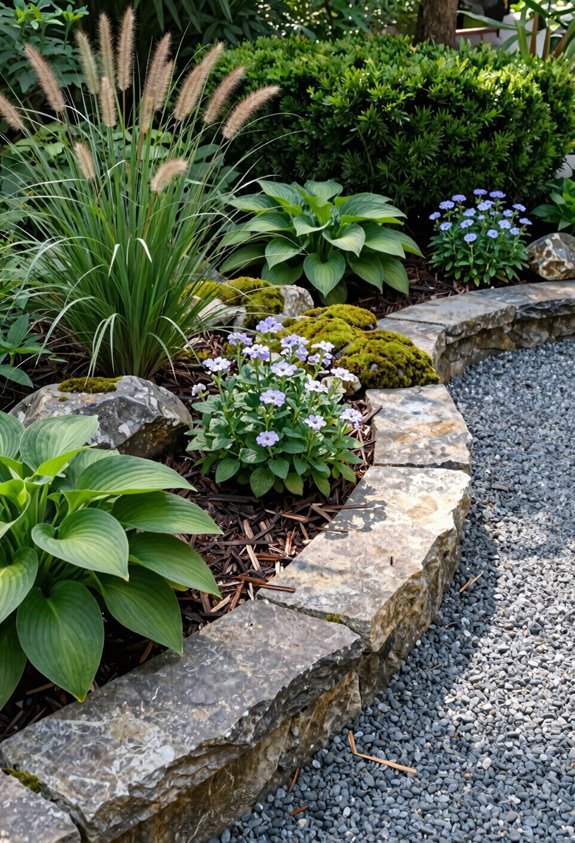
Stone, brick, or timber forms the backbone. I pair these hardscape elements with plants to create living borders that define space and reduce maintenance.
Stone Ribbon Borders
Inspired by classic garden edge design, I set Carex Everillo beside stone pavers. This creates double ribbons of greenery and stone framing along azalea borders. The plants soften the hardscape while the stone provides structure.
Lavender Pathway Edging
I use lavender as living edging for dry-garden paths. This low-water option delivers fragrance and iconic appeal without constant watering. Set plants 12 inches apart for continuous lines.
Brick and Groundcover Combinations
Yellow fire bricks paired with pebble walkways form classic borders. I soften these with low-growing groundcover or perennials. Shrubs and grasses that spill over improve the transition between bed and path.
Living borders cut mowing width and build lasting garden structure.